
ScalaHosting Review
ScalaHosting delivers managed VPS performance at a price point that undercuts Cloudways and Kinsta by a wide margin. SPanel replaces cPanel without the licensing fees, and the hardware (AMD EPYC 9474F, DDR5, PCIe 5.0 NVMe) is genuinely fast. The catch: renewal prices roughly double, and only three native data centers limit geographic reach.
TL;DR
- ScalaHosting offers managed VPS with AMD EPYC 9474F CPUs, DDR5 RAM, and PCIe 5.0 NVMe SSDs starting at $29.95/mo. That hardware outperforms most competitors in its price range.
- SPanel is a free, in-house cPanel replacement that handles domains, email, backups, and security without licensing fees. It works well but has a smaller ecosystem than cPanel.
- Renewal prices roughly double after the intro period. A $29.95/mo plan becomes $54.95/mo. Factor this into your long-term budget.
- Best for developers who want VPS-level control without VPS-level complexity. Skip it if you need data centers in Asia-Pacific or want a polished WordPress-specific workflow like Kinsta.
ScalaHosting has been around since 2007, but it flies under the radar compared to bigger names like Cloudways or Kinsta. That changed recently when they started shipping AMD EPYC 9474F processors, DDR5 memory, and PCIe 5.0 NVMe drives across their VPS fleet. We’ve been running SlashSkill on ScalaHosting infrastructure and have spent time in the SPanel dashboard, so this review comes from actual daily use rather than a test account spun up for a weekend.
We’ve already reviewed Cloudways and Kinsta individually, so this ScalaHosting review puts the platform in context against both.
What Is ScalaHosting?
ScalaHosting is a managed cloud VPS provider based in Dallas, Texas. They build and manage their own server infrastructure (unlike Cloudways, which layers on top of DigitalOcean, Vultr, AWS, etc.) and develop their own control panel, SPanel, as a cPanel replacement.
Their core product is managed VPS hosting where you get dedicated CPU, RAM, and storage with full root access. They also offer shared WordPress hosting on the budget end, but the VPS plans are where ScalaHosting makes its case. The company has three native data centers (two in the US, one in Europe) with additional reach through AWS and DigitalOcean partnerships.
The pitch: VPS-level performance and control at a fraction of what Cloudways or Kinsta charge, with a control panel that doesn’t cost extra.
SPanel: The cPanel Replacement
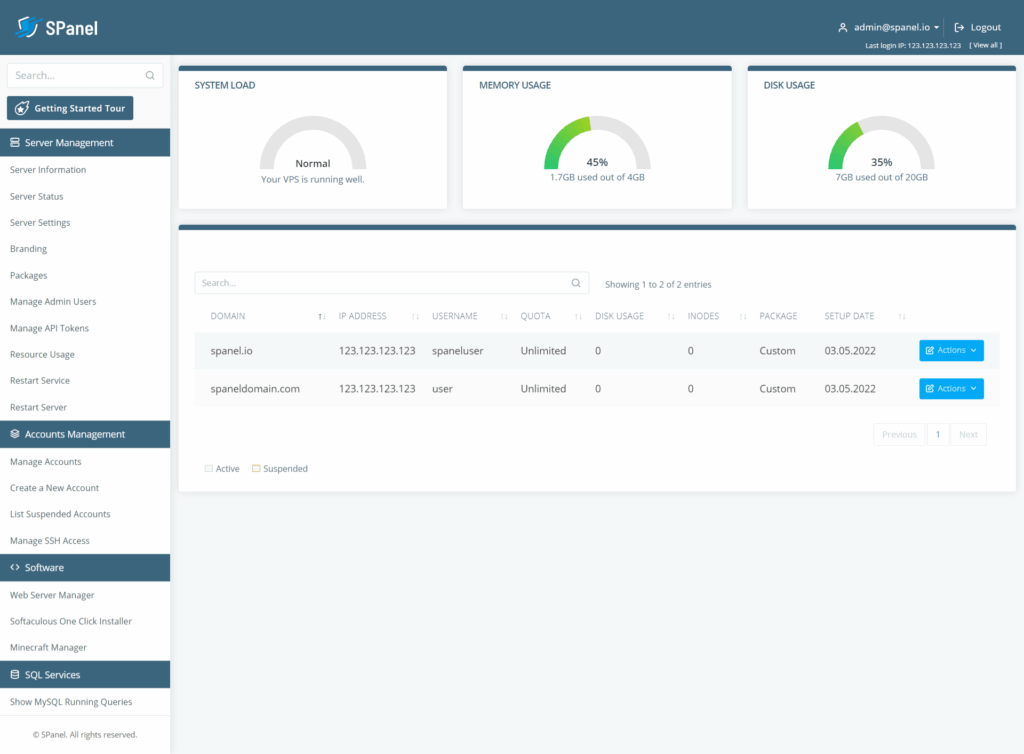
SPanel is the reason ScalaHosting can keep prices low. cPanel licenses run $15-45/mo depending on the account count. SPanel is free, built in-house, and included with every managed VPS plan.
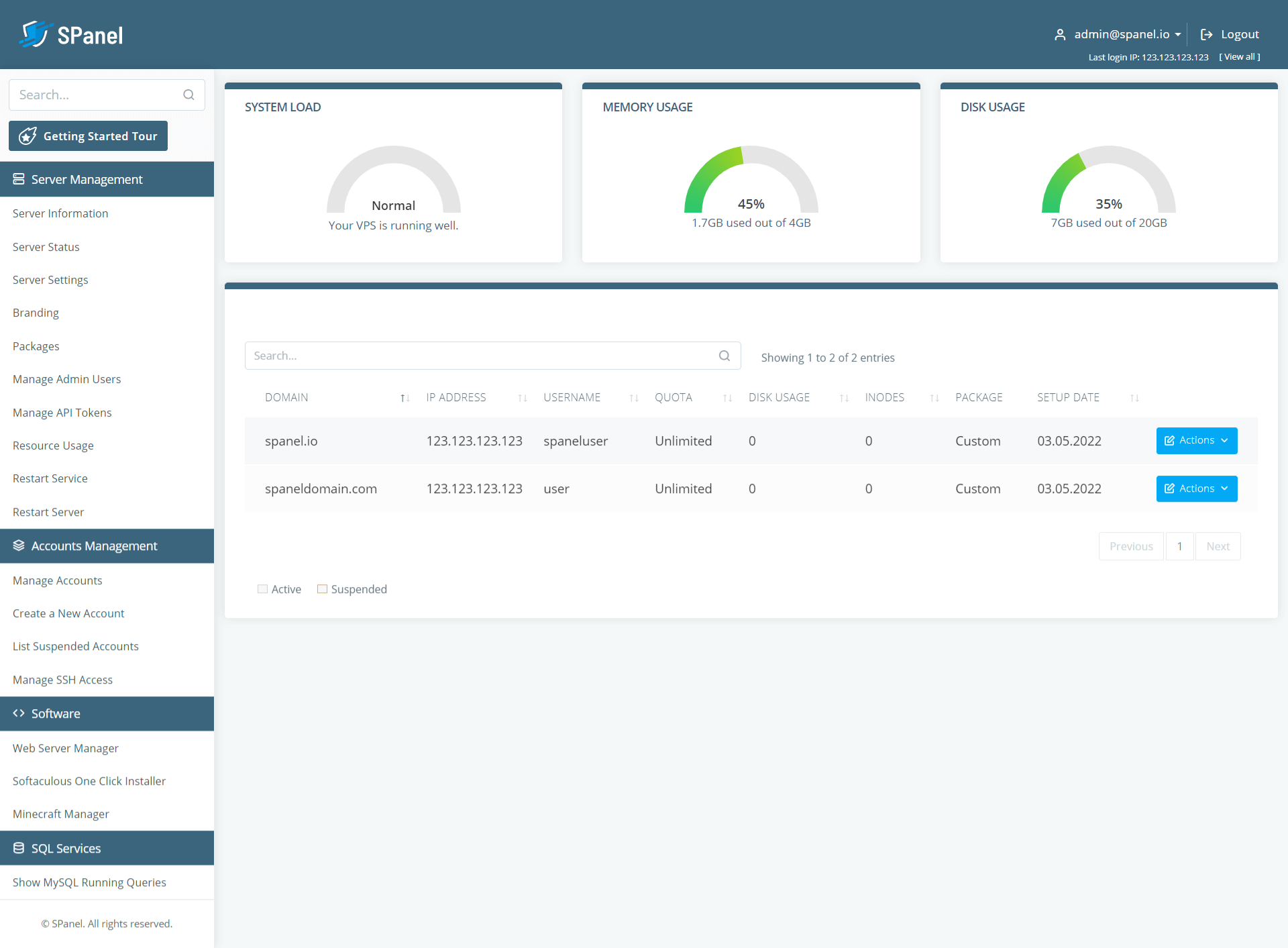
The interface is clean and functional. You get server management (resource monitoring, service restarts, SSH access), account management (create hosting accounts, set quotas, manage domains), and a user-level panel for individual sites (file manager, email, databases, backups). It looks like a simplified cPanel with a modern coat of paint. The per-site resource isolation is especially useful when hosting multiple WordPress sites on one server.
What SPanel Does Well
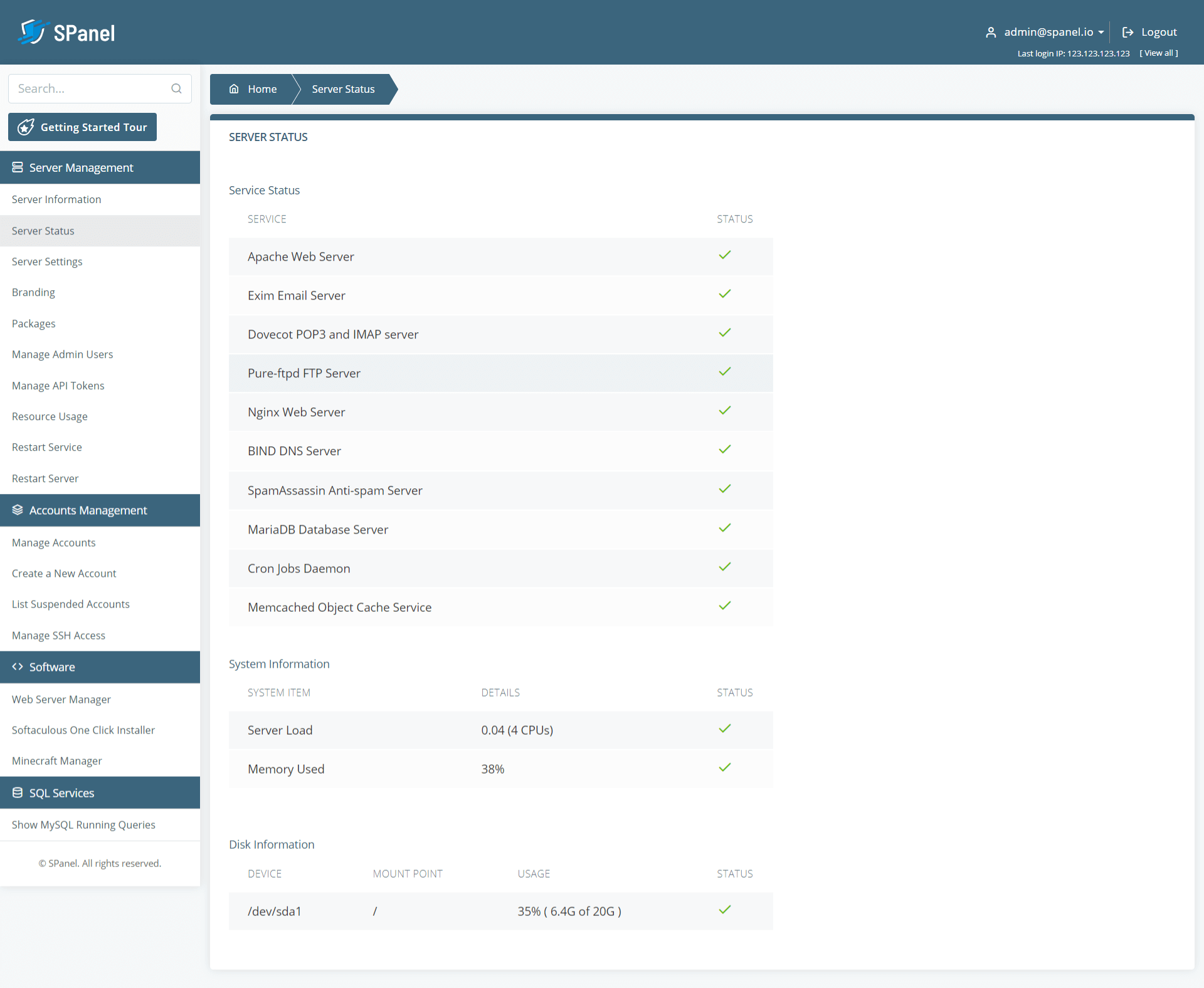
Resource monitoring is genuinely useful. You can see CPU load, memory usage, and disk consumption at a glance from the admin dashboard. The web server manager lets you switch between Apache, Nginx, OpenLiteSpeed, and LiteSpeed Enterprise without touching the command line. For WordPress specifically, the built-in WordPress Manager handles installations, staging, automatic updates, and security hardening.
SShield, the integrated security layer, monitors traffic in real time and claims to block 99.998% of attacks. It runs alongside SPanel and sends alerts for suspicious activity. You also get automatic SPF/DKIM records for email, blacklist monitoring, and on-demand malware scans.
One interesting touch: SPanel has a community-driven feature voting system at features.spanel.io where users propose and vote on new features. The highest-voted items get prioritized for development.
What SPanel Lacks
The ecosystem is smaller than cPanel’s. If you rely on specific cPanel plugins or have workflows built around WHM, the migration has friction. Documentation exists but leans generic. And while SPanel handles most daily tasks well, you won’t find the depth of third-party integrations that cPanel offers after decades of market dominance.
If you’re coming from a raw VPS setup or are comfortable with SSH, SPanel feels like a nice bonus. If you’re deeply embedded in the cPanel ecosystem, evaluate the tradeoffs carefully.
Performance and Infrastructure
This is where ScalaHosting punches above its weight class.
The managed VPS fleet runs on AMD EPYC 9474F processors (4.1 GHz turbo), which rank in the top 3% of server CPUs on PassMark with a multithread score of 102,107. For context, Hostinger uses AMD EPYC 9354P (ranked 58th), SiteGround uses Intel Xeon Gold 6268CL (ranked 226th), and Rocket.net still runs Intel Xeon E5-2667 v2 from 2013 (ranked 388th). Memory is DDR5 at 4800 MHz, and storage is PCIe 5.0 NVMe SSDs reading at 2,457 MB/s and writing at 2,000 MB/s.
Independent benchmarks from WPBeginner recorded a full page load of 1.0 second, Largest Contentful Paint of 492ms, and 100% uptime during their testing window. WebsitePlanet measured 0.7-second typical load times with 99.982% uptime across two weeks. Under stress testing with 50 concurrent users, WPBeginner recorded 457ms average response time with no failures.
The hardware is competitive with what you’d get on a high-end Cloudways Vultr HF server or a Kinsta Google Cloud C3D instance. The difference is ScalaHosting delivers it at a lower price point because they own the infrastructure rather than reselling someone else’s cloud. If you want to understand how hosting architecture affects WordPress speed more broadly, our WordPress performance optimization guide covers the fundamentals.
Data Center Limitations
ScalaHosting operates three native data centers: two in the US (Dallas) and one in Europe (Sofia, Bulgaria and Bucharest, Romania). If your audience is in North America or Europe, coverage is fine. If you need Asia-Pacific, Latin America, or Africa presence, you’ll need to use their AWS or DigitalOcean managed options, which add cost and complexity.
Compare this to Kinsta’s 37 Google Cloud data centers worldwide or Cloudways’ five cloud providers with dozens of regions. Geographic reach is ScalaHosting’s weakest infrastructure point.
Pricing: What You’ll Actually Pay
ScalaHosting’s managed VPS plans look aggressive on paper. Here’s the current lineup as of March 2026:
| Plan | CPU | RAM | Storage | Intro Price | Renewal Price |
|---|---|---|---|---|---|
| Build #1 | 1 core | 2 GB | 40 GB NVMe | $29.95/mo | $54.95/mo |
| Build #2 | 2 cores | 4 GB | 80 GB NVMe | $44.95/mo | $96.95/mo |
| Build #3 | 4 cores | 8 GB | 160 GB NVMe | $69.95/mo | $170.95/mo |
| Build #4 | 8 cores | 16 GB | 320 GB NVMe | $94.95/mo | $244.95/mo |
All plans include unmetered bandwidth, a dedicated IP, free SSL, automatic daily offsite backups, SPanel, SShield security, and unlimited hosted sites. No per-site limits, no visitor caps.
The intro-to-renewal jump is significant. Build #1 goes from $29.95 to $54.95 (an 83% increase). Build #3 goes from $69.95 to $170.95 (a 144% increase). This is the biggest caveat with ScalaHosting pricing. The intro rates are genuinely competitive, but budget for the renewal rate when evaluating long-term costs.
Even at renewal prices, though, ScalaHosting undercuts managed competitors. A comparable 4-core/8GB setup costs $69.95/mo intro on ScalaHosting vs $118-141/mo on Cloudways Vultr HF. Kinsta doesn’t offer equivalent raw server specs at any price point since they charge per site rather than per server. Our Cloudways vs Kinsta comparison breaks down those pricing models in detail.
ScalaHosting also lets you customize builds by adding individual CPU cores ($3/core) or RAM ($1/GB), which is useful if you need an oddball configuration that doesn’t fit a standard tier.
Where ScalaHosting Falls Short
No hosting provider is perfect, and ScalaHosting has clear weaknesses worth knowing before you commit.
Renewal Pricing
Already covered above, but it bears repeating. The gap between intro and renewal is among the widest in the managed VPS space. Lock in a longer term (36 months) if you commit, because month-to-month after the intro period gets expensive fast.
Limited Data Centers
Three native locations (Dallas, Sofia, Bucharest) is thin. If your primary audience is in Asia, Australia, or South America, latency will be noticeable. The AWS/DigitalOcean managed options expand reach but add cost and remove some of the SPanel integration benefits.
No Dedicated Local Dev Tool
Kinsta has DevKinsta for local development with push-to-staging. ScalaHosting has no equivalent. You can use Local by Flywheel or any other local WordPress tool, but there’s no integrated pipeline from local to staging to production.
Shared Hosting Is Weak
ThemeIsle’s testing of the shared WordPress plans showed 99.46% uptime (below industry standard) and load times of 1.8 seconds in the US. The shared plans exist, but they’re not where ScalaHosting shines. If you’re considering ScalaHosting, go VPS. Our shared hosting vs VPS guide explains when the upgrade makes sense.
Pros and Cons
Pros
- Top-tier hardware (AMD EPYC 9474F, DDR5, PCIe 5.0 NVMe)
- SPanel included free (saves $15-45/mo vs cPanel)
- Full root access on managed VPS
- Unlimited sites, unmetered bandwidth, no visitor caps
- Free daily offsite backups on all plans
- SShield real-time security monitoring
- Custom resource scaling ($3/core, $1/GB RAM)
- 4.9/5 Trustpilot rating with 2,150+ reviews
Cons
- Renewal prices roughly double after intro period
- Only 3 native data centers (US and Europe)
- No local development tool (unlike Kinsta’s DevKinsta)
- SPanel ecosystem smaller than cPanel’s
- Shared hosting plans underperform (stick to VPS)
- Documentation can be generic and SEO-focused
ScalaHosting vs Cloudways vs Kinsta
We’ve reviewed all three. Here’s how they compare on what matters.
| ScalaHosting | Cloudways | Kinsta | |
|---|---|---|---|
| Starting Price | $29.95/mo | $11/mo | $35/mo |
| Infrastructure | Own servers (3 DCs) | 5 providers (DO, Vultr, etc.) | Google Cloud C3D |
| Control Panel | SPanel (free) | Custom dashboard | MyKinsta |
| Root Access | Yes | No | No |
| Sites per Plan | Unlimited | Unlimited | 1-150 (plan-dependent) |
| Backups | Daily offsite (free) | Daily (free) | Daily (free) |
| Redis | Available | Free on all plans | $100/mo add-on |
| CDN | Cloudflare (free basic) | Cloudflare Enterprise (paid) | Cloudflare (included) |
| Local Dev Tool | None | None | DevKinsta (free) |
| Support Rating | 4.9/5 Trustpilot | Mixed since DO acquisition | 97% satisfaction, <2min response |
| Our Score | 7/10 | 7/10 | 8/10 |
Choose ScalaHosting if:
- You want full root access on a managed VPS
- You want to avoid cPanel licensing fees
- You prefer owning your server resources rather than sharing infrastructure
- Budget is a priority and you’ll lock in a multi-year term
- Your audience is primarily in North America or Europe
Choose Cloudways or Kinsta if:
- You need global data center coverage (Cloudways: 5 providers, Kinsta: 37 regions)
- You want a polished WordPress-specific workflow with DevKinsta (Kinsta)
- You need to choose or switch cloud providers flexibly (Cloudways)
- Premium support with guaranteed response times is non-negotiable (Kinsta)
- You want a lower entry price with pay-as-you-go billing (Cloudways from $11/mo)
If you’re still weighing Cloudways against Kinsta specifically, our Cloudways vs Kinsta comparison covers that matchup in depth. And if you’d rather manage your own server entirely, our VPS deployment guide walks through that approach.
Frequently Asked Questions
Is ScalaHosting good for WordPress?
Yes, on the VPS plans. ScalaHosting’s managed VPS includes a WordPress Manager for one-click installs, staging, automatic updates, and security hardening. The hardware is fast and you get full root access. Avoid the shared WordPress plans, which underperform in benchmarks.
What is SPanel and how does it compare to cPanel?
SPanel is ScalaHosting’s proprietary control panel that replaces cPanel. It handles domains, email, databases, backups, and security in one interface. It’s included free with managed VPS plans, saving $15-45/mo in cPanel licensing fees. The tradeoff is a smaller plugin ecosystem and fewer third-party integrations than cPanel.
Does ScalaHosting offer root access?
Yes. All managed VPS plans include full root access via SSH. This is a notable differentiator from Cloudways (no root access) and Kinsta (no root access). You can install custom packages, modify server configs, and run whatever software you need.
How much does ScalaHosting cost after renewal?
Renewal prices roughly double. Build #1 goes from $29.95/mo to $54.95/mo. Build #3 goes from $69.95/mo to $170.95/mo. Lock in a 36-month term for the best intro rate, and budget for the renewal price when planning long-term costs.
Is ScalaHosting better than Cloudways?
It depends on your priorities. ScalaHosting offers root access, free SPanel (no cPanel fees), and lower VPS pricing. Cloudways offers more cloud provider choices (5 providers), a lower entry price ($11/mo on DigitalOcean), and free Redis on all plans. ScalaHosting owns its infrastructure; Cloudways layers management on top of third-party clouds.
Final Verdict
ScalaHosting fills a specific gap in the managed hosting market: it gives you VPS-level hardware and root access with a management layer (SPanel) that makes it accessible to developers who don’t want to administer a raw server. The AMD EPYC 9474F CPUs and PCIe 5.0 NVMe storage are legitimately fast, and the price-to-performance ratio beats both Cloudways and Kinsta at comparable resource levels.
The 7/10 score reflects real limitations: renewal pricing that roughly doubles, only three native data centers, no local development tool, and a control panel ecosystem that’s still maturing compared to cPanel. These aren’t dealbreakers for most developers, but they’re worth knowing before you commit to a multi-year term.
If you want managed VPS with full root access and you’re willing to lock in a longer billing term for the intro pricing, ScalaHosting is a strong pick. Read our Cloudways review and Kinsta review to see how the three stack up against your specific needs.
ScalaHosting Review
Managed VPS with top-tier hardware and full root access at a price that undercuts the competition. Lock in a multi-year term to get the best deal.
Try ScalaHosting →