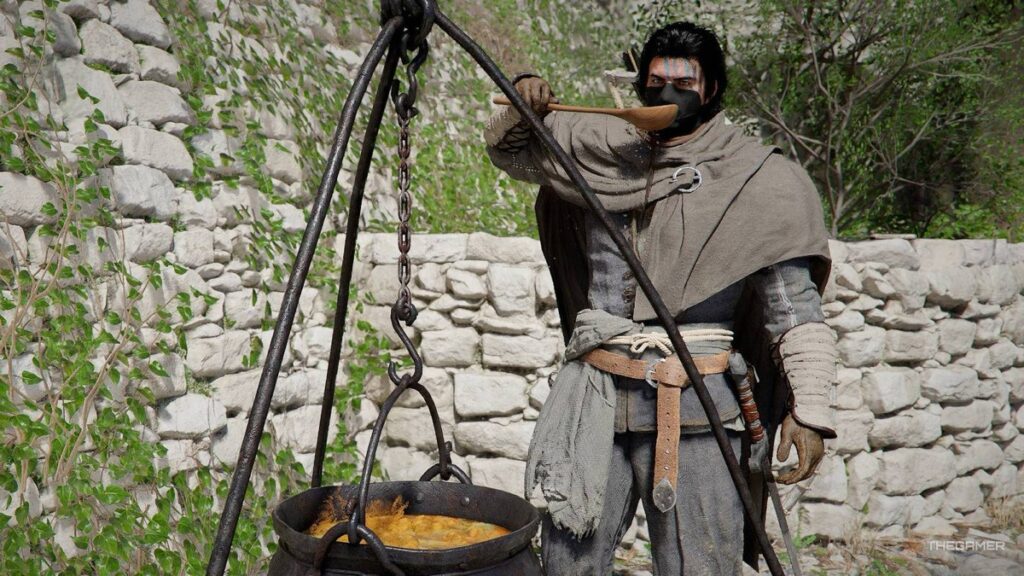
Crimson Desert has no healing potions. Food is the only way to restore health, and you can eat during combat with no cooldown. That alone makes the crafting system worth investing in. Beyond cooking, alchemy potions like the Attack Speed Potion grant a 30% damage speed boost for 60 seconds, and Palmar Pills revive you on the spot when you die. This Crimson Desert crafting guide covers whether each system is worth your time, what to prioritize first, and the recipes that make the biggest difference in boss fights. For general tips, see our beginner guide.
Key Takeaways
- Cooking is mandatory, not optional: food is the only healing source in the game, and you can eat mid-combat with no cooldown
- Grilled Meat is your bread and butter: 1 raw meat per unit, restores 80 HP, and you should bring 100+ to every boss fight
- Meat Skewers are the upgrade: they restore both Health and Spirit for one extra ingredient over Grilled Meat
- Unlock the Alchemy Lab before the Dye Station: alchemy produces combat consumables while dyes are cosmetic only
- Stop gear refinement at Level 4: Level 5+ costs Abyss Artifacts, the same currency you need for skills and stats
Is Crimson Desert Crafting Guide Worth Your Time?
Yes. Crafting in Crimson Desert spans three systems: cooking, alchemy, and gear refinement. Cooking is non-negotiable since food is your only healing source. Alchemy is high-value because potions like Attack Speed (+30% for 60 seconds) and Palmar Pills (self-revive on death) transform difficult fights. Gear refinement upgrades weapon attack power and armor defense at the blacksmith. Dye crafting also exists but is purely cosmetic.
The priority order is cooking first, alchemy second, refinement third, dyes whenever you feel like it. Nearly every item you pick up in Pywel has a crafting purpose, so hoarding materials early pays off.
Cooking: The Only Way to Heal
To cook, find a cooking pot or campfire. They are in every settlement and most outdoor locations. Interact with the station, select a recipe, and cook as many servings as your ingredients allow.
Press Right on the D-Pad to eat during combat. There is no cooldown between uses, which means you can heal through incoming damage by eating repeatedly. For tough boss fights, bring 100+ Grilled Meat and eat between attacks to tank through damage you would otherwise need to dodge.
Recipes come from four sources: exploring houses and buildings, completing side quests, purchasing from innkeepers, and improvising at cooking stations. You can substitute ingredients freely. For example, Lean Meat can be swapped for Tender Meat or Marbled Meat. Cook something new three times and it gets added to your recipe book permanently.
Recipes come in four quality tiers: Modest, Basic, Filling, and Hearty. Adding extra ingredients to a base recipe upgrades it. Hearty Grilled Meat restores 220 HP but costs ten pieces of raw meat. Ten individual Grilled Meat servings from the same amount restore 800 HP total, so cooking in bulk at the lowest tier is more efficient for pure healing.
Best Cooking Recipes
| Recipe | Ingredients | Effect | Priority |
|---|---|---|---|
| Grilled Meat | 1 raw meat | Restores 80 HP | High (bulk healing staple) |
| Meat Skewers | 1 raw meat + 1 extra ingredient | Restores Health and Spirit | High (dual restore) |
| Porridge | Grains + water | High HP restore per ingredient cost | Medium (good value) |
| Fish Porridge | Fish + grains + water | High HP restore | Medium (quest-related) |
| Wine | 2 fruit, 1 sugar, 2 water | Restores moderate Stamina | Low (situational) |
Meat Skewers are the upgrade over Grilled Meat. They restore both Health and Spirit for one extra ingredient, making them stronger for extended fights where you need ability resources. Buy Tough Meat from the butcher in Hernand for the cheapest raw meat supply, and check back at midnight in-game when the stock refreshes.
After unlocking Greymane Camp and completing follower missions for Lonnie, you can collect daily Chewy Rice Cakes and Porridge for free. These refresh each day and supplement your food supply without spending ingredients.
Alchemy and Potions
Alchemy unlocks at the Greymane Camp after you build the Alchemy Lab through the camp upgrade system. The lab requires wood and ore from Hernand to construct. Once built, you craft potions at cauldrons, which are also found at certain locations in the world, including Shadow’s Whisper Cave north of Hernand.
| Potion | Ingredients | Effect |
|---|---|---|
| Attack Speed Potion | Crimson Root + Adrenaline Gland + Alcohol | +30% attack speed for 60 seconds |
| Palmar Pill | 2 water + 15 of any herb (Pine Mushroom, Rosemary, Lavender, etc.) | Revives Kliff with 30% HP on death |
| Spirit Gauge Restore | Abyss Dewdrop + Silver Dust | Restores a portion of the Spirit gauge |
The Attack Speed Potion is the single most impactful crafting item in the game. Pop it before any boss fight for a significant damage output boost. Crimson Root, the rarest ingredient, grows in the Crimson Desert region and the Hernand borderlands. Adrenaline Glands drop from predators like Pailune Wolves, Stoneback Crabs, and bears. Alcohol is sold by merchants or distilled at camp.
The Palmar Pill recipe is in Shadow’s Whisper Cave, north of Hernand. Enter through a thin crack in the cliff face. This pill is essentially an extra life. When Kliff dies, consuming it brings him back at 30% HP right where he fell. Carry at least two into every boss encounter. For more on skill priorities and Abyss Artifact spending, see our skills guide.
Gear Refinement and the Level 4 Trap
Gear refinement upgrades weapon attack power and armor defense at the blacksmith. In Hernand, look for the anvil icon on your map to find Blacksmith Turnali. A side quest from Turnali unlocks the refinement system and rewards an upgraded Bekker Shield.

Each piece of gear has 10 refinement levels. Levels 1 through 4 use standard materials: Iron Ore and Copper Ore for melee weapons, Timber and Fine Timber for bows and shields, and a mix of ores and hides for armor. Level 5 and above costs Abyss Artifacts on top of materials.
Stop at Level 4. Abyss Artifacts are the same currency you spend on skills and stats, and those investments matter more than incremental gear upgrades. If you have a duplicate weapon, you can sacrifice it instead of raw materials, which saves resources.
Before boss fights, use grindstones found in camps for a temporary weapon attack boost, and anvils for a temporary armor defense boost. These buffs stack with refinement and cost nothing. For the strongest weapons to refine, check our best weapons guide.
Greymane Camp Upgrade Priority
Greymane Camp is your mobile base and the hub for all crafting. It unlocks through the Restore the Greymane Camp main story quest. As the story progresses, you can build and upgrade stations.
Upgrade in this order:
- Alchemy Lab (first) — produces combat consumables that directly affect boss fight outcomes
- Cooking stations — improve recipe access and food production capacity
- Vegetable patches and meat production — create a steady ingredient supply
- Dye Station (last) — cosmetic only, zero combat benefit
Later in the game, you can recruit NPCs to send on resource-gathering missions across Pywel. This creates a passive income of crafting materials without manual farming. For a breakdown of fast travel and map navigation for gathering runs, see our minimap guide.
Research institutes also feed into crafting. Gorthak Ironworks has a project that reduces material waste during crafting, and several institutes unlock dispatch missions for weapons you can only get through research. See our research institute guide for the full list of craftable blueprints and dispatch unlocks.
Frequently Asked Questions
Is crafting worth it in Crimson Desert?
Yes. Cooking is the only way to heal, and you can eat mid-combat with no cooldown. Alchemy produces the Attack Speed Potion (+30% for 60 seconds) and Palmar Pills (self-revive). Both are game-changers for boss fights. Gear refinement upgrades weapon and armor stats. The only optional crafting is dye crafting, which is purely cosmetic.
What is the best healing food in Crimson Desert?
Meat Skewers restore both Health and Spirit for one extra ingredient over Grilled Meat. For pure bulk healing, standard Grilled Meat (80 HP per unit, 1 raw meat each) is the most efficient option. Bring 100+ to boss fights and eat between attacks.
How do you get the Palmar Pill recipe in Crimson Desert?
The recipe is inside Shadow’s Whisper Cave, north of Hernand. Enter through a thin crack in the cliff face. The pill requires 2 water and 15 of any herb (Pine Mushroom, Rosemary, Lavender, and others work). Craft it at any cauldron.
Should you refine gear past Level 4 in Crimson Desert?
Not early on. Levels 1 through 4 use standard ores and timber, but Level 5 and above costs Abyss Artifacts, the same currency you need for combat skills and stat upgrades. Prioritize skills and stats first, then refine gear past Level 4 once you have Abyss Artifacts to spare.
Where do you cook in Crimson Desert?
At cooking pots and campfires found throughout the world. Every settlement has at least one. In Hernand, the cooking pot is right next to the butcher. Greymane Camp also has cooking stations once upgraded.
Gear for Long Sessions
Crimson Desert rewards long exploration sessions where you gather ingredients and clear camps between story missions. A comfortable setup keeps those sessions going.

8BitDo Ultimate 2 Controller
Hall effect sticks with wireless and Bluetooth

SteelSeries Arctis Nova 7
Multi-platform wireless with 38-hour battery

Samsung Odyssey G55C 32″ QHD
165Hz curved VA panel at a budget price
Summary
If you need a steady supply of Destruction and Insight abyss cores for socketing, our abyss core farming guide covers a repeatable method that drops cores every few minutes.
Crafting in Crimson Desert is worth investing in from the start. Cooking is mandatory since food is your only healing, and the lack of cooldown on eating makes bulk Grilled Meat a viable boss fight strategy. Upgrade to Meat Skewers once you can for dual Health and Spirit recovery. Build the Alchemy Lab at Greymane Camp before anything else to unlock the Attack Speed Potion and Palmar Pills. Refine gear at the blacksmith but stop at Level 4 to preserve your Abyss Artifacts for skills and stats. The Kuku Pot system at the Kilnden Workshop opens up a separate crafting tree for packs, legendary armor, and weapons once you reach Chapter 4. Skip dye crafting unless you want cosmetic changes. Gold bars crafted through alchemy can be deposited at banks for passive silver income through the investment system.