The best MECCHA CHAMELEON tips all come back to one idea: you are not hiding from a computer, you are fooling another player’s eyes. The game launched on June 9, 2026 (June 10 in Japan), hit roughly 17,500 concurrent players within two days, and climbed to the second spot on Steam’s trending chart, all on the back of a simple hook. Everyone starts as a plain white figure, and you paint yourself to match the level before the seekers come hunting. This guide covers how a round actually works, how to get the most out of the paint tool, and the habits that win rounds on both sides of the hunt.
Key Takeaways
- The game in one line: hide-and-seek where hiders paint their white bodies to blend into the stage, and seekers tag everyone they can spot before the timer runs out.
- Paint tool first: the eyedropper samples exact colors from the level, HSV sliders fine-tune them, and metallic and roughness sliders match how surfaces catch light. Learn it before your first real match.
- Hider rule of three: location, paint quality, and pose all have to hold up. A perfect color match in a bad pose still gets tagged.
- Seeker rule of one: hunt shapes, not colors. Limbs that cross surface edges and outlines that don’t match any object give hiders away faster than paint mistakes.
- The numbers: $5.99 (20% off at $4.79 through June 16), 2 to 10 players per lobby, Windows only, Mostly Positive on about 1,200 Steam reviews as of June 11, 2026.
How a MECCHA CHAMELEON Round Works
MECCHA CHAMELEON is an online hide-and-seek game from Japanese solo developer lemorion_1224. Lobbies hold 2 to 10 players (the developer’s recommendation, with the practical cap depending on the host’s connection), split into hiders and seekers. Public matchmaking and private hosted lobbies are both supported, and the game ships with twelve languages and Steam Workshop support for custom maps. If you are sorting out platforms or rounding up a group, our guide to MECCHA CHAMELEON crossplay and how to play with friends covers consoles, player count, and private lobbies.
A round moves through four phases. The host picks a map and mode in the lobby. Hiders then get a preparation window to roam the level, paint themselves, and lock a pose while seekers wait. The hunt phase releases the seekers, who tag anyone they can spot before the clock runs out. Seekers win by finding every hider; hiders win by surviving to zero. A results screen then reveals where everyone was hiding, which is reliably the funniest part of the match.
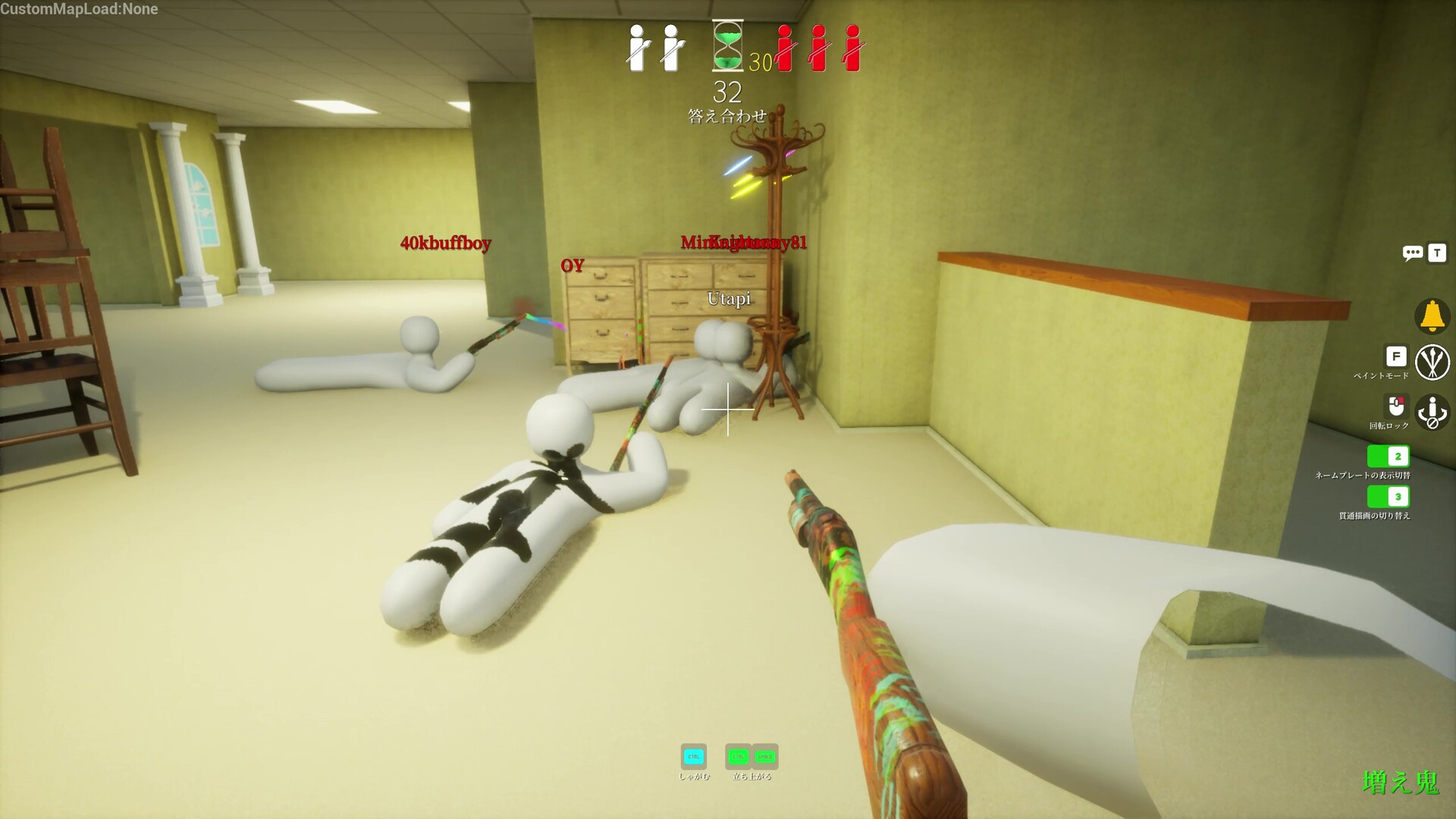
Modes change how eliminations work. In the standard mode, tagged hiders are simply out. In Increasing Oni mode (the name shows up in the HUD as 増え鬼), every tagged hider joins the seeker team, so the hunt snowballs and the last survivors face a room full of converted seekers. A Double mode has everyone hide first and then hunt. The HUD tracks the state of the match with a row of hider icons that flip from white to red as players get found, next to the phase timer. For a full breakdown of all three modes and which one to play, see our MECCHA CHAMELEON game modes guide.
Master the Paint Tool First
Every other skill in the game sits on top of the paint tool, so spend your first lobby learning it instead of rushing to a hiding spot. Paint mode opens with its own key (F by default, shown in the in-game HUD hints), and the menu is closer to an art program than a typical game gadget. For the complete keybind list, see our MECCHA CHAMELEON controls and keybinds guide. Once the menu makes sense, our color picker and answer check guide covers fine color matching and what the post-round reveal shows.
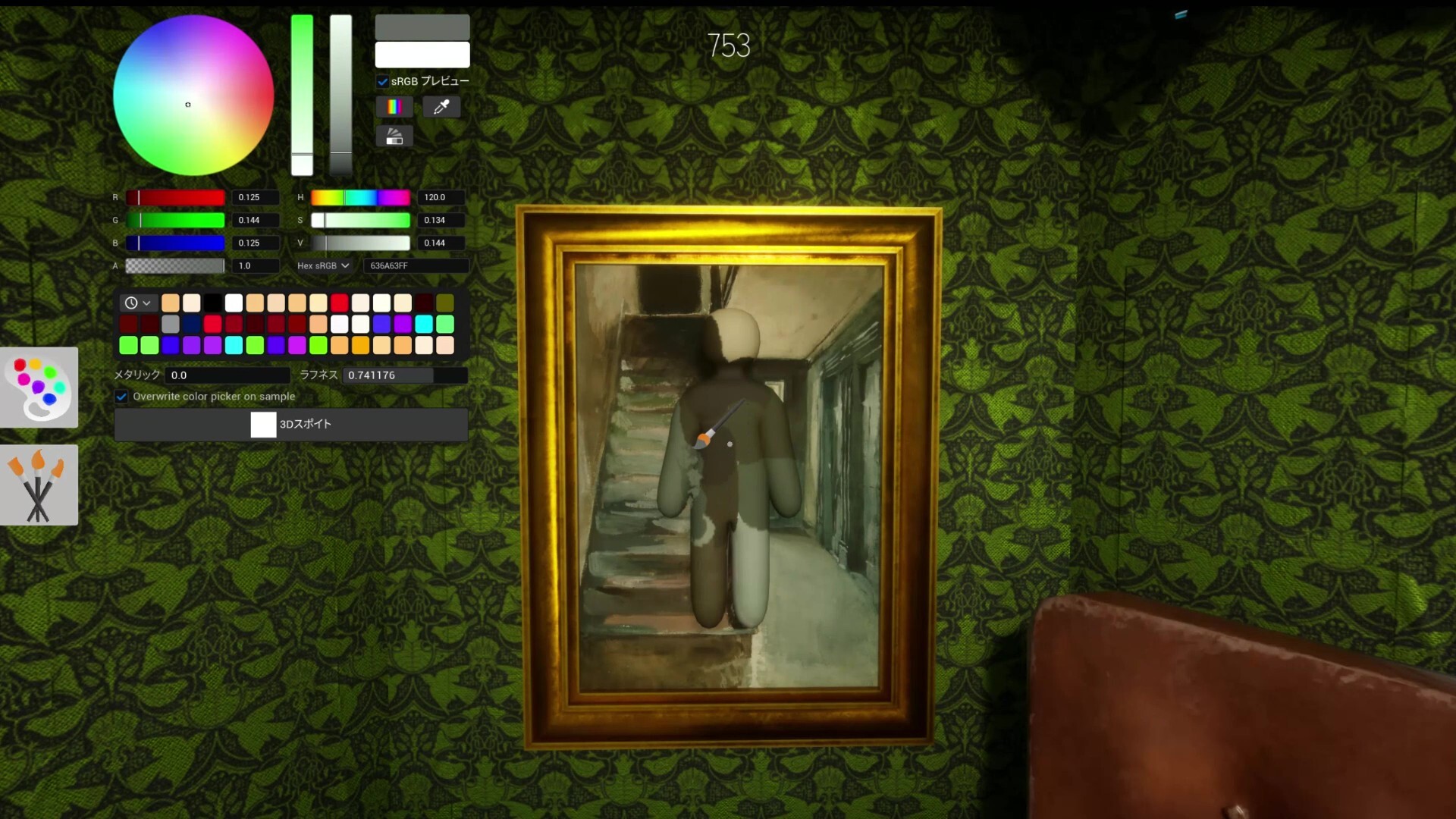
The tools that matter, in the order you should learn them:
- The eyedropper (3D spoid). It samples the exact color of any surface you point at. Sample the wall or floor you plan to hide against, never a similar-looking surface across the room. Lighting changes color more than you think.
- HSV and RGB sliders. After sampling, nudge value and saturation to match shadows and highlights. A sampled color is a starting point, not a finished match.
- Metallic and roughness sliders. The paint menu includes both, and they control how your body catches light. A perfect color on a glossy body still shines wrong against a matte wall. It is easy to miss, and it is a common reason a “perfect” match still gets spotted.
- Palette swatches and themes. You can save colors and reuse them, which is how regulars re-hide fast in repeat rounds on the same map.
- Camera rotation while painting. The middle mouse button rotates the camera during color work, letting you sample surfaces at a distance and inspect your own body from the angles a seeker will actually see.
Skill with the tool follows a clear ladder. Beginners match a single flat wall color. Intermediate players sample gradients so the lit side of their body is brighter than the shadowed side. Advanced players replicate full patterns: checkered floors, tile grids, picture frames. And there is a shortcut tier: curl into a ball pose and paint yourself as a balloon or a box, which needs far less artistic skill than a flat-wall blend.
⚡ Quick tip: The community’s most common day-one complaint is leaving white gaps between the limbs. Rotate your camera around yourself before prep ends and check every angle. White elbows have ended more rounds than bad hiding spots.
MECCHA CHAMELEON Tips for Hiders
Winning as a hider rests on three pillars: where you hide, how well you paint, and whether your pose sells the disguise. All three have to hold up, because seekers only need one of them to fail.
Spend your prep time on a budget. Pick your hiding zone in the first third of the prep window, sample your colors immediately, and use everything left to refine edges and lock the pose. Players who wander looking for the perfect spot end up half-painted when the hunt starts.
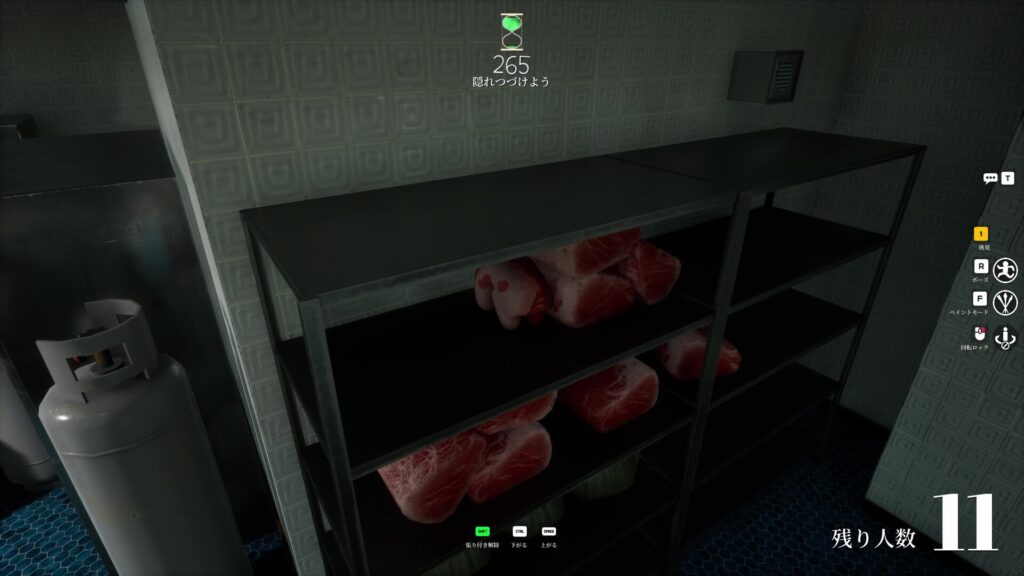
Hide like an object, not like a player. The strongest spots sit next to natural occluders: furniture edges, floor-level zones below a seeker’s default camera height, and visually busy corners where your outline gets lost among other shapes. Mimicking a real object class beats melting into a blank wall. Flatten into a framed painting in a gallery room, curl up as produce on a kitchen shelf, or pose as one balloon among many in a party room. Center-of-room spots only work when your paint is genuinely flawless.
Match the light, not just the color. Paint the lit side of your body brighter and the shadowed side darker, in the same direction as the room’s actual light source. Seekers are taught to look for lighting inconsistencies, so a uniformly painted body in a directionally lit room reads as wrong even when the hue is exact.
Lock your pose and commit. The pose menu covers standing, crouching, curling, and wall-flattened options, and the game supports sticking to surfaces (the HUD shows a dedicated key to release a wall-stick). Pick the pose that fits your object story before prep ends, then hold still. Micro-movement is the number one tell experienced seekers watch for, and repositioning mid-hunt only pays off if your current spot is already blown.
Use the chaos. If a nearby hider painted themselves loudly and badly, stay put. Seekers tag the obvious decoy first and often move on, satisfied the area is cleared.
Seeker Tips: Hunt Shapes, Not Colors
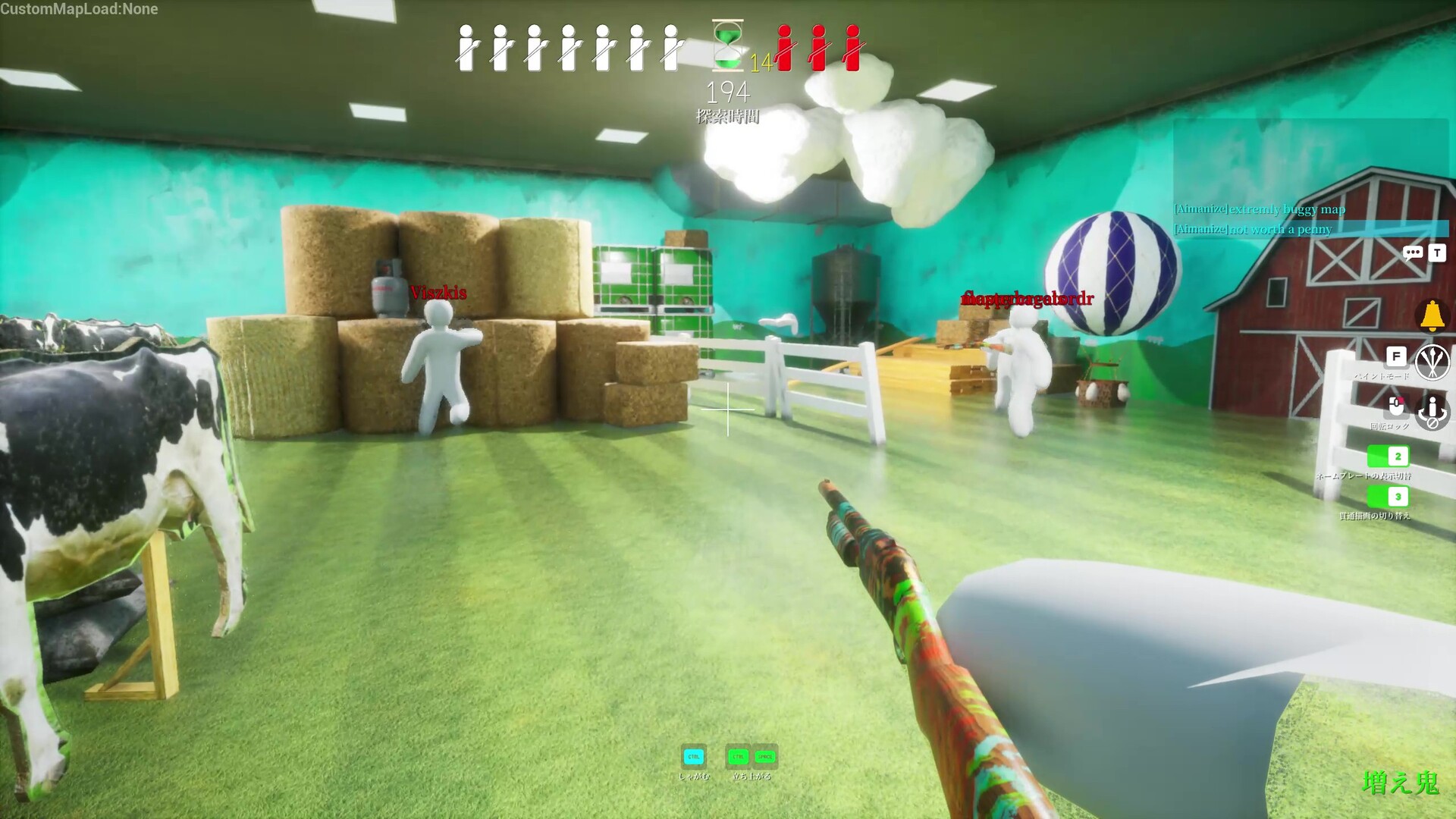
Seeking rewards systematic coverage over frantic sprinting. Early players converged on the same core idea fast: a hider can match a wall’s color perfectly and still betray themselves with a shape that does not belong.
- Sweep the perimeter first, then work inward along natural choke points. Divide the map into sections and clear each one fully instead of bouncing between rooms.
- Read silhouettes before colors. Limbs extending past a surface edge, an outline that matches no nearby object type, and asymmetry on a body that should be uniform are the fastest tells. Real objects are consistent; painted players usually miss a second-pass detail.
- Check the obvious prop mimics early. Balloons, boxes, and shelf objects attract low-effort hiders, and tagging them fast builds your team in Increasing Oni mode before the clever hides eat your clock.
- Inspect at crouch height. Floor-level and wall-edge zones sit below the default sightline, which is exactly why good hiders use them.
- Watch for lighting errors. Strange reflections, a matte shape on a glossy surface, or a shadow falling the wrong way all point to a painted body rather than level geometry.
- Manage the clock. If one suspected hide is eating your time in standard mode, log the spot mentally and move on. A stubborn 50-50 is a win for every other hider on the map.
One settings note: drop your mouse sensitivity lower than your usual shooter setting. Seeking is an inspection job, and a slow, stable camera catches the half-tone color band a fast flick skips right past.
Advanced Tech and Known Issues
The community found movement tech within the first day. Crouching in midair drops you faster than a normal fall, working as a makeshift fast-fall for reaching low hiding spots quickly. A wallkick also exists: in tight spaces where your head touches the ceiling, the game can launch you away from the wall at high speed. Players have reproduced it in the washer gap on the Backrooms map and the piano area of the Hide-and-Seek Mansion, though the exact trigger is still inconsistent.
Know the rough edges before you buy. Some corners let players clip under the map, which breaks seeking until a respawn, and reviewers have reported no-clip exploits and trouble joining friends’ servers. For the full picture on exploits and third-party hacks, see our breakdown of MECCHA CHAMELEON cheats and hacks. The UI and brush options are basic, with players asking for softer brushes, texture stamps, and higher paint resolution. The developer ships updates through the Steam news hub and the game’s Discord, and Increasing Oni lobbies stay playable through all of it, but this is a $6 game from one person, two days after launch. Polish is coming; it is not all there yet.
Is It Worth $6?
For groups, yes, and the launch numbers back that up. The game sits at Mostly Positive (about 74% of roughly 1,200 reviews) as of June 11, 2026, with around 17,500 people in matches at once. Reviewers keep landing on the same description: an artist’s version of prop hunt, where the laughs come from the reveal screen as much as the hunt. The repeated criticisms are real (rough UI, basic brushes, server hiccups in private lobbies), so treat it as a party game you bring to friends rather than a polished competitive title.
It is also the latest case of a tiny Japanese release sprinting up Steam’s charts on pure novelty, a lane that produced TBH: Task Bar Hero’s climb to the number three spot two weeks ago. Where it lands on the most played games on Steam board next week will tell us whether this is a fad or a fixture, and the Steam Workshop support gives it a real shot at the second one.
Frequently Asked Questions
What is MECCHA CHAMELEON?
MECCHA CHAMELEON is an online hide-and-seek game where every player starts as a plain white figure and hiders paint their bodies to blend into the level. Seekers win by tagging every hider before the timer ends. It released on Steam on June 9, 2026 (June 10 JST) from Japanese solo developer lemorion_1224 and went viral within two days.
How many players does MECCHA CHAMELEON support?
Lobbies support 2 to 10 players based on the developer’s recommendation, with the practical maximum depending on the host’s network. The game offers public matchmaking and private hosted lobbies, so you can play with strangers or set up a friends-only match.
How does the paint tool work in MECCHA CHAMELEON?
Paint mode opens an art-program style menu with a color wheel, RGB and HSV sliders, palette swatches, and a 3D eyedropper that samples exact colors from level surfaces. It also includes metallic and roughness sliders that control how your body catches light, which matters as much as the color itself.
What is the best way to win as a hider?
Pick your hiding zone early in the prep phase, sample colors directly from the surface you hide against, and shade the lit side of your body brighter than the shadowed side. Mimic a real object such as a painting, a balloon, or shelf goods rather than blending into a blank wall, then lock your pose and stay completely still.
What is Increasing Oni mode?
Increasing Oni is the snowball mode, shown in the HUD as 増え鬼. Every hider a seeker tags joins the seeker team, so the hunt grows stronger as the round goes on and the last hiders standing face a room full of converted seekers.
Is MECCHA CHAMELEON on console or Mac?
No. As of June 2026 the game is Windows-only on Steam. It costs $5.99, with a 20% launch discount bringing it to $4.79 through June 16, 2026. For the full rundown on PS5, Xbox, Switch, Mac, and Steam Deck, see our guide on whether MECCHA CHAMELEON is on PS5, Xbox, Switch, or Mac.
Gear for Winning With Paint
MECCHA CHAMELEON rounds are won in the paint menu and lost in voice chat laughter, so the right kit here is different from a shooter loadout. Fine slider control and steady sampling reward a precise mouse, artists will genuinely have an edge with a tablet, and a clear mic matters in a game this social. As of June 2026, these three are solid deals.

GAOMON M10K Drawing Tablet
A 10 by 6 inch tablet with 8,192 pressure levels, for paint jobs your mouse hand cannot pull off.
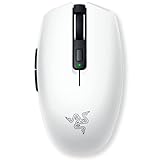
Razer Orochi V2 Wireless
An ultra-light 18K DPI mouse at 53% off, steady enough for slow seeker sweeps and slider work.

FIFINE USB Mic with Boom Arm
A condenser mic with quick mute for the moment a seeker walks right past your face.
Between hide-and-seek sessions, Berry Finds tracks real-time Amazon deals on thousands of everyday products across home, kitchen, beauty, and more, so the things you buy outside of gaming never cost full price.
Summary
MECCHA CHAMELEON turns hide-and-seek into an art contest: learn the paint tool’s eyedropper, HSV, and roughness sliders before anything else, build hides on the three pillars of location, paint, and pose, and seek by reading shapes and lighting instead of colors. The game is two days old, rough in places, and very funny with a full lobby. If it holds its numbers through the launch discount window, expect map guides and painting deep dives here next. And if your group wants more of the genre tonight, our best prop hunt games roundup ranks nine more picks with live player counts.