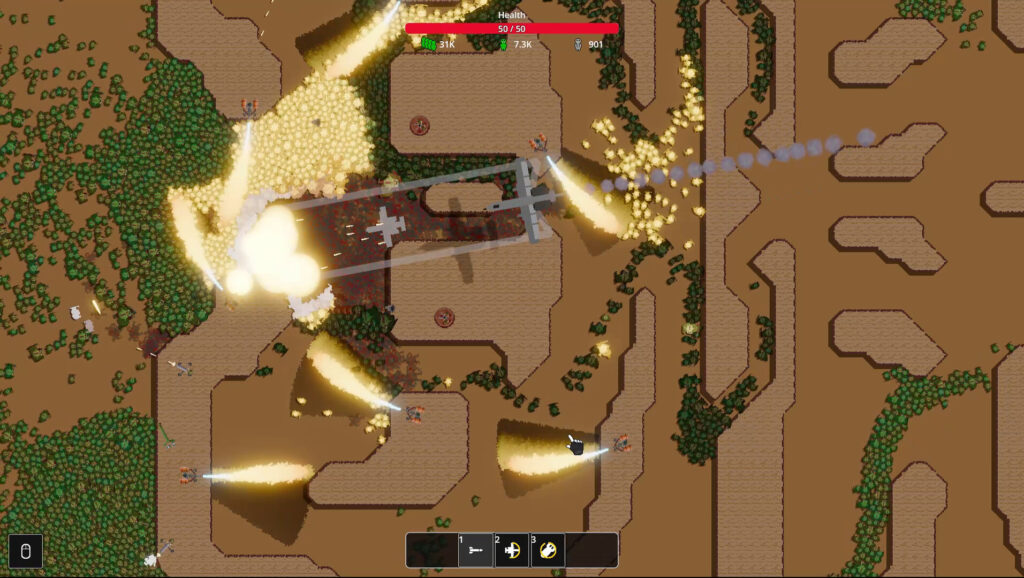
Sir, We Have an Orc Problem launched on July 28, 2026, and passed 6,500 concurrent players on day one, a big number for a $9 tower defense game from a two-person studio. The hook is scale: more than 100,000 physics-driven orcs flood each map like a tide, and your turrets have to hold the line. The best turrets in Sir, We Have an Orc Problem are less about raw damage and more about the job each one does, because the game hands you a sweep-based aiming system and an upgrade tree where buying the wrong things early means grinding the same level on repeat.
This guide covers every turret role, the placement controls most players miss, the upgrade order that skips most of the grind, and how to get past the difficulty walls at level 3.2 and beyond. If incremental progression loops are your thing, our TBH: Task Bar Hero class tier list covers the other big incremental hit of 2026.
Key Takeaways
- Unlock turret types first: new towers and extra copies of them beat stat upgrades early. Variety wins over raw numbers.
- Flamethrowers own chokepoints: fire damage over time on funneled orcs is the most efficient kill zone in the game.
- Losing is farming: every run pays out crystals, win or lose. The game is built around failed attempts funding the next one.
- Easy-to-miss controls: drag a placed turret to re-aim its sweep arc, right click to delete it. Both are worth learning on level one.
- Level 3.2 is the wall: the difficulty spikes hard there. Grind upgrades and unlock lasers before you butt your head against it.
- How the Game Works: Runs, Crystals, and 12 Maps
- The Best Turrets in Sir, We Have an Orc Problem
- Turret Placement: Sweep Arcs, Chokepoints, and Physics
- Upgrade Order: What to Buy First
- Active Abilities: Strafing Runs, Lasers, and the Nuke
- Beating the Difficulty Walls at 3.2 and 6.1
- Gear for Long Horde Sessions
- Frequently Asked Questions
- Summary
How the Game Works: Runs, Crystals, and 12 Maps
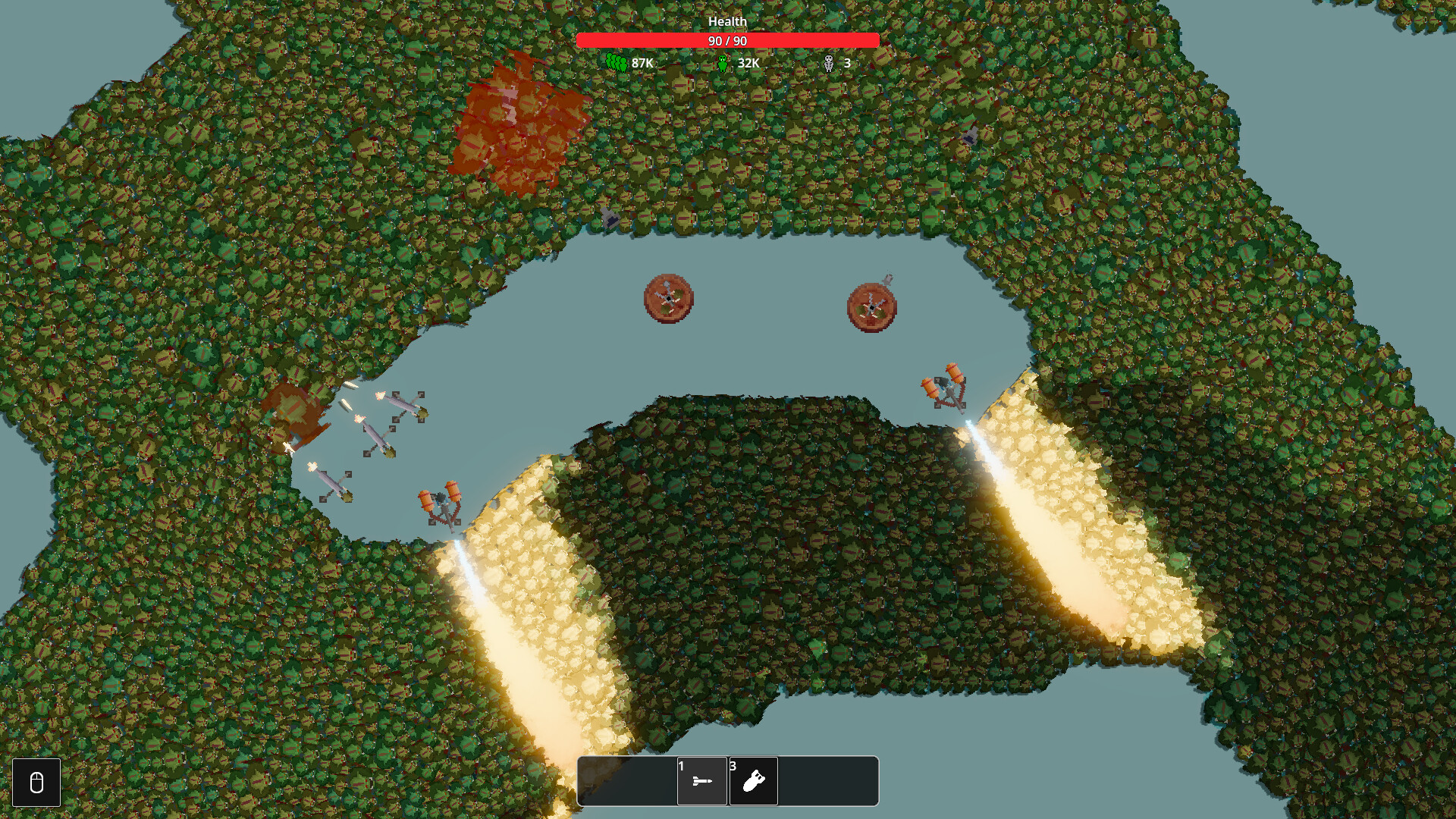
Sir, We Have an Orc Problem is a tower defense game wrapped around an incremental core. Each map throws waves of orcs at your base, kills pay out crystals, and crystals buy turret unlocks and upgrades on a big tech tree. Then you run the level again, stronger. Losing is part of the loop: you keep the crystals from failed runs, and the game is openly balanced around farming a level a few times before beating it.
Launch-week players on the Steam forums count 12 maps in the full release, numbered in a world.stage format (3.2, 6.1, and so on). The developers, the two-person team at Mumpitz Games, target 4 to 6 hours of content for a full clear. The scale ramps fast: in early playthroughs the first level fields around 400 orcs, the second roughly 2,000, and later maps flood past 100,000. The game blew up before launch too, passing 100,000 wishlists and, per the developers, landing in the top 50 most-played demos of June’s Steam Next Fest.
The Best Turrets in Sir, We Have an Orc Problem
Every turret has a distinct job, and the strongest defenses use all of them. Here is what each one is for, based on the in-game descriptions, community testing on the Steam forums, and long playthroughs from creators like Splattercat.
Flamethrower: The Chokepoint King
Flamethrowers set orcs on fire for damage over time, which makes them the most efficient turret wherever enemies bunch up. Park them on narrow corridors and funnels so every orc in the stream picks up a burn. Community testing settled on flamethrowers as the backbone of late-map defenses, with players building entire walls of them at the biggest chokepoint. A demo-era patch even guaranteed at least one tick of fire damage from unupgraded flamethrowers, so they contribute from the moment you place them.
Machine Gun: Exit Cleanup
Machine guns have a quirk: they get more accurate the farther out you aim them and more erratic up close. Their real job is cleanup near your base. Place several with overlapping fields of fire at the exit so the orcs that survived your kill zone cannot slip through. The 100 percent clear bonus can push them absurd: one super perk adds five full bullets per second to machine gun turrets.
Cannon: The Lane Cutter
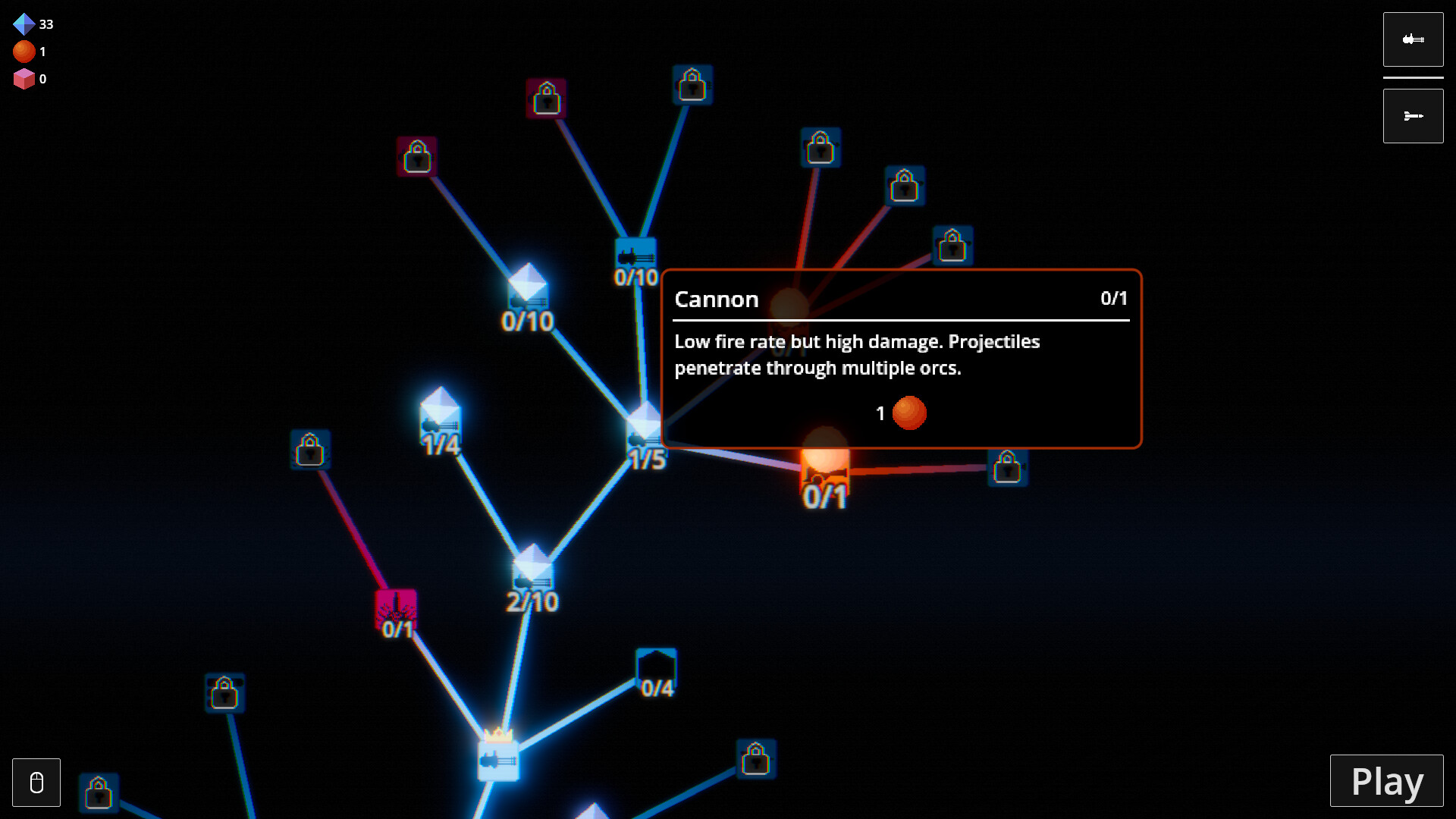
The in-game description says it directly: low fire rate, high damage, and projectiles that penetrate through multiple orcs. Cannons are for slicing into high-volume segments where a single shot can pass through a dozen bodies. They pair naturally with flamethrowers, softening the mass while the fire finishes it. Do not rely on them near the exit, though. They are too slow for precise final picks.
Mortar: Spawn Pressure
Mortars shell a target zone with explosive area damage, and they work best pointed at spawn areas where the horde is densest. Two things trip up new players. The big white circle you see is the targeting zone, not the blast radius, and accuracy drops the farther the mortar sits from that zone, so closer placement means tighter shelling. When upgrading, the community consensus is to focus on radius and explosion damage first.
Sniper: Long Lanes, Real Limits
The sniper tower covers long sightlines, but its range is not infinite. Playtesters placing it on the longest lane found it reached only about halfway. Treat it as a mid-lane damage dealer rather than a map-wide answer, and check its actual coverage after placing it.
Lasers: The 3.2 Unlock
Lasers arrive deeper in the tech tree, and players on the Steam forums point to them as the piece that cracks the level 3.2 difficulty wall. If you are stuck grinding around that point, put your crystals toward the laser unlock before pushing further stat upgrades.
Turret Placement: Sweep Arcs, Chokepoints, and Physics
Placement matters more than upgrades in this game, and three mechanics drive all of it:
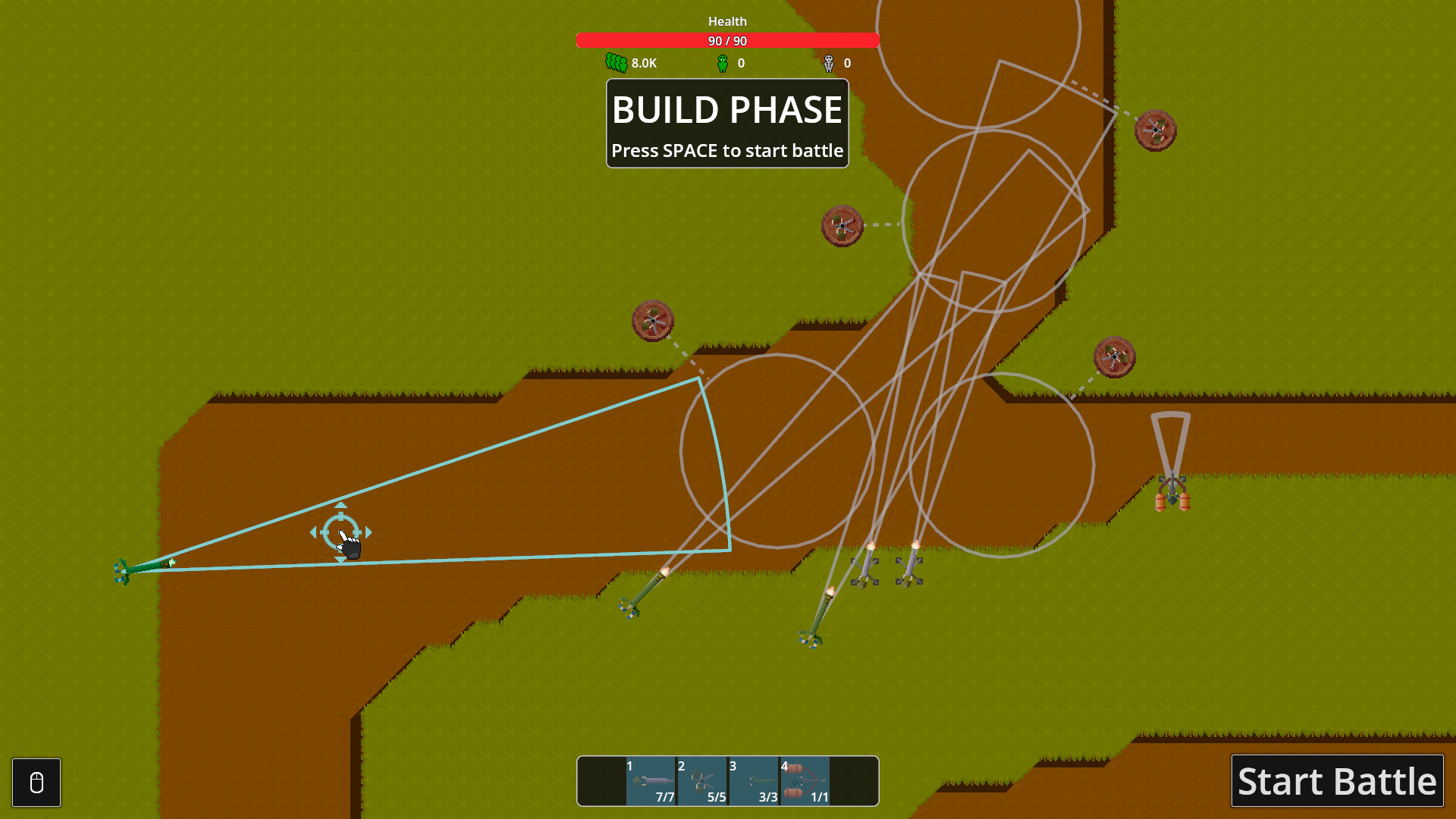
- Turrets sweep instead of aiming: each one strafes across its arc rather than tracking targets. You are building fields of fire, not point defenses. Overlap arcs so bunched orcs cannot absorb everything.
- Drag to re-aim, right click to delete: drag a placed turret to rotate its sweep arc, and right click removes it. Both controls are easy to miss, and free repositioning between attempts is how you iterate on a layout.
- Explosions shove orcs around: the horde is fully physics-driven, so a mortar or rocket blast can knock enemies onto a path you left undefended. Account for crowd displacement, not just damage.
Orcs gravitate toward the shortest path to your base and flow like a tide, so read the map for corners and pinches before placing anything. The winning pattern from community playthroughs: build a kill box at the tightest chokepoint with flamethrowers plus cannons, put mortars on the spawns, and keep machine guns at the exit for whatever leaks through.
Upgrade Order: What to Buy First
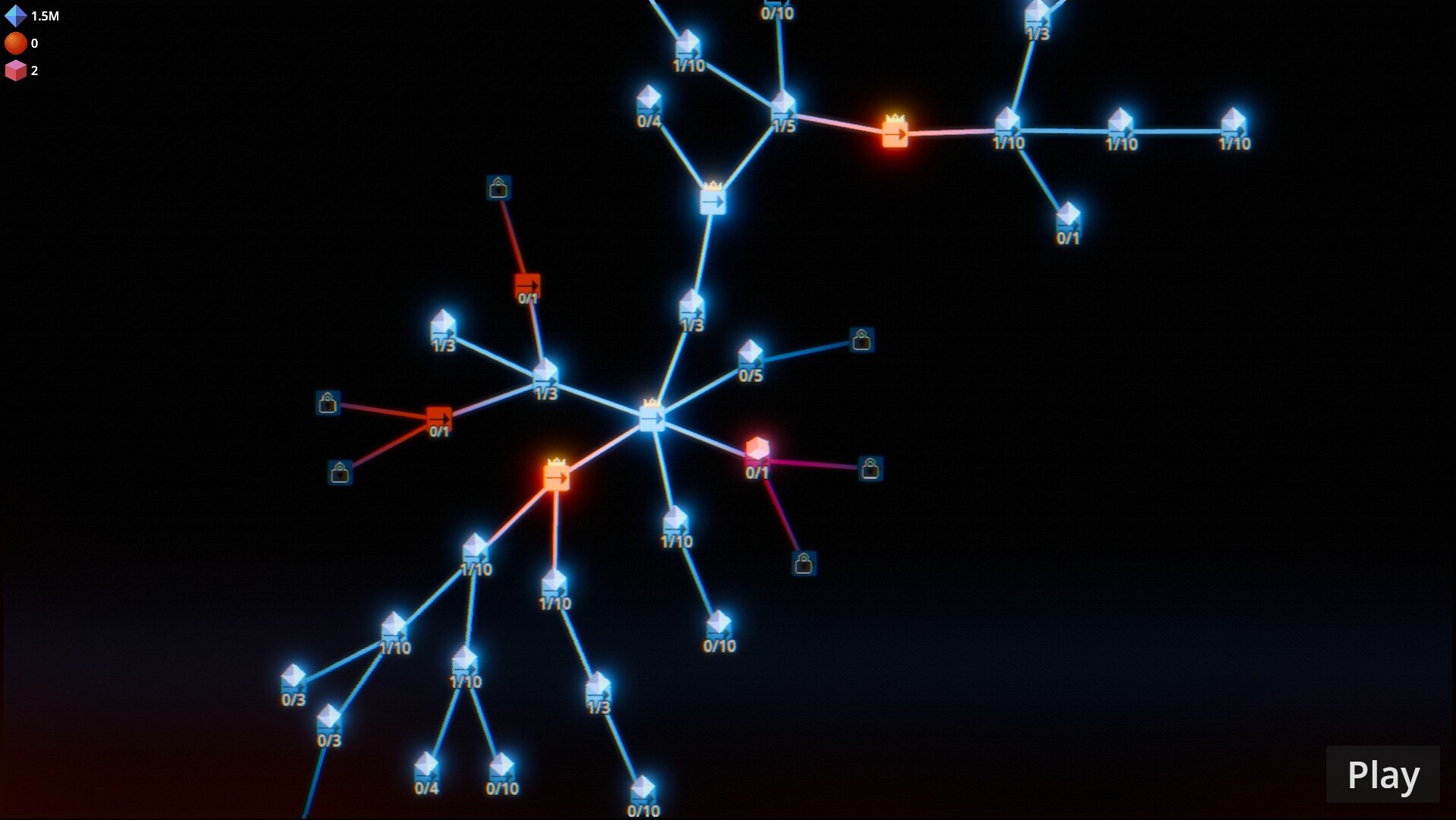
Crystals are always scarce, and there is no respec, so buy in this order:
- New turret types, the moment they appear: a new tool beats a stat bump every time, since each turret fills a role nothing else covers.
- More copies of turrets you own: there is no placement cap to worry about, and more guns on the field scales better than small percentage boosts.
- Role-defining stat upgrades: radius and explosion damage on mortars, fire upgrades on flamethrowers, then named perks like Headhunter and Power Shot as they come up.
- Economy upgrades with a catch: Bonus Resources adds flat crystals per run, but only if you finish the level by winning or losing. Surrendering skips the flat bonus, so play failed runs out.
Clearing a level at 100 percent health pays out a separate currency for super perks, the game-warping tier of upgrade. That is the long-term reason to revisit early maps once your tree fills out.
Active Abilities: Strafing Runs, Lasers, and the Nuke
Alongside turrets you unlock active abilities: strafing runs, orbital lasers, and eventually nukes. They are burst tools for the frontline, best dropped on dense masses near spawns rather than saved for cleanup near your base. Two practical notes from long playthroughs. The nuke takes visible travel time to land, so calling it late in a wave can waste it entirely. And in one full-clear run, the plane strike slightly out-damaged the rocket barrage over a level, so favor it when both are off cooldown.
Do not treat abilities as optional flavor. Players report the later levels feel balanced around bringing active skills, so budget crystals for them as part of the build rather than a luxury after turret upgrades.
Beating the Difficulty Walls at 3.2 and 6.1
Two spots generate most of the “am I doing this wrong” posts:
- Level 3.2: a major step up that most players hit before their tree is ready. The fix is accepting the loop: go back, farm earlier maps for crystals, and unlock lasers before returning.
- Level 6.1: the late-game check. Community consensus is that it expects active abilities on top of a full turret setup, so stock your skills before the attempt rather than relying on turrets alone.
Grinding the same map for crystals is intended, not a failure state. If a wall feels unfair, the game is telling you to spend ten minutes farming, and the 100 percent clear bonuses on old maps make those revisits pay double.
Gear for Long Horde Sessions
This is a mouse-driven game that turns fifteen-minute sessions into two-hour ones, so the kit that matters is a comfortable chair, a precise mouse, and a screen big enough to read a hundred thousand orcs at once. Current deals on three fits, as of July 2026:

Corsair T3 Rush
Breathable fabric and proper lumbar support for the sessions that run long past midnight.

LG Ultragear 27G640A QHD
QHD resolution makes dense horde screens readable, at 38% off list.

Razer Basilisk V3
An ergonomic mouse at half price for a game you play entirely with one.
Frequently Asked Questions
How many maps does Sir, We Have an Orc Problem have?
Launch-week players count 12 maps in the full release. Levels use a world.stage numbering like 3.2 and 6.1, and the developers target 4 to 6 hours of content for a full playthrough.
What are the best turrets in Sir, We Have an Orc Problem?
Flamethrowers are the strongest core pick for chokepoints thanks to fire damage over time, backed by cannons for penetrating dense lanes, mortars on spawn zones, and machine guns for exit cleanup. Lasers, unlocked deeper in the tree, are the key addition for the level 3.2 difficulty spike.
Is Sir, We Have an Orc Problem an incremental game or a tower defense game?
Both, by design. Combat plays as tower defense, but progression is incremental: every run pays out crystals win or lose, and the game expects you to farm failed runs to fund upgrades. There is no prestige system.
How much does Sir, We Have an Orc Problem cost?
The base price is $9.99 on Steam, with a 10% launch discount bringing it to $8.99 as of late July 2026.
Is Sir, We Have an Orc Problem multiplayer?
No. It is a single-player game on PC via Steam, made by the two-person team at Mumpitz Games in the Godot engine.
How do you delete or re-aim a turret?
Drag a placed turret to rotate its sweep arc and right click it to delete it. Both controls are easy to miss, and repositioning between attempts is free, so experiment with layouts liberally.
Summary
Sir, We Have an Orc Problem rewards role clarity over raw damage: flamethrowers and cannons in the kill box, mortars on spawns, machine guns at the exit, and lasers as the mid-game unlock that breaks the 3.2 wall. Buy new turret types first, play out losing runs for the bonus crystals, and remember the two easy-to-miss controls, drag to re-aim and right click to delete.
The game is $8.99 during launch week and it earned its 100,000 wishlists. Built in Godot, by the way, if you are curious what the engine can do at scale. To see what else is blowing up on Steam this week, check the most played games on Steam right now.