
The fastest way to make money in No Man’s Sky is not a single method. It is the right method for your current game stage. A brand-new Traveler with no freighter cannot run a Stasis Device factory, and a 1,000-hour save with an Activated Indium farm does not need to sell Salvaged Data. The players who make billions fastest are the ones who switch methods as their infrastructure grows. This guide ranks every viable units farm in the 2026 Voyagers and Remnant era by time-to-payout, tiered by game stage, so you can jump straight to what works right now. Every value below is a real sell price pulled from the current patch, not a Reddit thread from 2022.
Key Takeaways
- Best early-game method: Salvaged Data and crashed-ship flipping net 500K to 2M units per hour with zero infrastructure.
- Best mid-game method: Storm Crystals and Chlorine duplication both clear 10M+ units per hour once you have a hazard-rated suit and basic refiners.
- Best late-game method: Stasis Device or Fusion Igniter crafting prints 15.6M units per single item, with fully automated farms hitting 100M+ per hour.
- Best passive method: An Activated Indium mining base runs while you sleep. Stacked silos fill up with 8 to 20M units worth of material every hour of real time.
- 2026 meta addition: The Voyagers update added Corvette cargo runs, and the Remnant update introduced waste-processing loops that stack on top of every method below.
- How I Ranked These Methods
- Fastest Money Methods at a Glance
- Early Game Methods (0 to 20 Hours)
- Mid Game Methods (Freighter + Base)
- Late Game Methods (Billions in the Bank)
- 2026 Meta: Voyagers and Remnant Additions
- Mistakes That Waste Your Time
- Frequently Asked Questions
- Gear for Long Farming Sessions
- Putting It All Together
How I Ranked These Methods
Every money method in No Man’s Sky has three honest costs: the infrastructure you need to start, the time per cycle, and the attention the loop demands. Ranking by raw units per hour is misleading. A 50M/hr method that requires a full industrial base and a freighter is useless to a Traveler still stuck on their starter planet. The tiers below sort methods by what you can actually run right now, then rank within each tier by units per hour.
Units per hour numbers assume a reasonable inventory size (base Exo-Suit plus a few expansion units), an average-tier starship, and the current Voyagers patch economy. Your mileage will vary based on star system economy types, trade surplus events, and whether you stack portable refiners. Methods marked “passive” run while you are offline or doing something else.
Fastest Money Methods at a Glance
| Method | Game Stage | Units/Hour | Infrastructure Needed |
|---|---|---|---|
| Salvaged Data flipping | Early | 500K to 2M | None (drop pods + crashed freighters) |
| Fauna and flora scanning | Early | 300K to 800K | Scanner upgrades |
| Crashed ship flipping | Early to Mid | 1M to 5M per ship | Distress signal booster |
| Space station trade runs | Early to Mid | 500K to 3M | Cargo space, hyperdrive |
| Storm Crystal farming | Mid | 8M to 15M | Hazard-rated suit, extreme planet |
| Chlorine duplication | Mid | 10M to 25M | Salt, chlorine, refiners |
| Whispering Eggs | Mid | 3M to 8M | Hauler ship, corrupted sentinel planet |
| Derelict freighter raids | Mid to Late | 8M to 30M per derelict | Emergency Broadcast Receiver |
| Activated Indium mining base | Late | 8M to 20M (passive) | Base, extractors, silos |
| Stasis Device crafting | Late | 50M to 150M | Full farm of component ingredients |
| Interceptor ship harvesting | Late | 30M to 150M per session | Dissonant planet, Echo Locator |
Early Game Methods (0 to 20 Hours, No Freighter Yet)
Early game is about cash flow, not scale. You do not have a base, you do not have a freighter, and your inventory is small enough that high-volume strategies like Activated Indium are off the table. The goal is to get your first 10 million units for a decent hauler-class starship as quickly as possible, because inventory size gates every other method on this list.
1. Salvaged Data From Drop Pods and Crashed Freighters
Salvaged Data sells for around 50,000 units apiece at any Galactic Trade Terminal, or it can be exchanged at the Space Anomaly for blueprints (see our Salvaged Data priority guide for what to unlock first). You find it in buried technology modules pointed to by the Terrain Manipulator and in every crashed freighter site. A single crashed freighter wreck contains 5 to 8 pieces of Salvaged Data scattered across cargo pods and exterior terminals. That is 250K to 400K units per wreck, and most planets have multiple wrecks pinged by free Planetary Charts from Cartographers.
The method compounds because crashed freighters also spawn Damaged Containers that drop Curious Deposits, Runaway Mould, and miscellaneous tech components. Runaway Mould alone can be refined into Nanite Clusters for a secondary currency pump. Early in a save, dedicate a single afternoon to clearing every crashed freighter on two or three planets and you will walk away with more units than any early-game trade loop can produce.
2. Fauna and Flora Scanning Combos
A fully upgraded Analysis Visor with three S-class Scanner modules turns every new creature into 80K to 240K units and every new plant or mineral into 10K to 30K. Pair that with the Exocraft Signal Booster or a simple circle pattern on a biodiverse planet and you will clear an entire species list in 30 to 45 minutes. Full biodiversity bonuses reward another 1 to 2M units on top.
Scan diverse biomes, not lush single-biome planets. Extreme weather and exotic planets have rarer species that pay bigger individual bounties. Install the visor upgrades before you start scanning, not after. Retroactive bonuses do not apply.
3. Crashed Ship Flipping
Distress signals from Monoliths or purchased Emergency Cartographic Data lead to crashed starships. Each crashed ship has a base scrap value between 500K and 5M units depending on class. Claim the ship, scrap it at a space station, and repeat. An S-class Hauler in a wealthy system can scrap for 8M+ units, and you are not locked into keeping the ship. It is pure inventory liquidation.
4. Space Station Trade Arbitrage
Every star system has an economy type (Trading, Scientific, Mining, etc.) with surplus and shortage goods. Buy surplus goods cheap, sell them at a system with matching shortage demand, pocket the spread. The profit per unit is modest, usually 15 to 25%, but it scales with cargo space. That is why this transitions smoothly into mid-game cargo running.
The cheat code here is Economy Scanner modules installed in your ship. They color-code stars on the galaxy map by economy type so you can plot two-system loops without guesswork.
5. Ferrite Dust to Silver Refining
The portable refiner accepts Ferrite Dust as a fuel-like input and, with the right recipes, converts cheap terrain resources into Silver, Gold, and Platinum. This is slower than the methods above but requires zero travel. You can refine while you walk, scan, or sort inventory. Keep a refiner running in the background during any early-game session and you will accumulate a couple hundred thousand bonus units per hour at no attention cost.
Mid Game Methods (Freighter + Base Computer)
Mid game unlocks when you have a freighter, a base with power, and enough inventory slots to carry hundreds of units of a single resource. This is where units per hour goes from “a few million” to “tens of millions,” and where passive income becomes possible.
1. Storm Crystal Farming
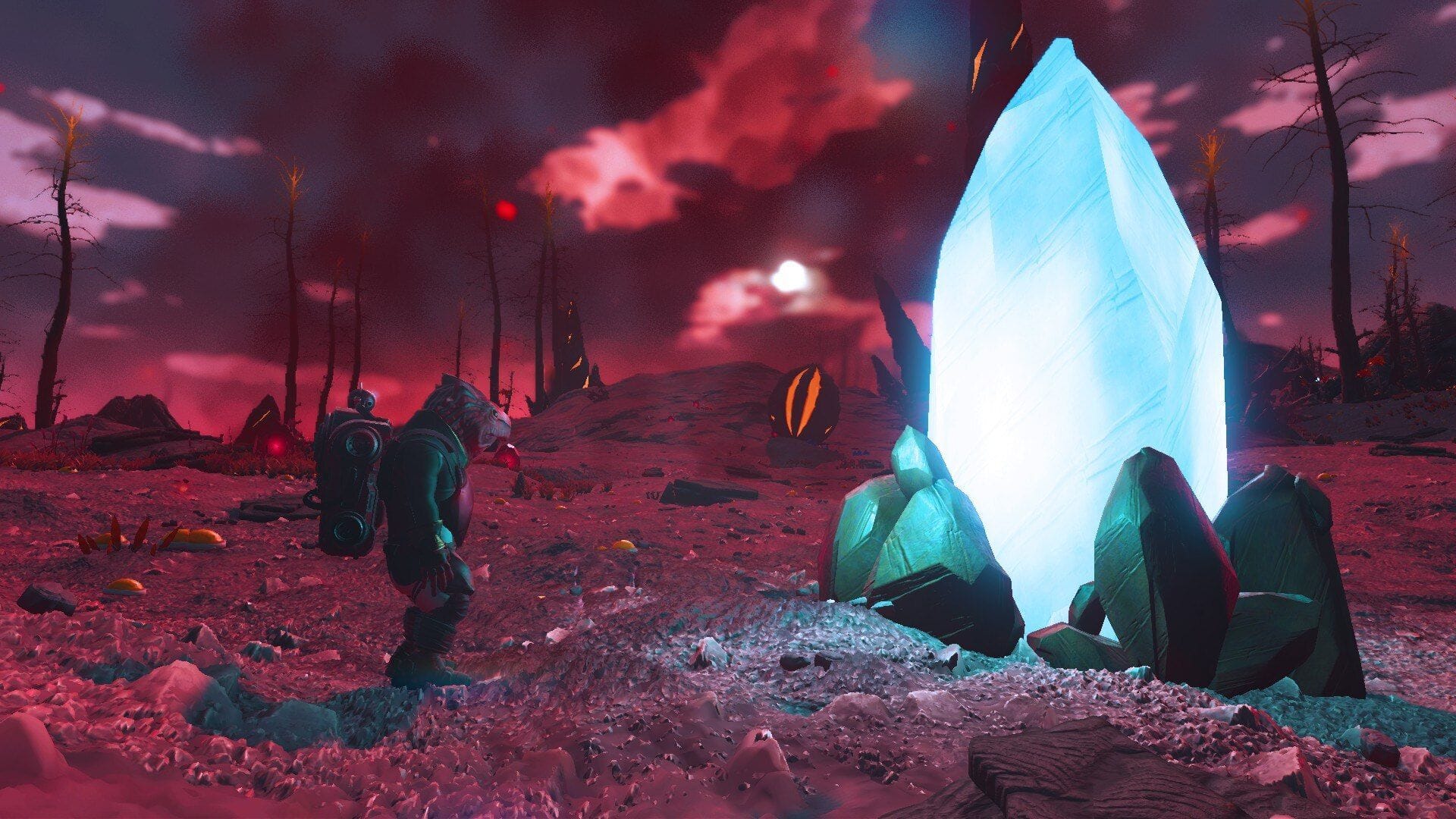
Storm Crystals spawn only on extreme weather planets during active storms. They sell for around 129,000 units apiece depending on local economy modifiers, and they stack in groups of five. A single stack sells for about 750,000 units. A hazard-rated suit with max-stacked Hazard Protection upgrades lets you harvest freely through the storm instead of hiding in a mini-base every two minutes.
The best Storm Crystal planets are extreme radioactive or extreme cold worlds with frequent storm cycles. Build a small base with a Signal Booster to plot the crystal locations, then loop the route once per storm. Stacking a dozen Storm Crystal stacks across a ship, freighter, and Exo-Suit inventory turns a single planet session into 8 to 15 million units per hour of active harvesting.
2. Chlorine Duplication (The Mid-Game GOAT)
This exploit has persisted across multiple updates because it is baked into the refiner recipe book. The Chlorine Expansion recipe takes 1 Chlorine plus 2 Oxygen and outputs 6 Chlorine: a net +5 per cycle, or 6× multiplication. Chain three refiners together and a single input stack of Chlorine doubles, then quadruples, then becomes a full inventory’s worth inside a few minutes. Chlorine sells for around 602 units per piece, so a stack of 9,999 clears roughly 6 million units.
You source the starter Chlorine from underwater salt deposits processed in a refiner or from trading. Once the first batch is built, the loop is pure duplication. A few cycles turn a small stockpile into a freighter full of Chlorine, and the bottleneck becomes selling fast enough that Galactic Trade Terminals reset their buy caps between visits.
⚡ Quick tip: Sell Chlorine across multiple space stations in different systems. The same terminal caps how much you can dump before prices crater. Plot a three-station warp route and rotate.
3. Whispering Eggs and Larval Cores
Abandoned buildings on Corrupted Sentinel planets and some infested moons host Whispering Egg clusters. Each cluster contains several eggs, and each egg drops a Larval Core worth around 70,000 units at a Galactic Trade Terminal (local economy pushes the range to 65K to 75K). The catch is that breaking an egg spawns a pack of Biological Horrors that pursue you. The farm loop involves grabbing a core, jetpacking to elevation, and sniping the horrors or simply outrunning them.
A single abandoned building pays 1 to 2M units in 10 minutes if you clear all visible egg clusters. A hauler ship makes this much safer. Park on a platform the horrors cannot climb to, run the farm, fly back to the station, sell, repeat. You can also refine Larval Cores into Nanites if you need that currency instead of units.
4. Nexus Missions and Weekend Events
The Space Anomaly’s Nexus offers multiplayer missions with tiered rewards. Stacking three 5-star missions in a single system nets 6 to 12M units plus Quicksilver, which buys cosmetic items but also unlocks permanent base parts and storage upgrades that save real time on other farms. Weekend event missions (Hello Games rotates them quarterly) frequently pay 10M+ for single objectives.
5. Derelict Freighter Raids
Purchase an Emergency Broadcast Receiver from a Scrap Dealer inside any space station. It consumes one per use but points you to a derelict freighter in the current system. Clearing a derelict (shooting through rusted containers, solving a hallway or two) rewards 8 to 30M units in direct payout plus high-value loot like Rare Metal Elements and rare Frigate modules.
The weekly reset on Scrap Dealer prices means derelicts are best farmed in batches. Collect four or five Receivers across systems, run them on the same weekend, and you have 60 to 120M from one afternoon.
Late Game Methods (Billions in the Bank)
Late game is where units stop being a limiting factor and you switch to optimizing real-world time. These methods require large industrial bases, stacked extractors, or vertical crafting supply chains. They reward that investment with payouts measured in hundreds of millions per session and passive income that runs while you are logged out.
1. Activated Indium Mining Base
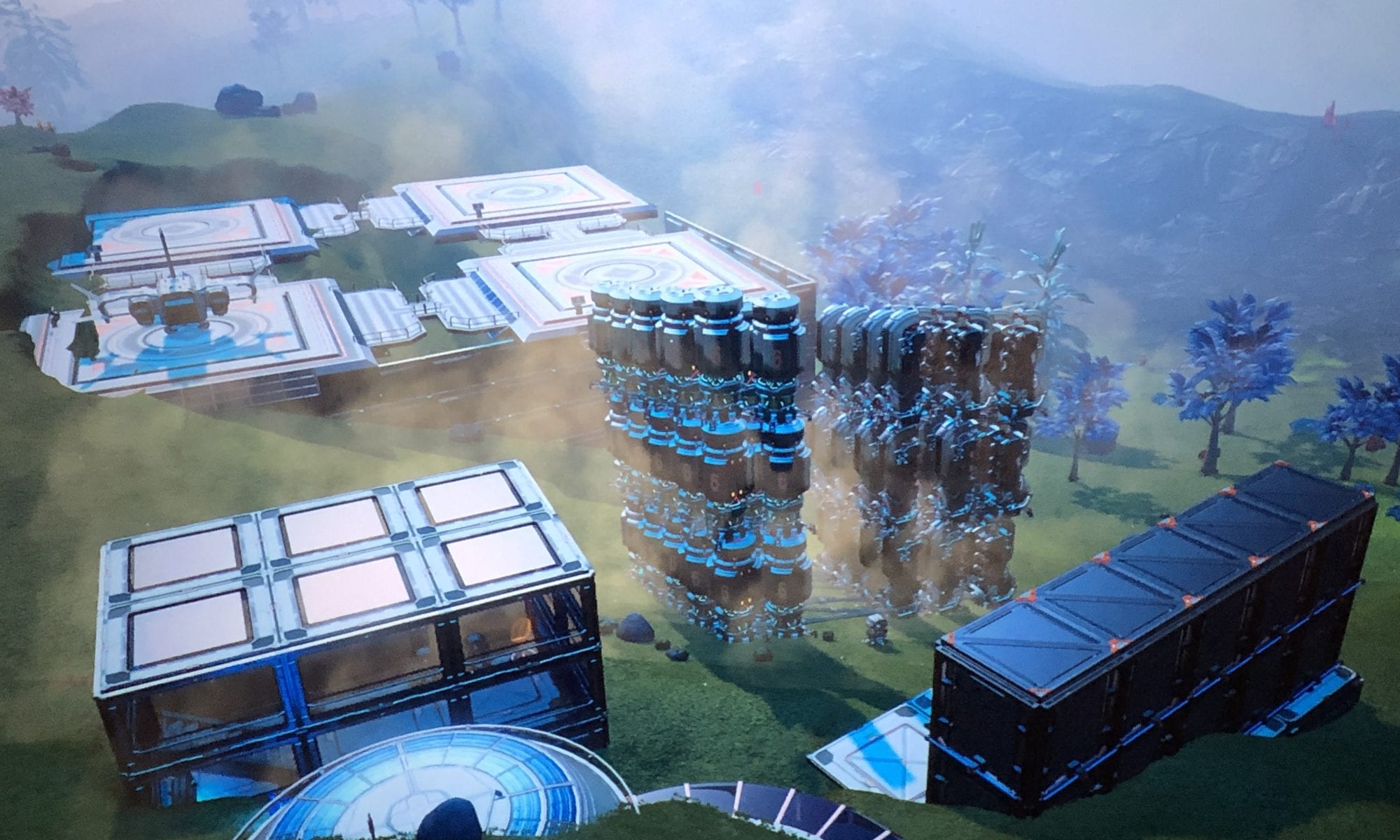
Activated Indium is one of the highest-value raw resources tradable at any Galactic Trade Terminal, with a base value of 949 units per piece. It only spawns on planets in blue Class-B star systems. Find a dense deposit, build a Base Computer, drop 8 to 16 Mineral Extractors connected to Supply Depots, power it with a solar grid, and walk away. The base generates passively whether you are playing or offline.
A mid-sized Activated Indium base produces 8 to 20M units per hour of passive fill time. A maxed setup with 30+ extractors breaks 50M/hr. There is no attention cost. You show up, transfer the silos, warp to a wealthy system, and sell. The only ongoing effort is rotating sale stations to avoid terminal price decay.
2. Stasis Device and Fusion Igniter Crafting
A single Stasis Device sells for 15,600,000 units, tied with the Fusion Igniter as the most valuable craftable item in the game. The crafting tree is massive. Each Stasis Device needs Cryogenic Chamber, Quantum Processor, Iridesite, and Portable Reactor sub-components, and every one of those needs its own ingredient stack.
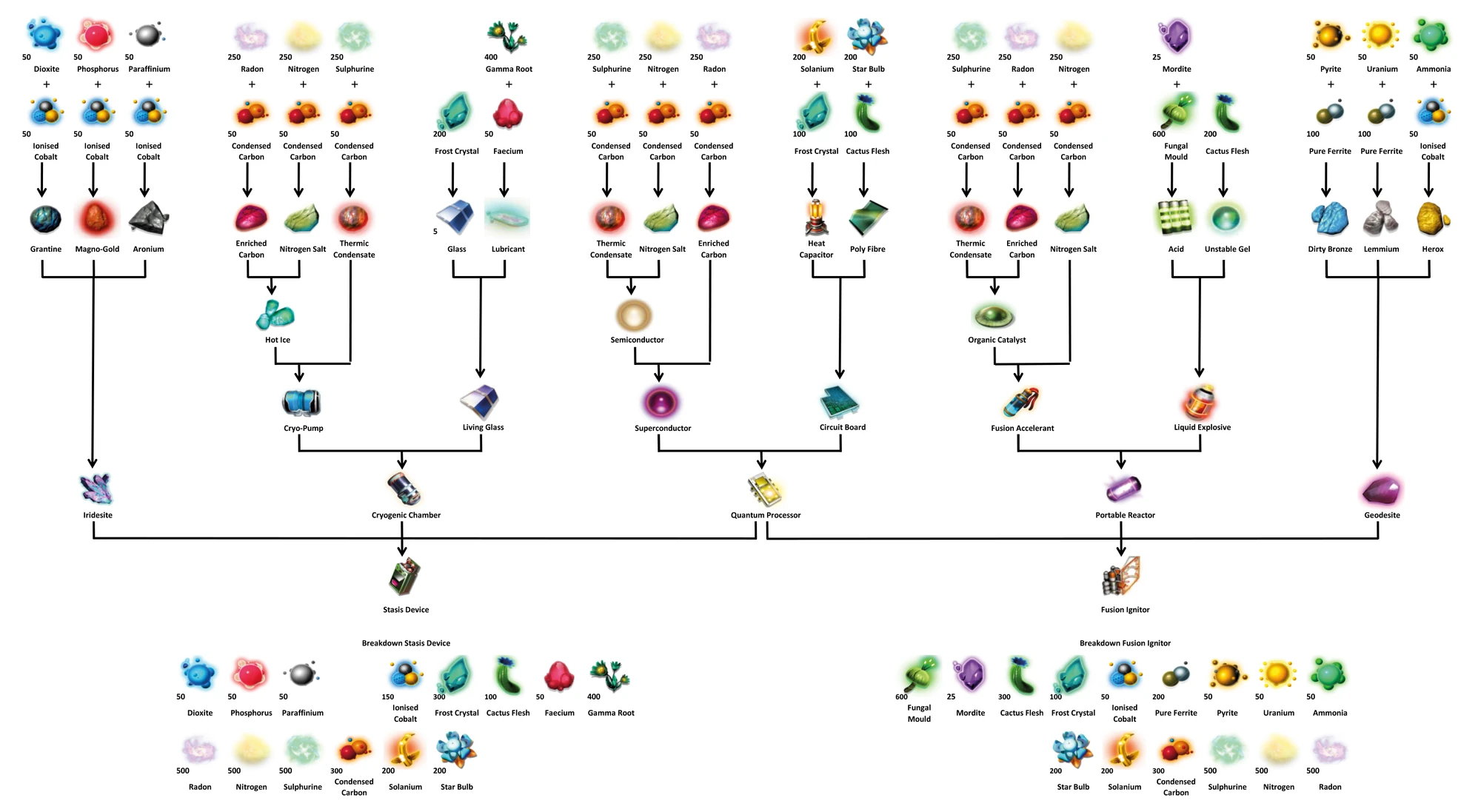
The efficient path is to farm the agricultural components (Star Bulb, Frost Crystal, Gamma Root, Cactus Flesh, Solanium, Fungal Mould, Venom Urchin) on a Base Computer planet with proper biomes and a Bio-Dome array. Minerals like Pure Ferrite, Pyrite, and Magnetised Ferrite come from extractors and mining sites. Once your pipeline is feeding a Large Refiner, you can craft one Stasis Device every 15 to 20 minutes, clearing 45 to 60M units per hour of attention time.
Fusion Igniter is the same 15.6M value with a slightly different ingredient list (Geodesite, Circuit Board, Pulse Engine Substrate). Most billionaire bases run both at once because some component plants grow on biomes the other does not need.
3. Interceptor Ship Harvesting
Dissonant planets (flagged by orange text on the galaxy map) contain Interceptor Sentinel ships that can be claimed after disabling their pilot Sentinels. A C-class Interceptor scraps for several million units, while S-class variants can clear 50M+ depending on installed tech modules. Values were nerfed from their Interceptor Update launch but remain among the highest per-ship payouts in the game. A single Dissonant planet with three or four spawn points produces 30 to 150M units per session once you have the Echo Locator and Dissonance Resonators unlocked.
4. S-Class Freighter and Ship Scrapping
Every time you warp into a new system, a random capital ship encounter can offer you an S-class freighter worth 25 to 40M units scrapped. The same applies to starships landing at your bases. Installed tech modules scrap for individual upgrade tokens on top of the raw ship value. Run a wealthy three-star system with a Frigate fleet and you cycle through multiple S-class offers per gaming session without deviating from other tasks.
2026 Meta: Voyagers and Remnant Additions
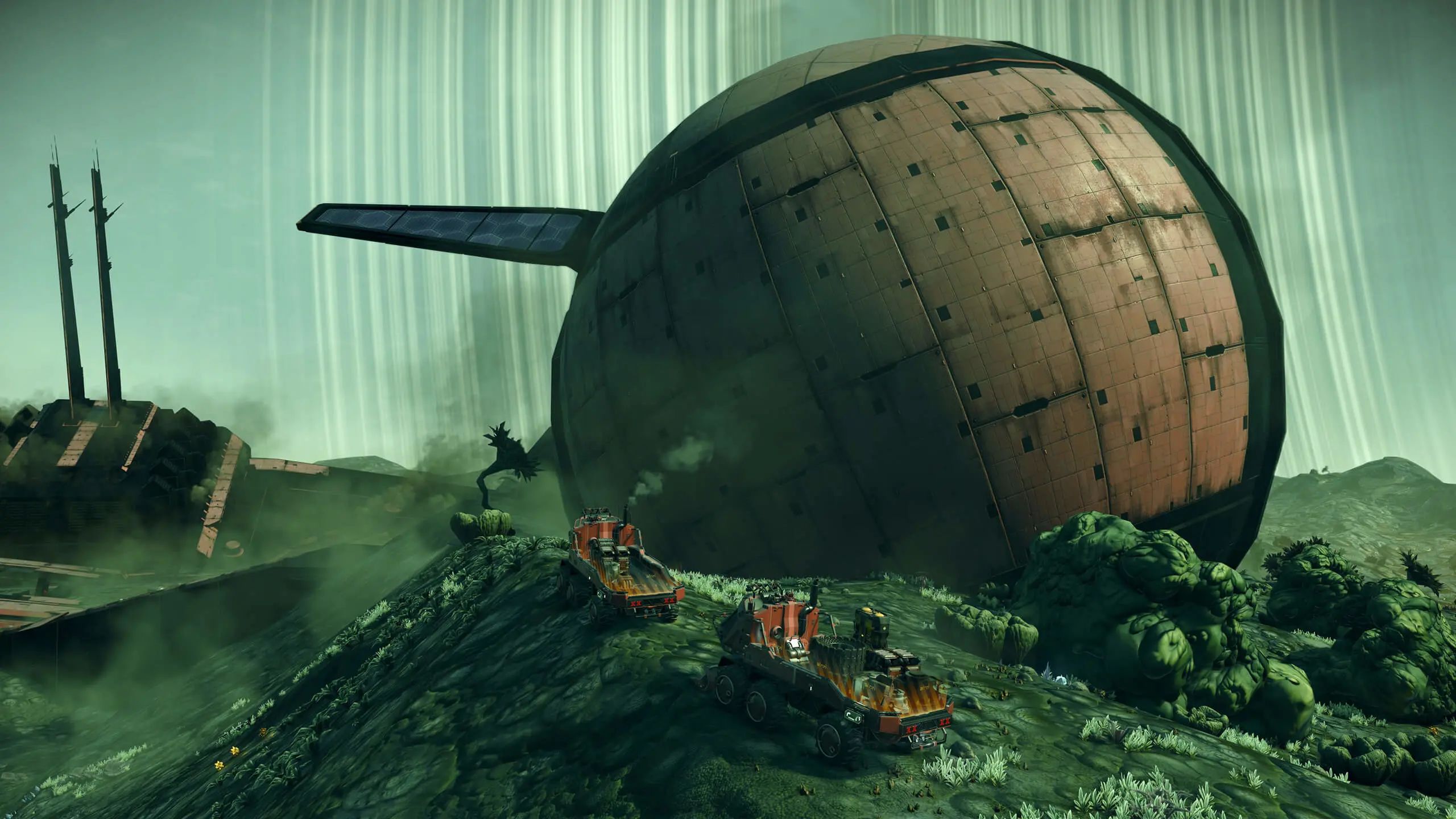
The current economy is not the same one older guides describe. The Voyagers update (6.0, August 2025) introduced modular Corvette-class starships, and the Remnant update (6.2, February 2026) added a Gravitino Coil and Colossus Exocraft upgrades that turn scrap cleanup into a mobile profit loop. Two methods stack cleanly on top of existing late-game farms.
Corvette-class cargo runs: Voyagers Corvettes are assembled piece by piece and can carry enough cargo modules to make a Hauler look compact. Once you have a customised Corvette with cargo-focused hab modules, every Chlorine or Storm Crystal sell loop moves more inventory per warp. For multiplayer crews, Corvette mission boards pay the whole party, which is a faster way to spend stocked missions than soloing Nexus runs.
Remnant waste processing: The Remnant update added the Gravitino Coil, which magnetises and carries stacks of industrial waste, plus a flatbed and mountable furnace on the Colossus Exocraft. Combined with Derelict Freighter raids and crashed-site sweeps, you stop ignoring scrap piles. They become a mobile processing line that refines on the road. The limited-time Remnant community expedition specifically rewards wreck cleanup with exclusive gear.
For the full patch history behind these changes and how they interact with older farm methods, see our No Man’s Sky update guide covering every major change through Voyagers and Remnant.
Mistakes That Waste Your Time
Do This
- Rotate between 3 to 4 space stations when selling bulk. Terminal prices decay.
- Build your Activated Indium base before you need the money, not after.
- Stack Cargo inventory slots first, then Tech, then General.
- Keep a portable refiner running during every session as passive income.
- Install Economy Scanner modules before any trade-run attempt.
Avoid This
- Farming Vy’keen Daggers or Gek Relics. The payout is gated by buy-caps.
- Selling Storm Crystals one by one. Batch them and sell a full stack.
- Crafting Stasis Devices before your agricultural farm is finished.
- Grinding for nanites when you need units. Different currencies, different farms.
- Ignoring the Quicksilver shop. Storage upgrades pay back in every other farm.
Frequently Asked Questions
What is the single fastest way to make money in No Man’s Sky right now?
Stasis Device crafting produces the highest units per hour of active play, 45 to 60 million units per hour once your ingredient farm is built. For passive income while offline, an Activated Indium mining base at 8 to 20 million units per hour is the fastest method that does not require your attention.
How much is a Stasis Device worth in No Man’s Sky 2026?
A Stasis Device sells for 15,600,000 units at any Galactic Trade Terminal, tied with the Fusion Igniter as the most valuable craftable item in the game. The value has remained stable through the Voyagers and Remnant updates.
Is the Chlorine duplication trick still working?
Yes. The Chlorine-and-Oxygen refiner recipe still produces more Chlorine than it consumes as of the current patch. It survived Voyagers and Remnant and remains the most reliable mid-game money method that does not require base infrastructure.
Do I need a freighter to make money in No Man’s Sky?
No, but most high-value methods become available much faster once you own one. Early methods like Salvaged Data flipping, crashed ship scrapping, and fauna scanning all work without a freighter. Mid- and late-game methods benefit from freighter inventory and Frigate fleet income.
What is the best money-making method for a brand new player?
Clear crashed freighter sites for Salvaged Data. Each wreck pays 250K to 400K units and takes 10 minutes. Stack two or three sessions of that and you can afford a decent starting hauler, which unlocks every other method on this list.
How do I sell large amounts without the Galactic Trade Terminal capping my price?
Rotate between three or four space stations in different star systems. Every terminal has a buy cap that cools down after a few minutes, and prices decay if you sell repeatedly to the same terminal. A three-station warp loop keeps every terminal at full buy price.
Are Storm Crystals still worth farming in 2026?
Yes. Storm Crystals still sell for around 129,000 units each and stack in groups of five for roughly 750,000 units per stack. A full inventory of stacked Storm Crystals clears 8 to 15 million units per hour of active harvesting on an extreme-weather planet.
Gear for Long Farming Sessions
Units farms are long. An Activated Indium silo rotation is forty minutes. A Stasis Device crafting cycle is fifteen. Comfortable input gear, clear audio for storm detection, and a monitor that does not strobe your eyes out all matter more on hour three than hour one. Here is the kit most /SKILL readers have landed on for marathon No Man’s Sky sessions.

8BitDo Ultimate 2
Hall-effect sticks and a charging dock. NMS-friendly ergonomics for long inventory management sessions.

SteelSeries Arctis Nova 7
38-hour battery and dual wireless, so you never miss a Sentinel alert mid-storm farm.

Samsung Odyssey G55C
32-inch QHD curved. The extra real estate actually helps you spot Storm Crystals in a blizzard.
Putting It All Together
The real fastest way to make money in No Man’s Sky is a pipeline, not a single method. Start with Salvaged Data and crashed ships to fund a freighter. Use that freighter to enable a Chlorine duplication loop for your first 50M. Reinvest in an Activated Indium base for passive income. Finally, layer a Stasis Device or Fusion Igniter farm on top for the big payouts. Every method on this list becomes obsolete once the next tier unlocks, but they are all valid in sequence. Run them in order and your units problem disappears before you finish the tutorial missions.
If you grind money across games, our GTA Online business tier list applies the same stage-by-stage ranking to every GTA Online business.
If you shop for home goods, kitchen gear, or deals outside of gaming and tech, Berry Finds covers those categories with the same deal-tracking format used here.