TL;DR
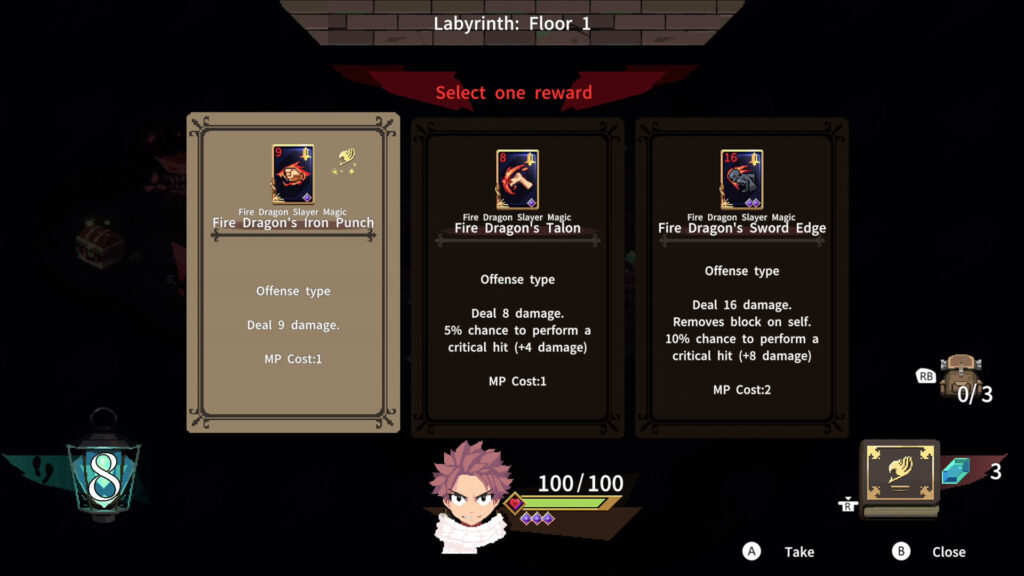
- Start with Natsu for the easiest learning curve. His straightforward attack cards teach core mechanics without overwhelming you with complex combos.
- Build your tomes before hard dungeons. Tome power determines success more than player skill, so invest time in upgrading your card collection first.
- Balance attack and defense cards. Pure damage decks fall apart in later dungeons where enemies hit hard and healing options are scarce.
- Be selective with cards. A lean 15-card deck with strong synergies beats a bloated 25-card deck every time.
If you’re a Fairy Tail fan looking for something different, Fairy Tail Dungeons delivers a fresh take on the anime franchise. After spending hours building out character tomes and pushing through its card-based dungeons, I’ve put together this beginner guide to help you master Magnolia’s mysterious catacombs from the start. If you enjoy roguelike deck-builders, you’ll also want to check out our Hades 2 beginner guide for another great entry point into the genre.
What is Fairy Tail Dungeons?
Fairy Tail Dungeons is a roguelike deck-builder set in the world of the popular anime and manga series. Developed by ginolabo and published by Kodansha, the game originally launched on Steam in 2024 before arriving on Nintendo Switch in January 2026. As of March 2026, the game is on version 1.2.0 with five additional playable characters added since launch.
A mysterious dungeon has appeared beneath the Fairy Tail guild hall. When characters enter these catacombs, their magic powers are sealed, forcing them to rely on cards to fight their way through. You’ll guide Natsu, Happy, and other guild members through increasingly difficult dungeon floors, building your deck and strategy as you go.
If you’ve played Slay the Spire or similar deck-building roguelikes, you’ll feel right at home. The Fairy Tail flavor adds unique mechanics and fan-service references that make it special for anime fans.
Core Mechanics Explained
Getting a handle on these core systems early will save you a lot of failed runs.
The Dungeon Map
Each dungeon floor presents a small map with various tiles. Moving to different tiles triggers events:
- Combat Tiles. Fight monsters and earn rewards.
- Card Tiles. Acquire new cards for your deck.
- Lacrima Tiles. Gain magical resources for upgrades.
- Rest Tiles. Heal or upgrade cards.
- Event Tiles. Random encounters with various outcomes.
Action Points (AP)
Each turn, you have a limited number of action points to spend on playing cards. Managing AP is the core strategic challenge. You can’t play everything, so you must prioritize which cards matter most for the current fight.
The Tome System
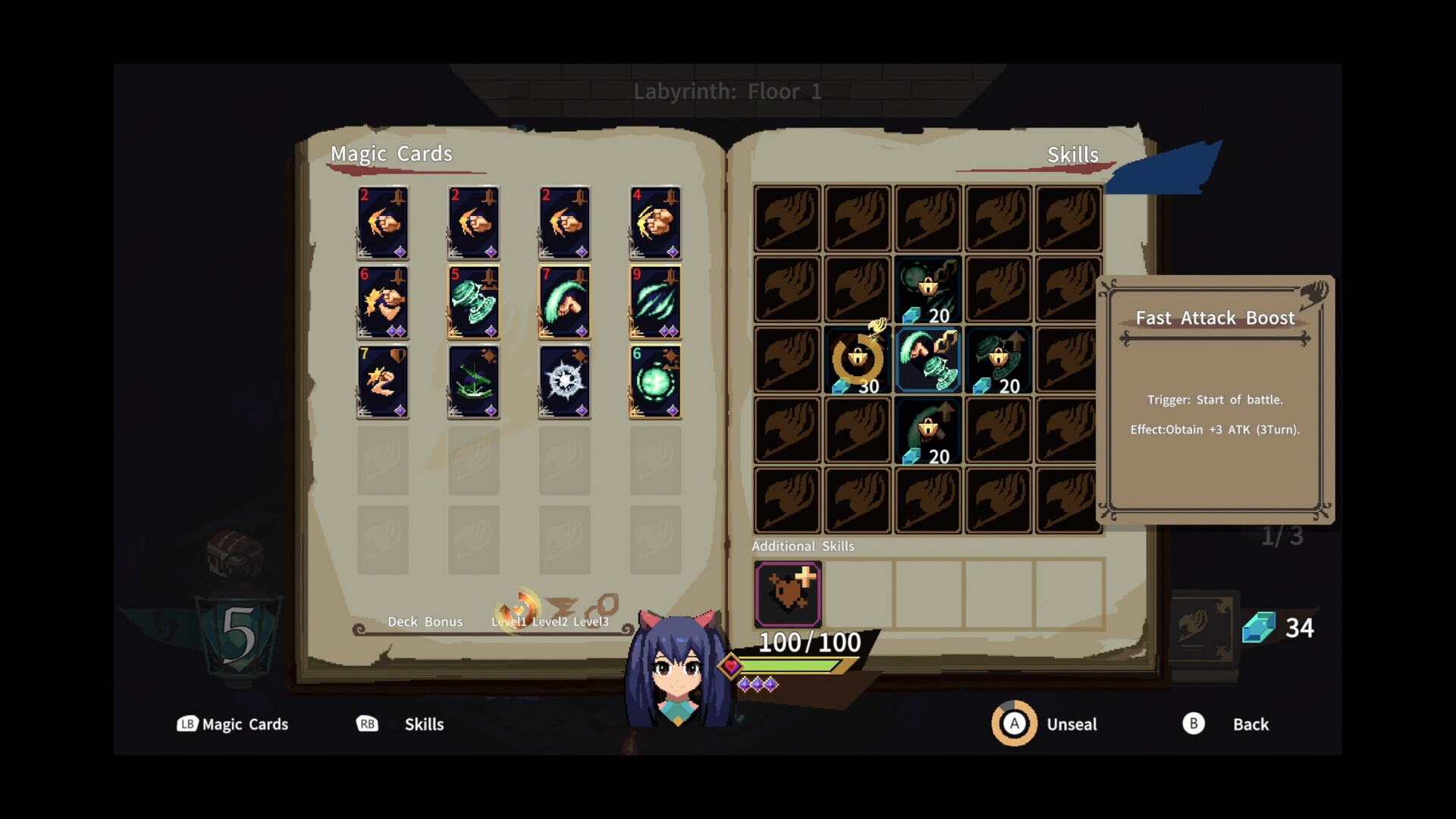
Your tome is a persistent book that records your progress, cards, buffs, and stats from each run. Tomes are character-specific and represent your accumulated power. Building strong tomes is how you prepare for harder dungeons.
Best Starting Characters
While Fairy Tail Dungeons features multiple playable characters, your choice matters for learning the game.
Natsu (Recommended for Beginners)
Natsu’s straightforward fire-based attack cards make him ideal for learning combat fundamentals. His deck focuses on dealing damage efficiently, letting you understand the basics without complex synergies.
Lucy (Intermediate)
Lucy’s celestial spirit cards offer more strategic variety but require understanding how to chain effects. Better for players comfortable with deck-builder mechanics.
Gray (Advanced)
Gray’s ice-make cards involve more defensive and combo-oriented play. Rewarding once mastered, but has a steeper learning curve.
Build a strong Natsu tome first. This gives you a reliable character for team dungeons later while you learn the game’s systems.
Deck Building Basics
Your deck determines everything. Here’s how to build effectively.
Card Types
- Attack Cards. Deal damage to enemies.
- Defense Cards. Provide block to reduce incoming damage.
- Support Cards. Buff yourself, debuff enemies, or draw more cards.
The Golden Rules of Deck Building
- Smaller decks are often better. A 15-card deck with strong synergies beats a 25-card deck full of mediocre options. You’ll see your best cards more often.
- Don’t take every card offered. Skip weak cards that dilute your deck. It’s okay to pass on rewards.
- Balance offense and defense. Pure attack decks crumble against bosses who hit hard. Include enough block to survive their big turns.
- Upgrade strategically. Upgrade your key cards first, the ones you want to see every fight.
Understanding the Tome System
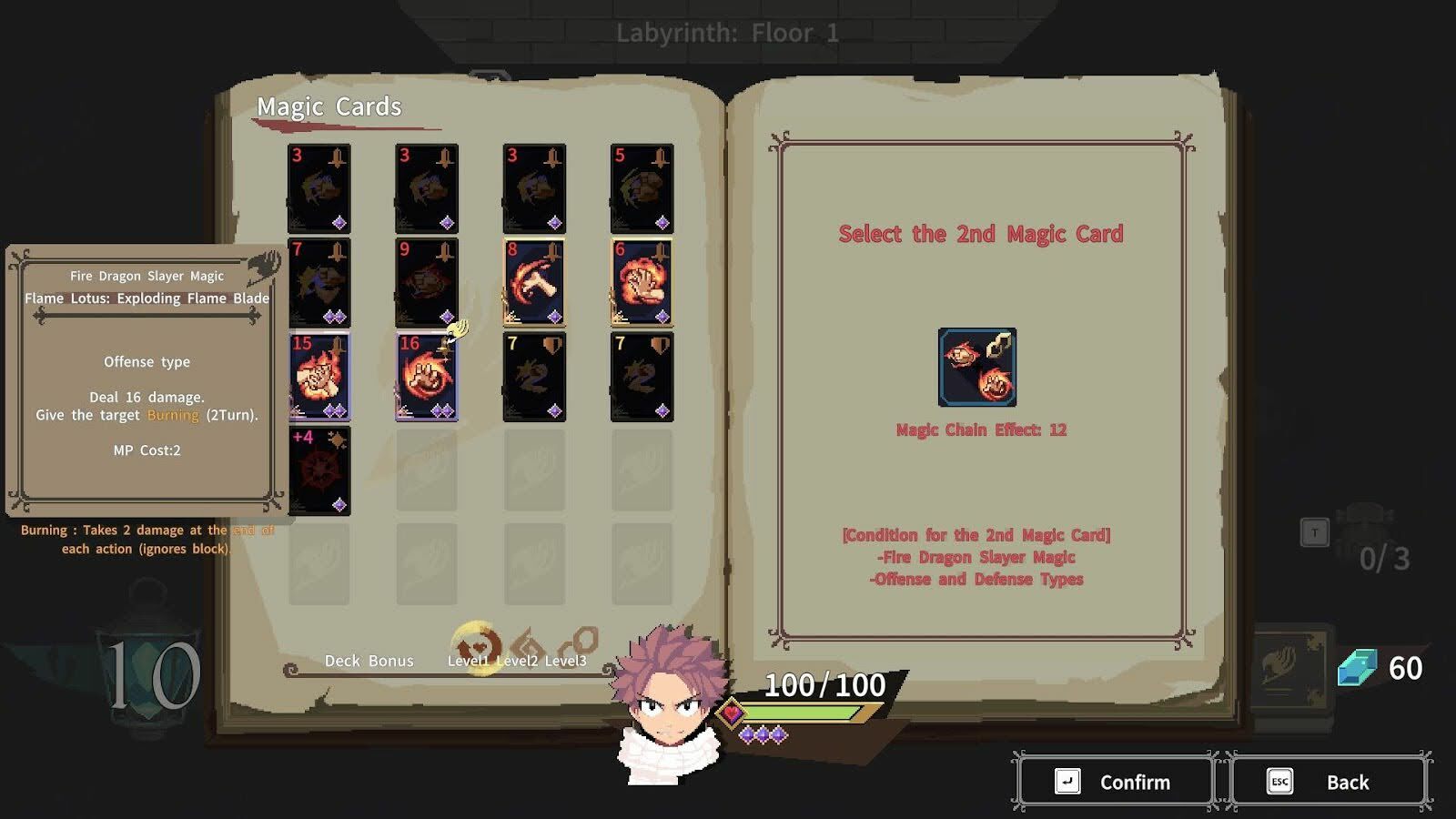
The tome is what sets Fairy Tail Dungeons apart from other deck-builders. After each run, your tome saves your accumulated power.
What Tomes Track
- All cards you’ve collected and upgraded
- Stat bonuses and buffs earned
- Special abilities unlocked
- Overall power level
Why Tomes Matter
When you tackle Team Dungeons (the harder content), you bring three characters with their respective tomes. Weak tomes mean weak teams. Investing time in solo dungeon runs to build powerful tomes is how you prepare for end-game challenges.
Tome Building Strategy
- Complete full dungeon runs to maximize tome gains.
- Focus on one character at a time rather than spreading thin.
- Prioritize stat upgrades that complement your playstyle.
- Don’t abandon a run early. Even losses contribute to tome progress.
Combat Tips and Strategies
Combat in Fairy Tail Dungeons is straightforward to learn but has depth.
Read Enemy Intents
Enemies telegraph their next action. If they’re about to hit for 15 damage, make sure you have at least 15 block or a way to kill them first. Reacting to enemy intents is the key to surviving deeper floors.
Efficient AP Usage
- Calculate before you play. Know how much damage you need to deal and how much block you need.
- Don’t over-block. If an enemy is attacking for 10, blocking for 25 wastes AP that could deal damage.
- Save support cards for when they matter. Don’t buff when you could just finish the fight.
Boss Fights
Bosses hit harder and have more health. Against them:
- Pace yourself. It’s a marathon, not a sprint.
- Maintain defensive options for their big turns.
- Learn their patterns through experience.
Common Mistakes to Avoid
- Taking every card offered. More cards isn’t better. A bloated deck means you rarely draw your best cards. Be selective.
- Ignoring defense. Pure offense feels powerful until a boss one-shots you. Balance is key.
- Upgrading random cards. Upgrades are limited. Use them on cards you rely on, not random picks.
- Rushing to hard content. Team Dungeons will destroy you if your tomes are weak. Invest time in solo runs first.
- Abandoning runs early. Even failing runs contribute to your tome. Play them out to maximize progress.
Pro Tips
- Rest tiles offer two options. Heal OR upgrade a card. Upgrading is often better if you’re not in danger of dying.
- Event outcomes can be learned. Pay attention to what events do so you can make informed choices.
- Lacrima management matters. Don’t spend all your Lacrima early. Save some for late-game upgrades.
- Card removal is powerful. Removing weak starter cards can be as valuable as adding new ones.
- Team composition in Team Dungeons. Bring characters whose tomes complement each other.
- The final boss is illustrated by Hiro Mashima. A cool reward for fans who reach the end.
Best Setup for Fairy Tail Dungeons
Fairy Tail Dungeons runs on PC (Steam) and Nintendo Switch. Individual runs take 30 to 60 minutes, making it a perfect fit for portable play. The Nintendo Switch OLED is the natural choice since the game launched there with the 1.2.0 update. If you prefer playing the Steam version on the go, the Steam Deck OLED handles it without breaking a sweat. For more controller options, check our best controllers for Steam Deck guide.

Nintendo Switch OLED
Native platform with portable play

Steam Deck OLED 512GB
Play the Steam version anywhere
Frequently Asked Questions
Is Fairy Tail Dungeons like Slay the Spire?
Yes, the core gameplay loop is similar: roguelike dungeon runs with deck-building combat. The tome system and team dungeons add unique layers, and the Fairy Tail setting provides familiar characters and magic systems for fans.
Do I need to know Fairy Tail to enjoy this game?
No, but it helps. The game stands on its own as a solid deck-builder, but fans will appreciate the character references, voice lines, and story beats. The $14 price point makes it worthwhile either way.
How long does it take to beat Fairy Tail Dungeons?
A single dungeon run takes 30 to 60 minutes. Building strong tomes for all characters and clearing Team Dungeons can take 20+ hours depending on your deck-builder experience.
What platforms is Fairy Tail Dungeons on?
Available on Steam (PC) and Nintendo Switch. The Switch version released January 7, 2026, alongside the version 1.2.0 update that added five new playable characters.
Is there multiplayer?
No, Fairy Tail Dungeons is a single-player experience. Team Dungeons use your own built characters, not other players.
Fairy Tail Dungeons is a solid deck-building roguelike that also happens to be a love letter to the anime. Build strong tomes through solo runs, be selective about the cards you take, and don’t neglect defense. If you enjoy the genre, our Slay the Spire 2 beginner guide and CloverPit beginner guide cover more great entry points. Now get down to those catacombs. Natsu’s waiting.