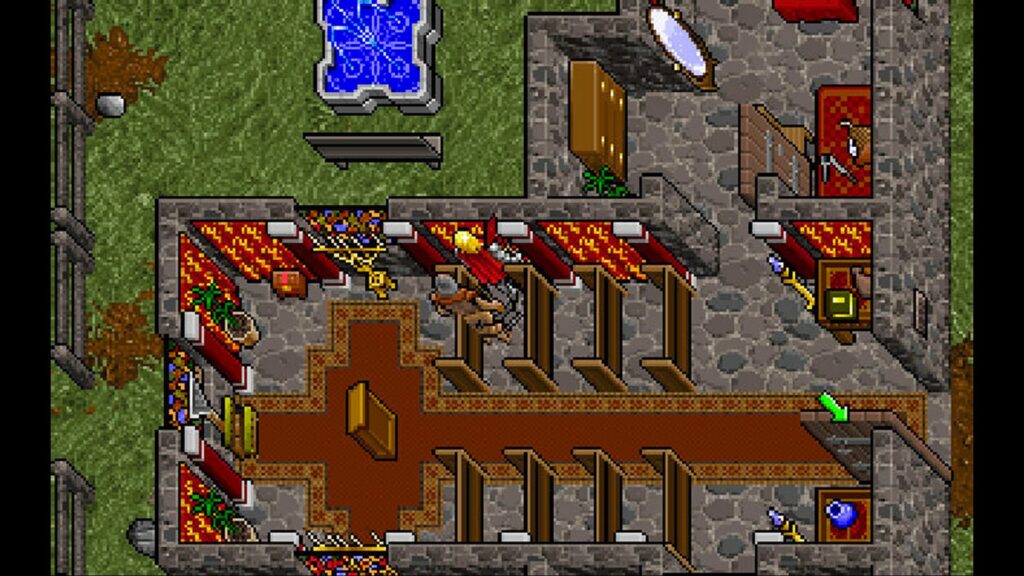
Ultima graphics evolution spans wireframe dungeons, overhead tiles, first-person 3D, isometric worlds, and full polygonal environments. The official series changed its visual language almost every few releases. Fan developers then rebuilt those styles through ports, remakes, and original games such as EUO.
This visual history covers every distinct style across the numbered series, major spin-offs, and four Ultima Online clients. It also covers ten prominent fan projects. Canceled official games and minor ports are outside this scope.
Key Takeaways
- The first leap: Akalabeth paired an overhead map with first-person wireframe dungeons.
- The tile era: Ultima I through VI added color, larger parties, portraits, and a more unified world.
- The 3D branch: Ultima entered texture-mapped first-person spaces before Ultima IX used a full third-person world.
- The lasting look: Ultima VII uses movable objects, while classic Ultima Online adapts isometric art to shared play.
- The fan legacy: EUO, Exult, xu4, Nuvie, Lazarus, and other projects preserve or reinterpret distinct eras.
- Ultima graphics evolution at a glance
- Wireframes and the first tile worlds
- The Age of Enlightenment
- Side worlds and handheld games
- Underworld moves Britannia into 3D
- Ultima VII refines the oblique world
- Ultima VIII: Pagan
- Ultima Online client styles
- Ultima IX: Ascension
- Browser and mobile spin-offs
- Fan engines, remakes, and original projects
- How to play these styles today
- Gear for classic Ultima
- Frequently asked questions
- Summary
Ultima Graphics Evolution at a Glance
| Era | Games | Visual approach |
|---|---|---|
| Origins | Akalabeth, Mount Drash | Wireframes, maze views, and abstract symbols |
| Early trilogy | Ultima I, II, III | Colored overhead tiles with fixed command panels |
| Age of Enlightenment | Ultima IV, V, VI | Denser tiles, larger interfaces, portraits, and a continuous world |
| Experiments | Worlds of Ultima, Runes of Virtue | Engine reuse on computers and action graphics on handhelds |
| First-person 3D | Ultima Underworld I and II | Texture-mapped dungeons inside a framed viewport |
| Oblique 2D | Ultima VII, Serpent Isle, Pagan | Detailed object worlds and larger character sprites |
| Online | Ultima Online clients | 2D isometric graphics followed by several 3D redraws |
| Full 3D | Ultima IX | Third-person polygonal environments |
| Late spin-offs | Lord of Ultima, Ultima Forever | Browser strategy art and mobile action-RPG graphics |
Wireframes and the First Tile Worlds
Akalabeth: World of Doom
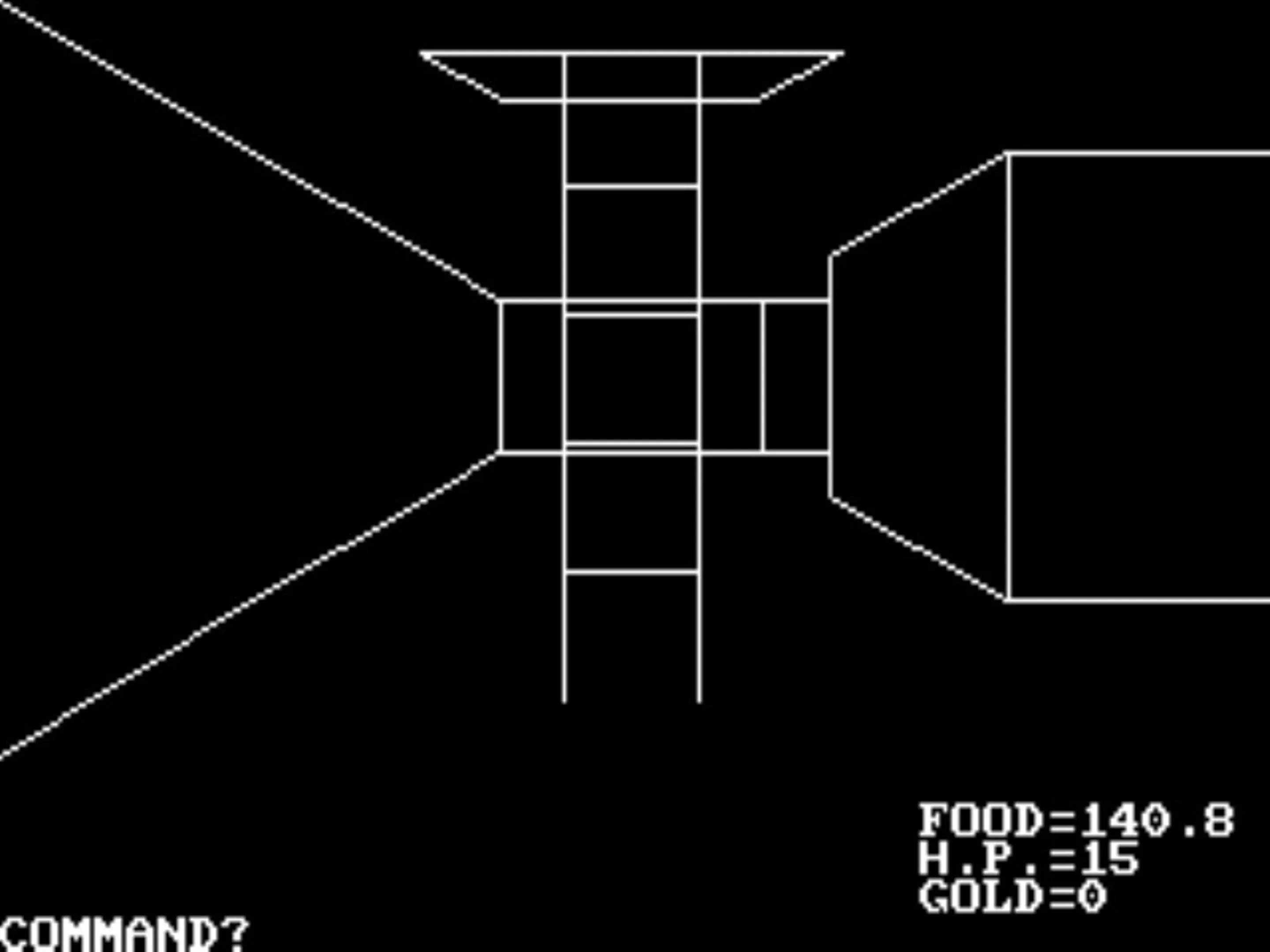
Akalabeth uses two views. Its overworld represents terrain with simple overhead marks, while dungeons switch to first-person wireframes. The black background separates each wall and doorway from the interface text.
Ultima: Escape from Mount Drash
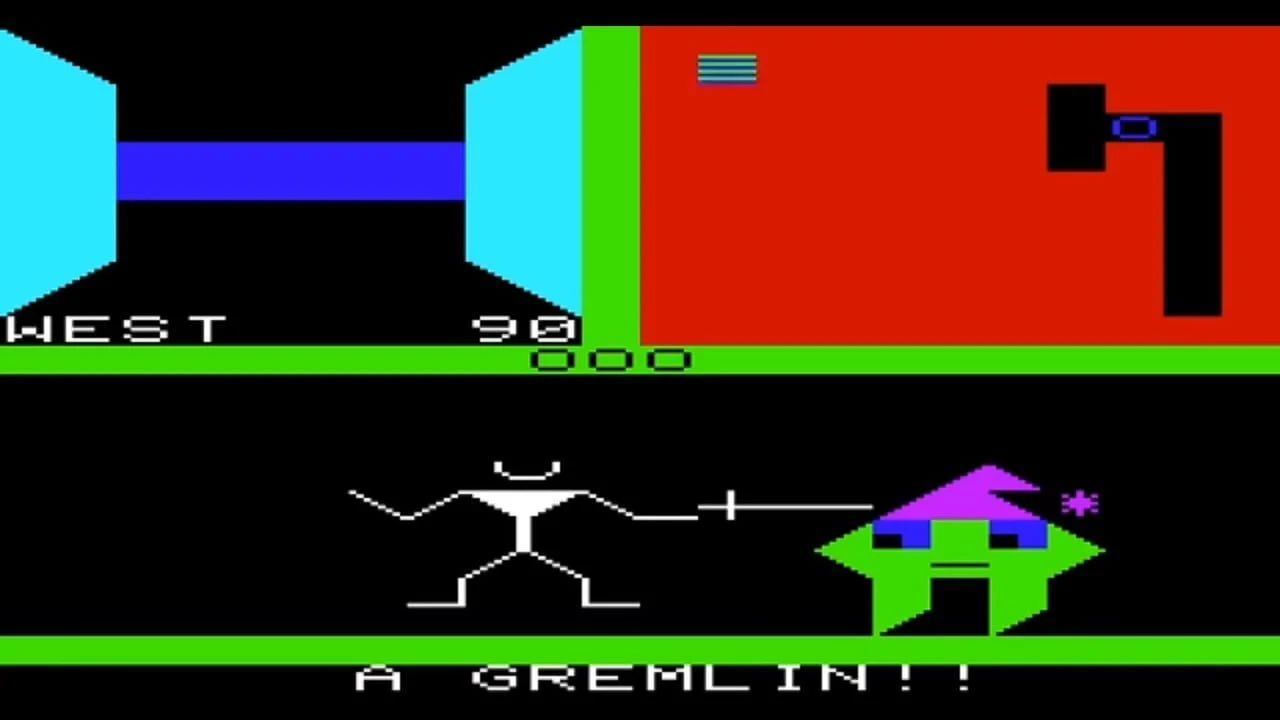
Escape from Mount Drash compresses the series into a VIC-20 maze game. Thick blocks of cyan, red, blue, and green replace the mapped countryside. Monsters become tiny symbols inside narrow first-person rooms.
Ultima I: The First Age of Darkness
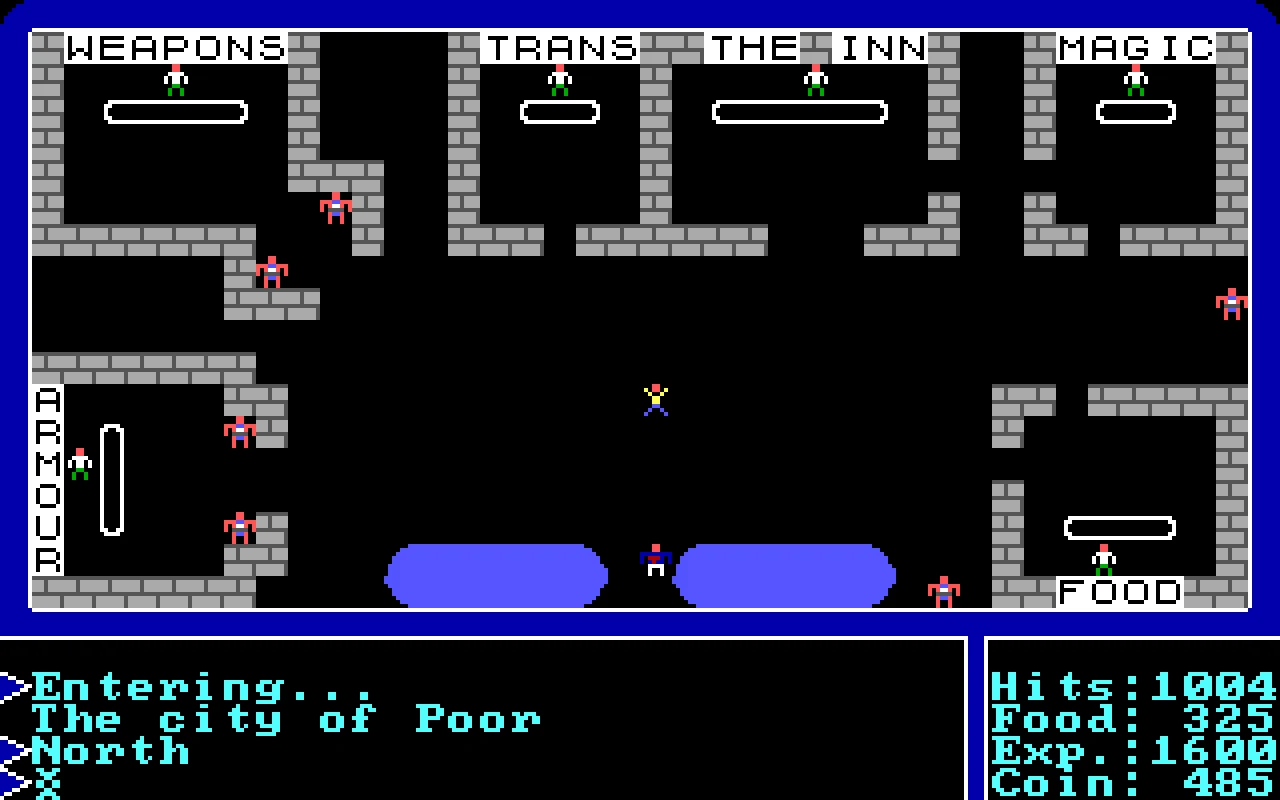
Ultima I keeps Akalabeth’s view changes but gives the surface a broader tile vocabulary. The player reads forests, water, mountains, towns, and enemies as colored symbols. A command strip remains visible beside the play field.
Ultima II: The Revenge of the Enchantress
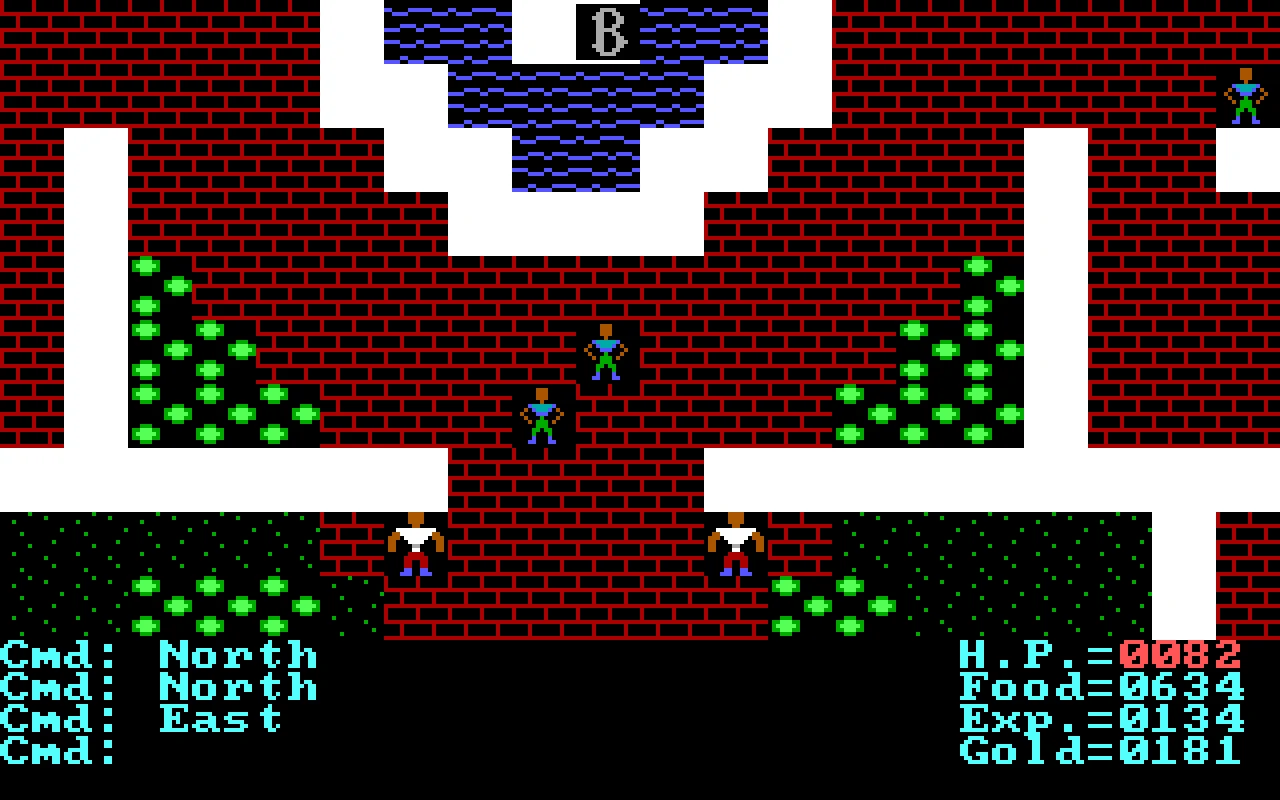
Ultima II follows the first game’s overhead structure. Its PC presentation uses hard color boundaries and repeated icons, so the world reads as a symbolic atlas. The status and command areas still occupy much of the screen.
Ultima III: Exodus
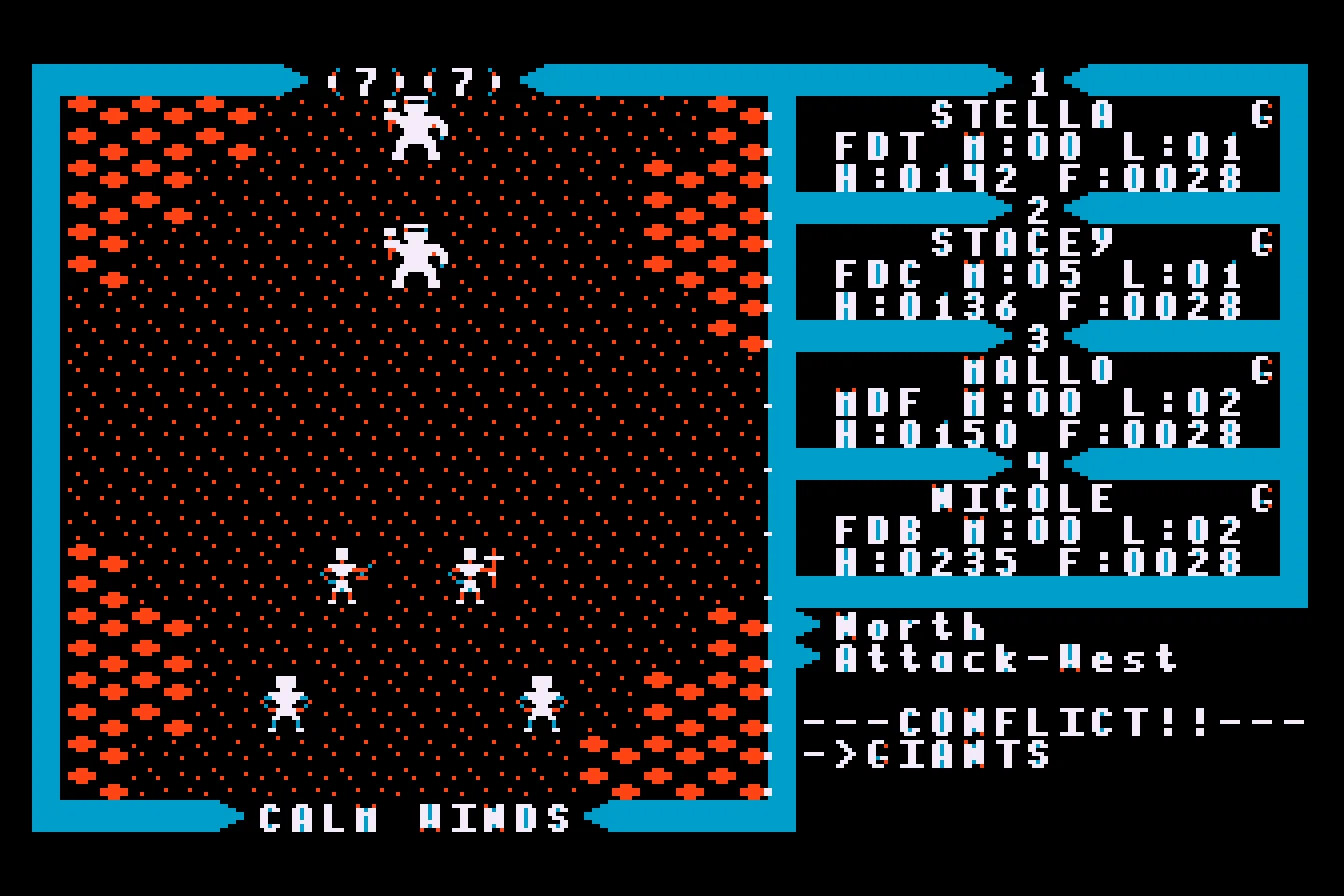
Ultima III gives the interface a party focus. The map remains tile-based, but the roster makes four adventurers part of the visual rhythm. Later computer versions also use more color and clearer terrain icons.
The Age of Enlightenment
Ultima IV: Quest of the Avatar
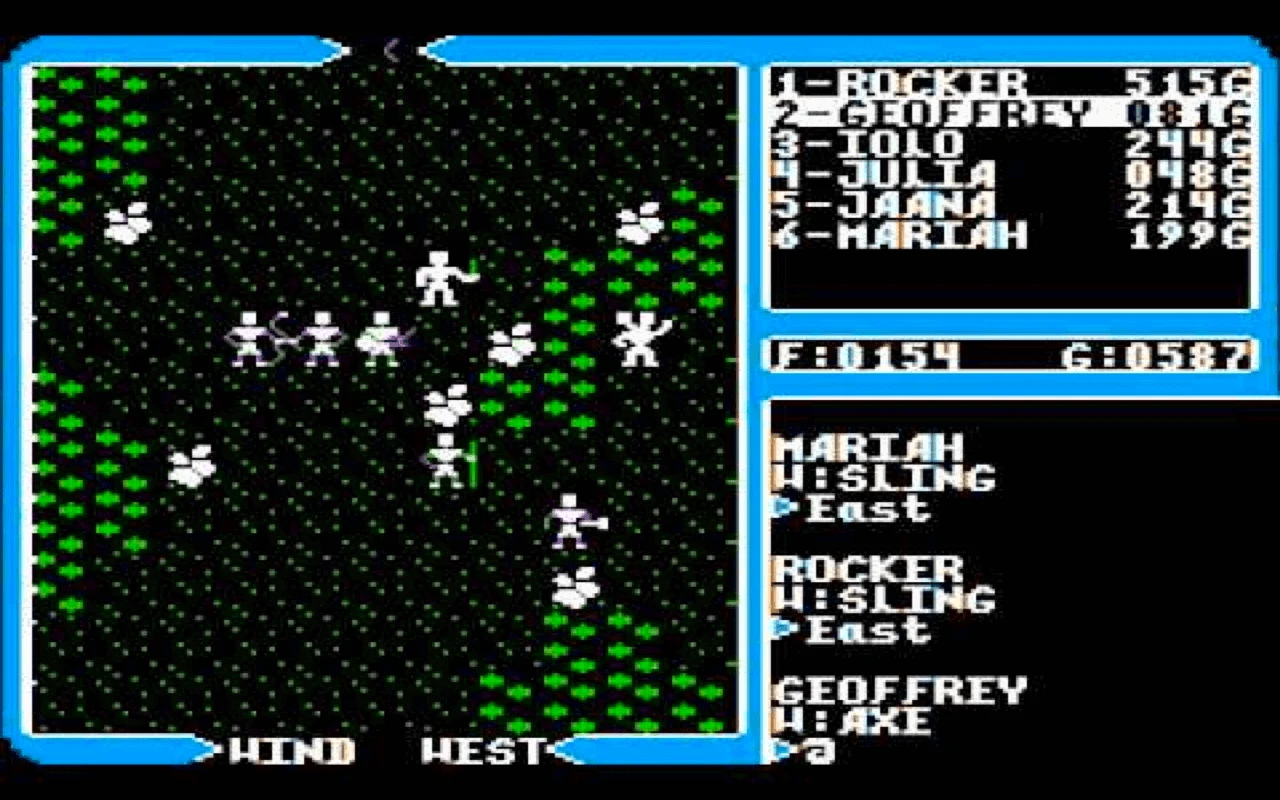
Ultima IV makes the early tile system more readable. Combat moves onto dedicated arenas, while the right side tracks the party and recent commands.
Ultima V: Warriors of Destiny
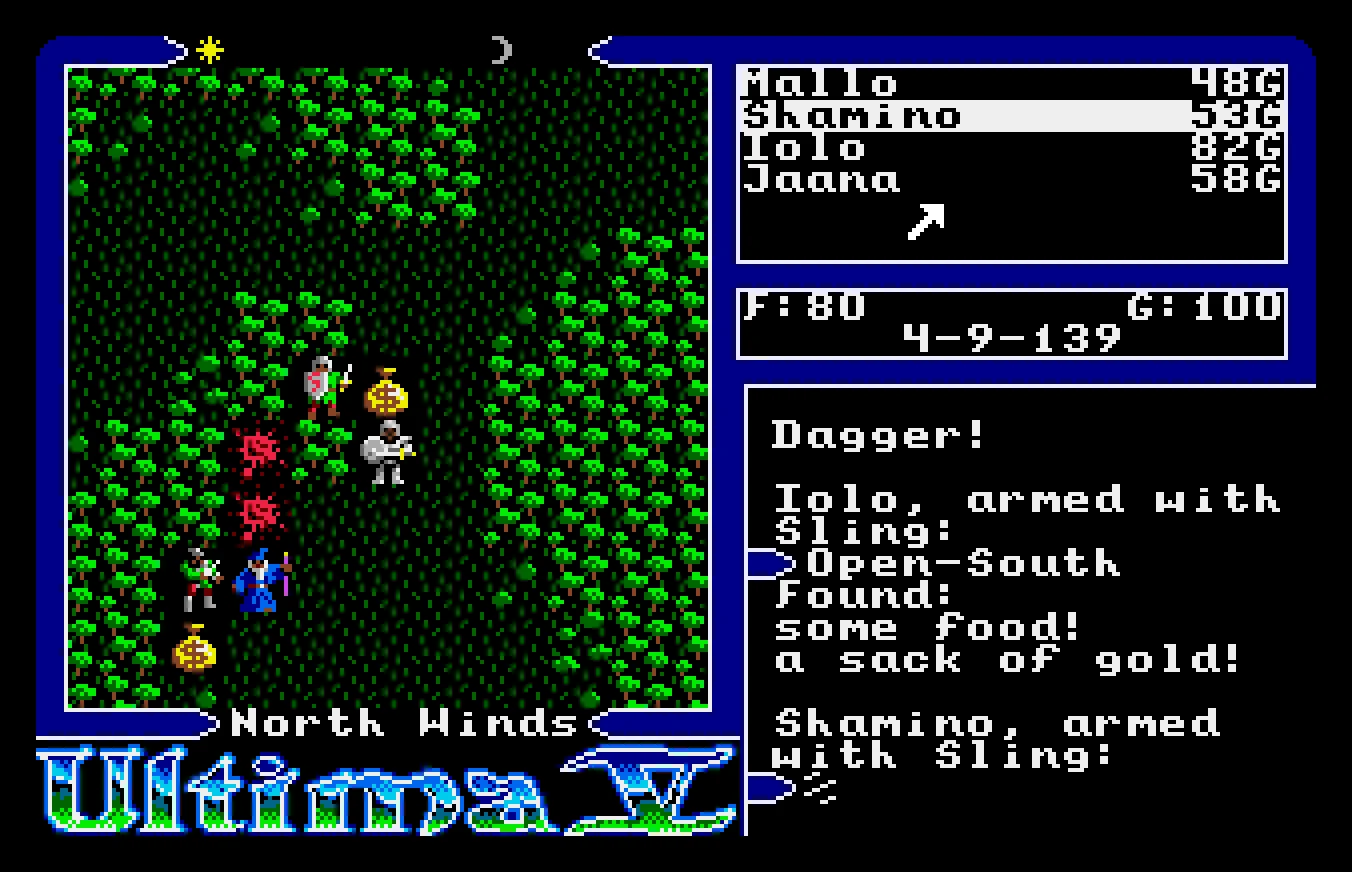
Ultima V expands the tile detail across buildings, wilderness, and interiors. Enhanced ports add more color than the original Apple II release. The familiar roster and command panel still frame the world.
Ultima VI: The False Prophet
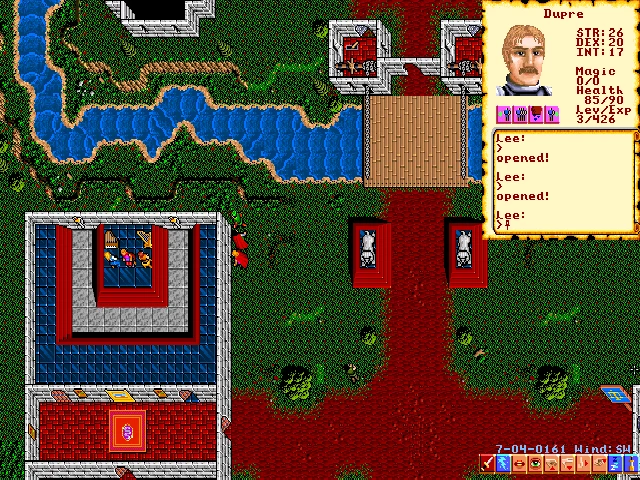
Ultima VI removes the old scale change between wilderness, towns, and interiors. Characters and buildings share one continuous tile world. Portraits and equipment panels make conversations and inventory part of the scene.
Side Worlds and Handheld Games
Worlds of Ultima: The Savage Empire
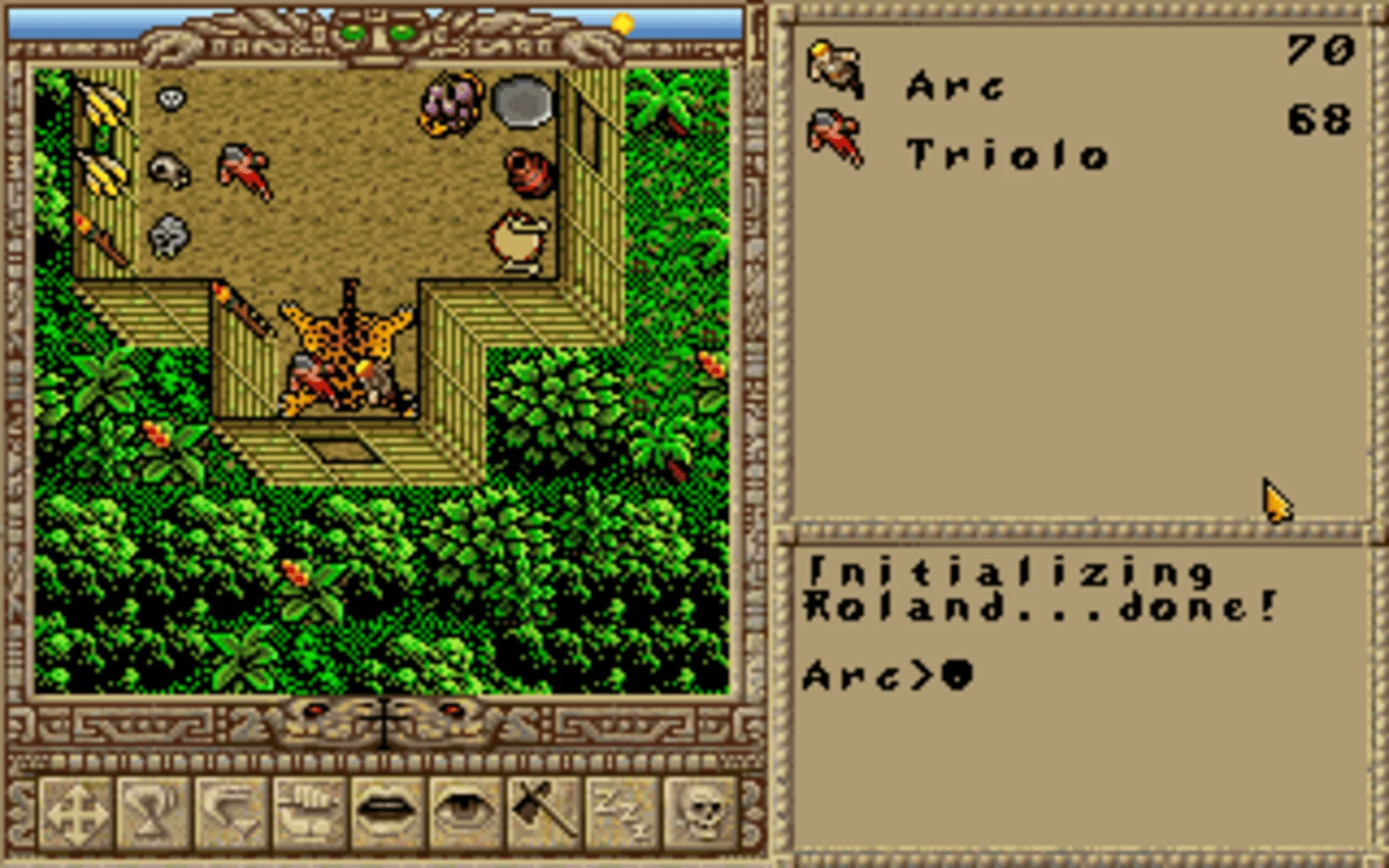
The Savage Empire uses the Ultima VI visual system in a different setting. Dense jungle tiles replace much of Britannia’s medieval scenery. The portrait, equipment, and message areas remain familiar.
Worlds of Ultima: Martian Dreams
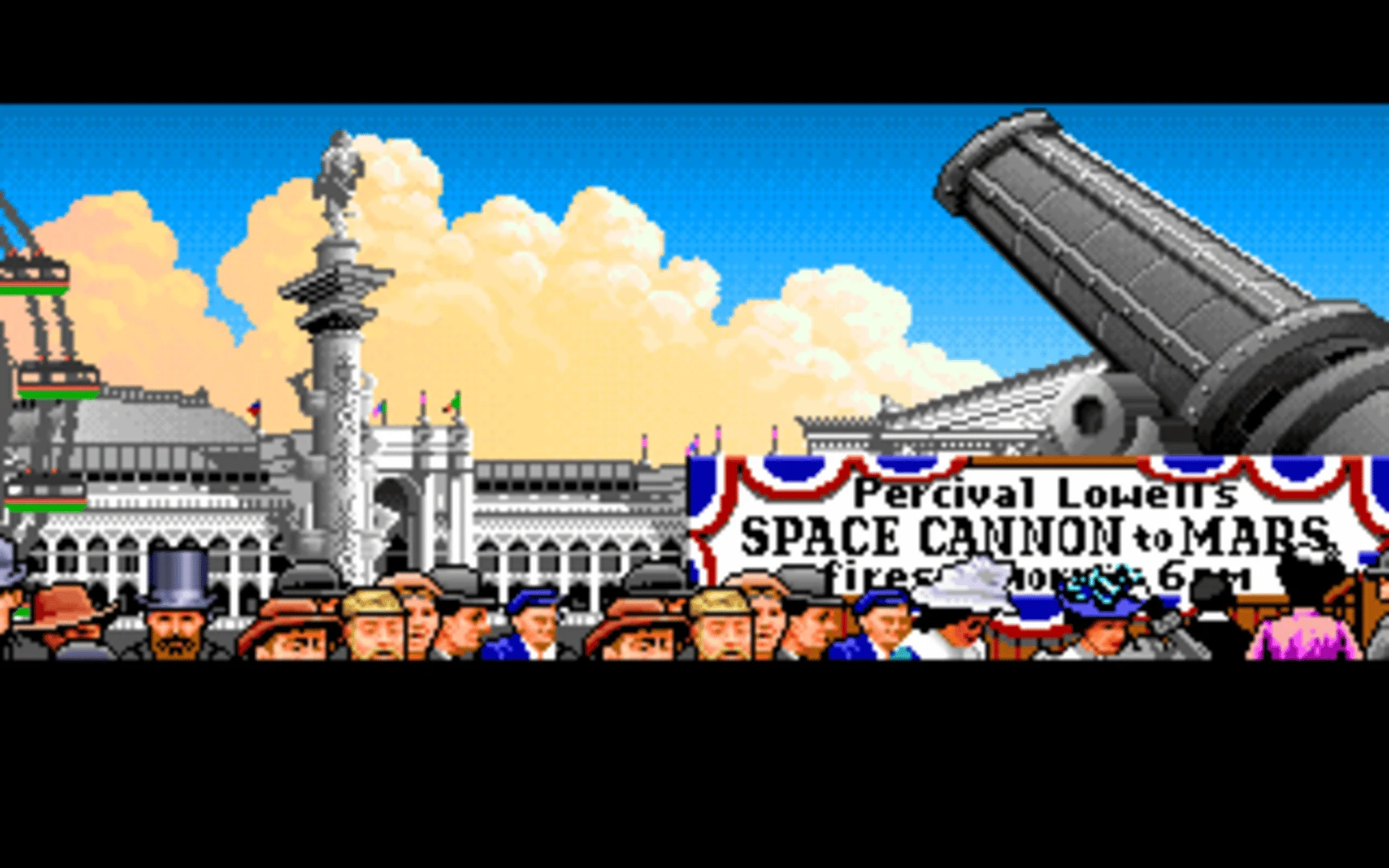
Martian Dreams also starts from Ultima VI. Its copper machinery, spacesuits, and red landscape change the mood more than the interface. Animated cutscenes frame its Victorian science-fiction story.
Ultima: Runes of Virtue
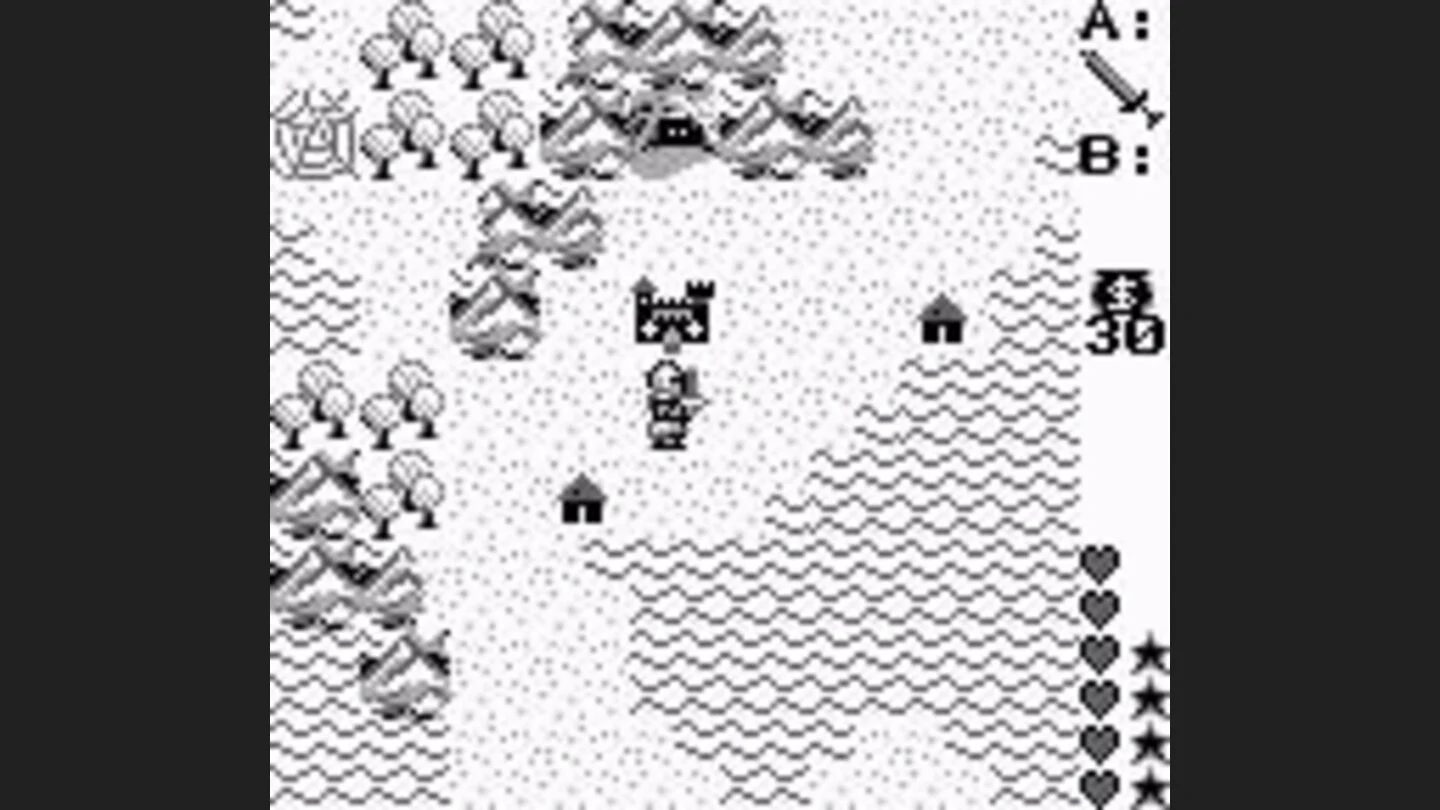
Runes of Virtue abandons command-driven computer layouts for direct handheld action. The Game Boy screen shows rooms as small monochrome stages. Hearts, equipment letters, and simple sprites carry the information.
Ultima: Runes of Virtue II
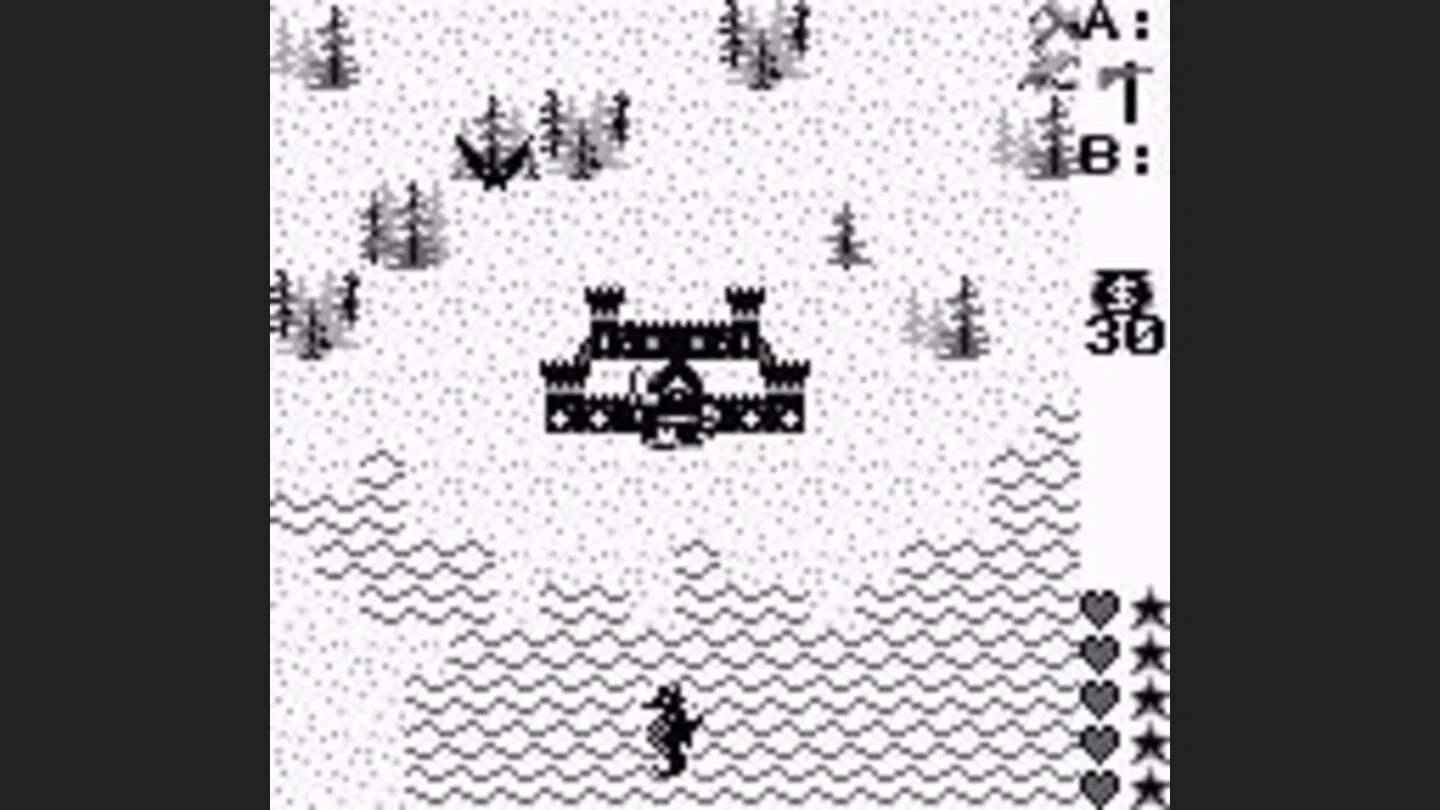
Runes of Virtue II keeps the first game’s action format. Larger environmental patterns make towns, roads, and wilderness easier to distinguish. Its look belongs to portable action adventures rather than computer role-playing interfaces.
Underworld Moves Britannia into 3D
Ultima Underworld: The Stygian Abyss
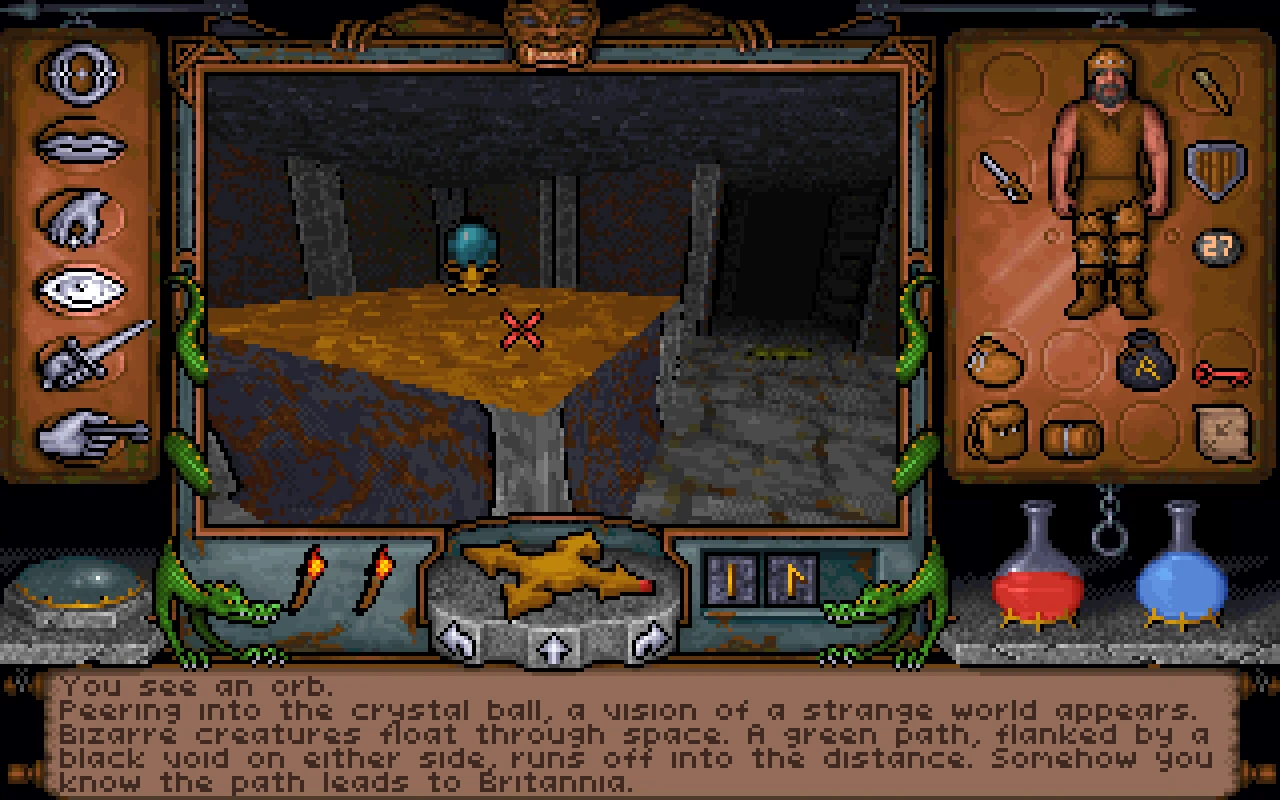
Ultima Underworld turns the dungeon into a continuous first-person space. Sloped floors, bridges, water, and rooms exist inside the same texture-mapped view. A paper doll and inventory surround the relatively small viewport.
This spatial design belongs to the same immersive-sim lineage later associated with Deus Ex. Our Deus Ex Remastered beginner guide covers that later style of interactive first-person world.
Ultima Underworld II: Labyrinth of Worlds
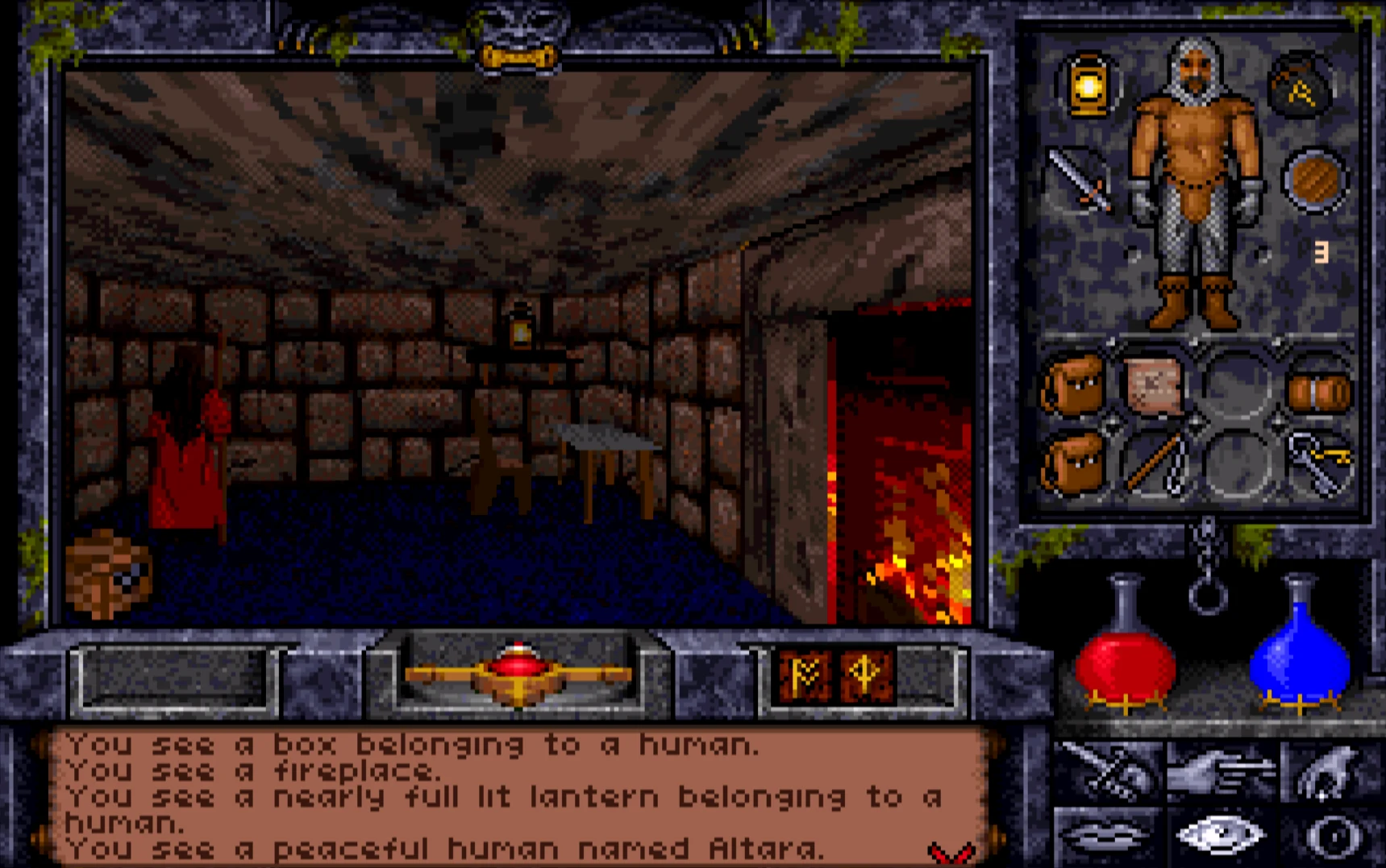
Ultima Underworld II keeps the first game’s engine and framed presentation. The viewport is larger, and the portraits carry more detail. Different worlds also let the same engine display a broader set of colors and materials.
Ultima VII Refines the Oblique World
Ultima VII: The Black Gate
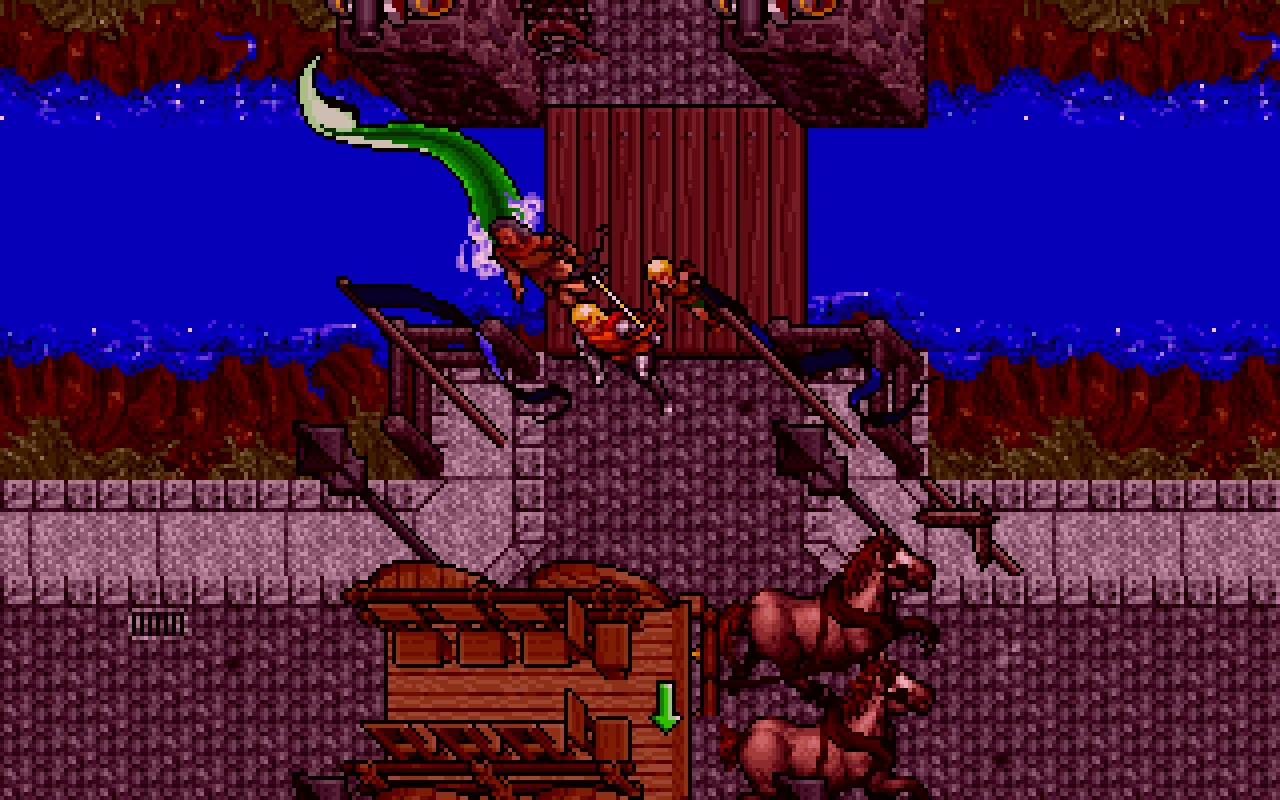
Ultima VII removes the permanent side panel and gives the world nearly the full display. Tables, plates, doors, beds, and small objects share the same oblique scene. Inventory appears through movable containers and paper-doll windows.
Ultima VII Part Two: Serpent Isle
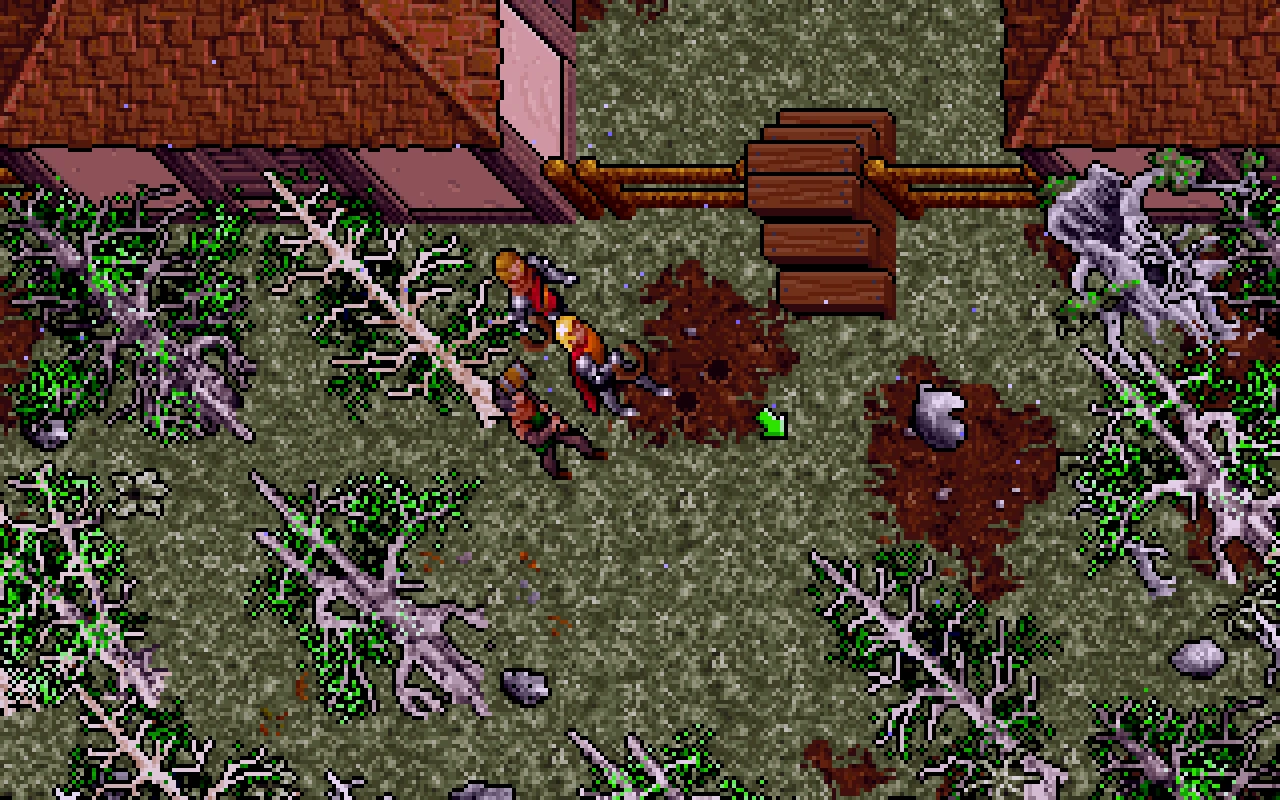
Serpent Isle uses the same visual foundation as The Black Gate. New landscapes and building sets separate its world from Britannia. Character portraits and clothing also carry more of the setting’s identity.
Ultima VIII: Pagan
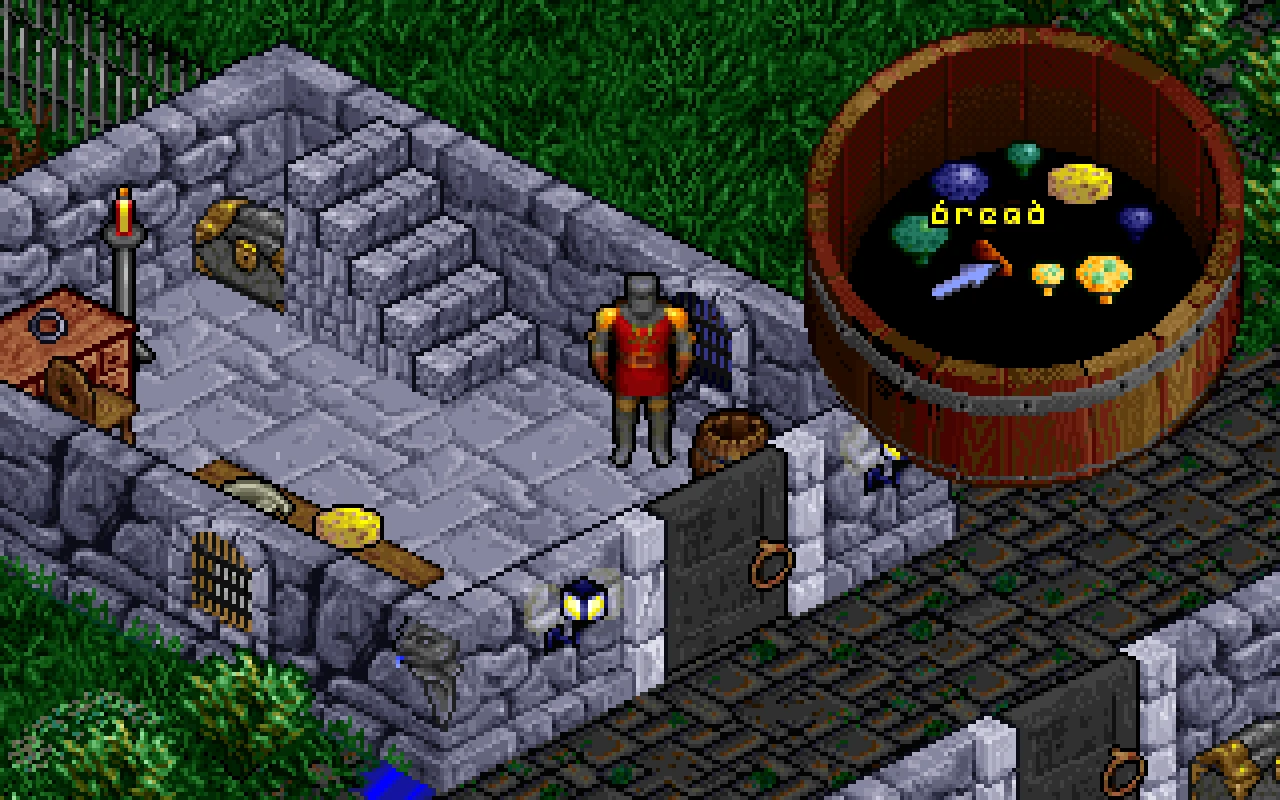
Ultima VIII changes the scale again. The Avatar becomes a larger sprite inside a fixed oblique view, and the environment uses heavier shadows. Its visual focus shifts toward movement and physical obstacles instead of dense object windows.
Ultima Online Client Styles
Ultima Online is one released game with several official visual identities. The client changed from painted 2D sprites to mixed 3D and redrawn interfaces. These four clients show separate official approaches.
Ultima Online Classic Client
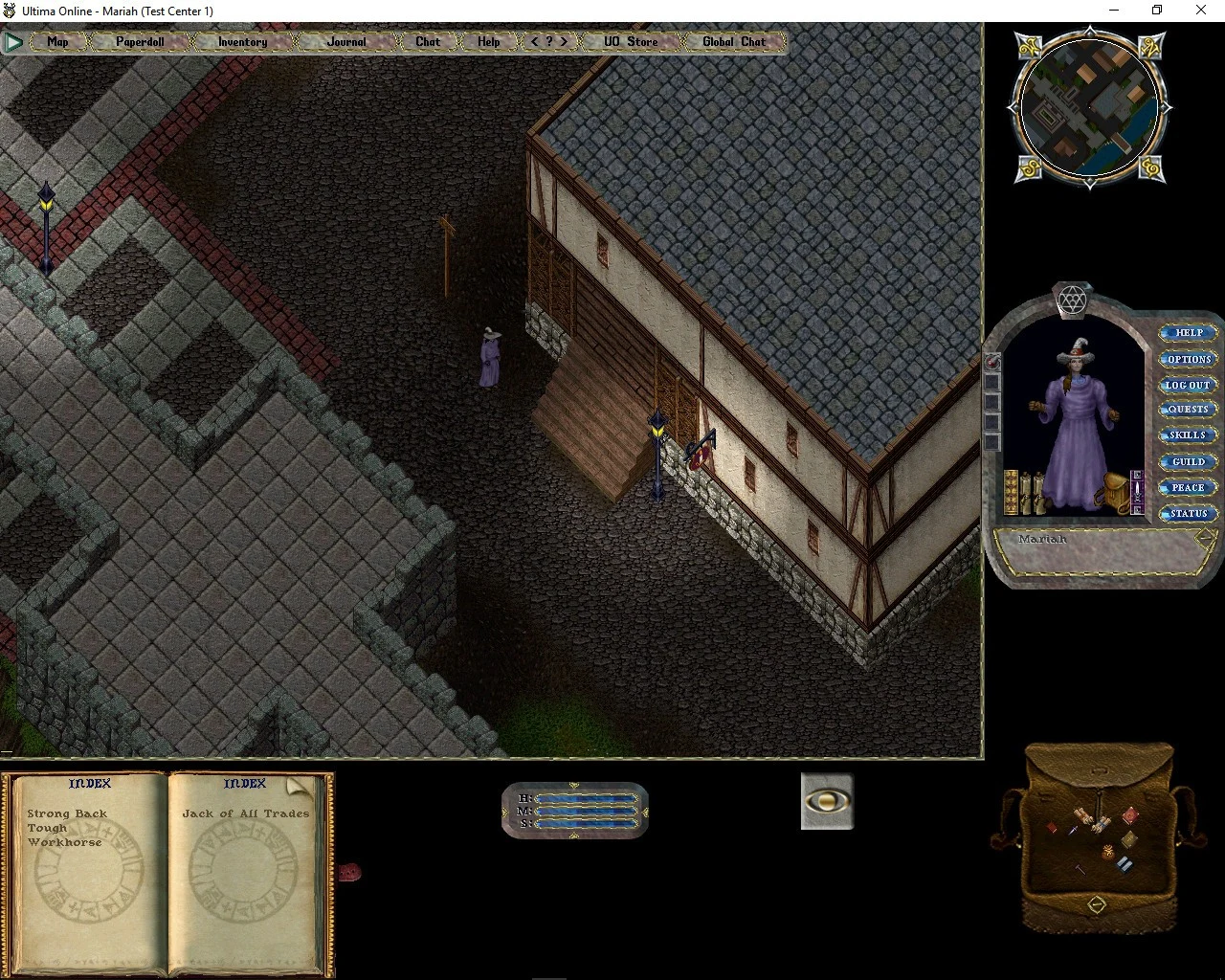
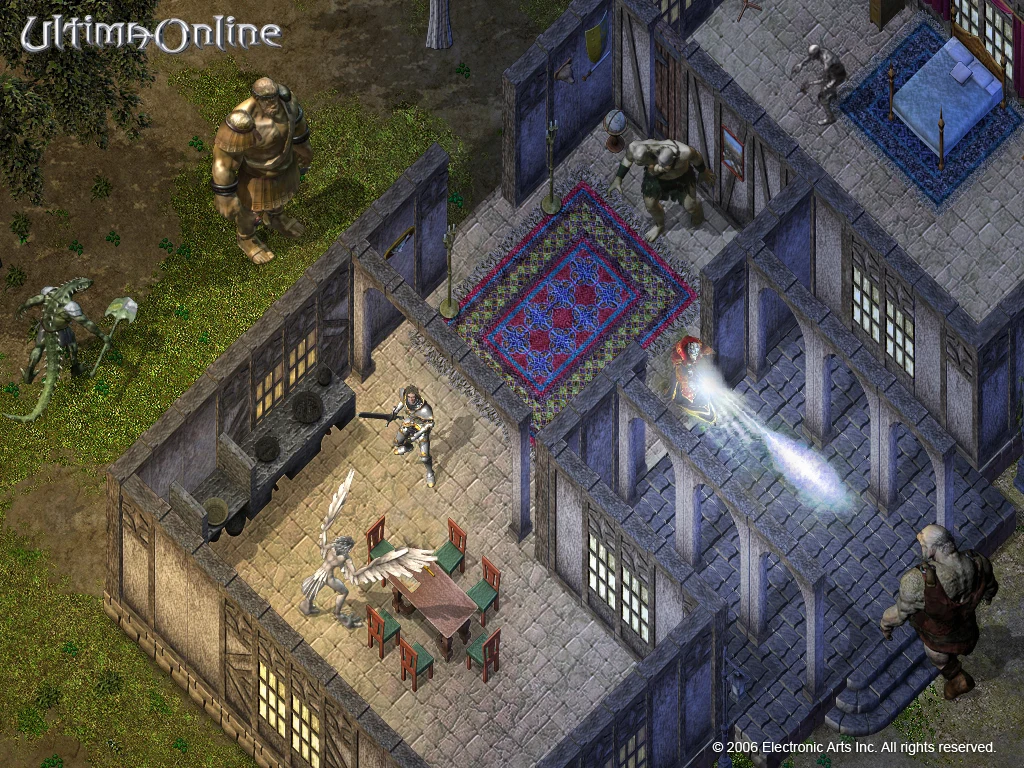
The Classic Client turns Ultima’s object-heavy 2D design into a shared world. Characters, creatures, houses, and items use painted isometric sprites. Players arrange inventory, maps, status bars, and paper dolls around the play area.
Ultima Online: Third Dawn Client
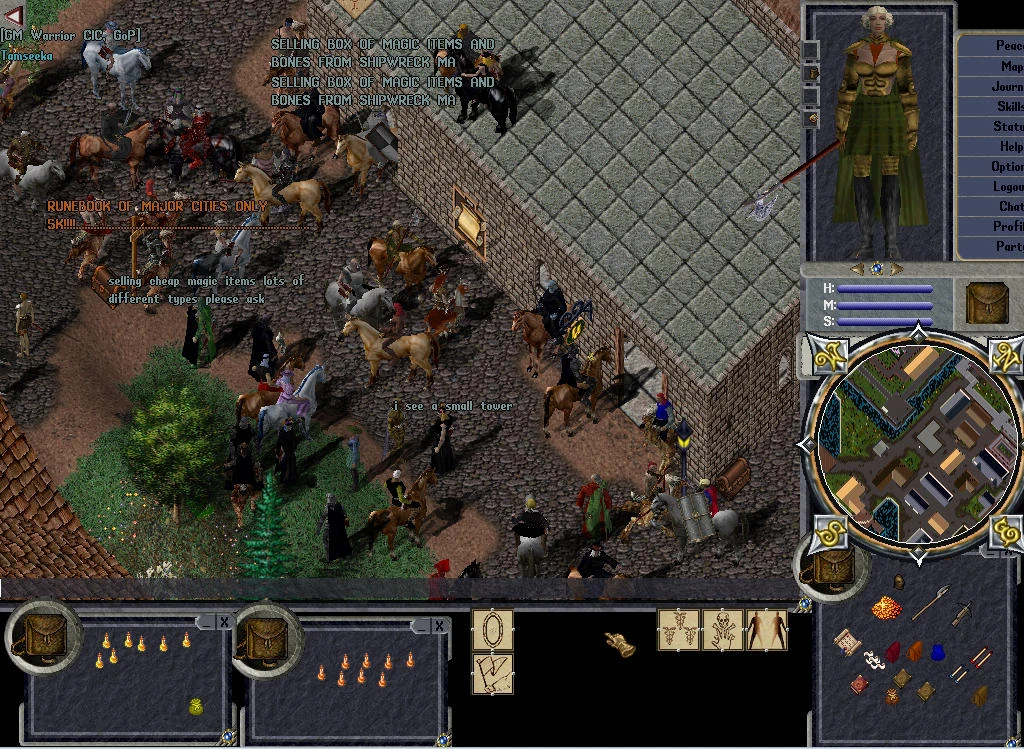
Third Dawn introduces a 3D client without turning Ultima Online into a free-camera game. Polygonal characters and creatures sit inside the established isometric layout. The result combines 3D assets with the proportions of the 2D world.
Ultima Online: Kingdom Reborn Client
Kingdom Reborn replaces the old art with a broader 2.5D redesign. Characters and terrain gain smoother shading, while windows use darker frames and compact controls. The camera remains tied to the classic isometric plan.
Ultima Online Enhanced Client
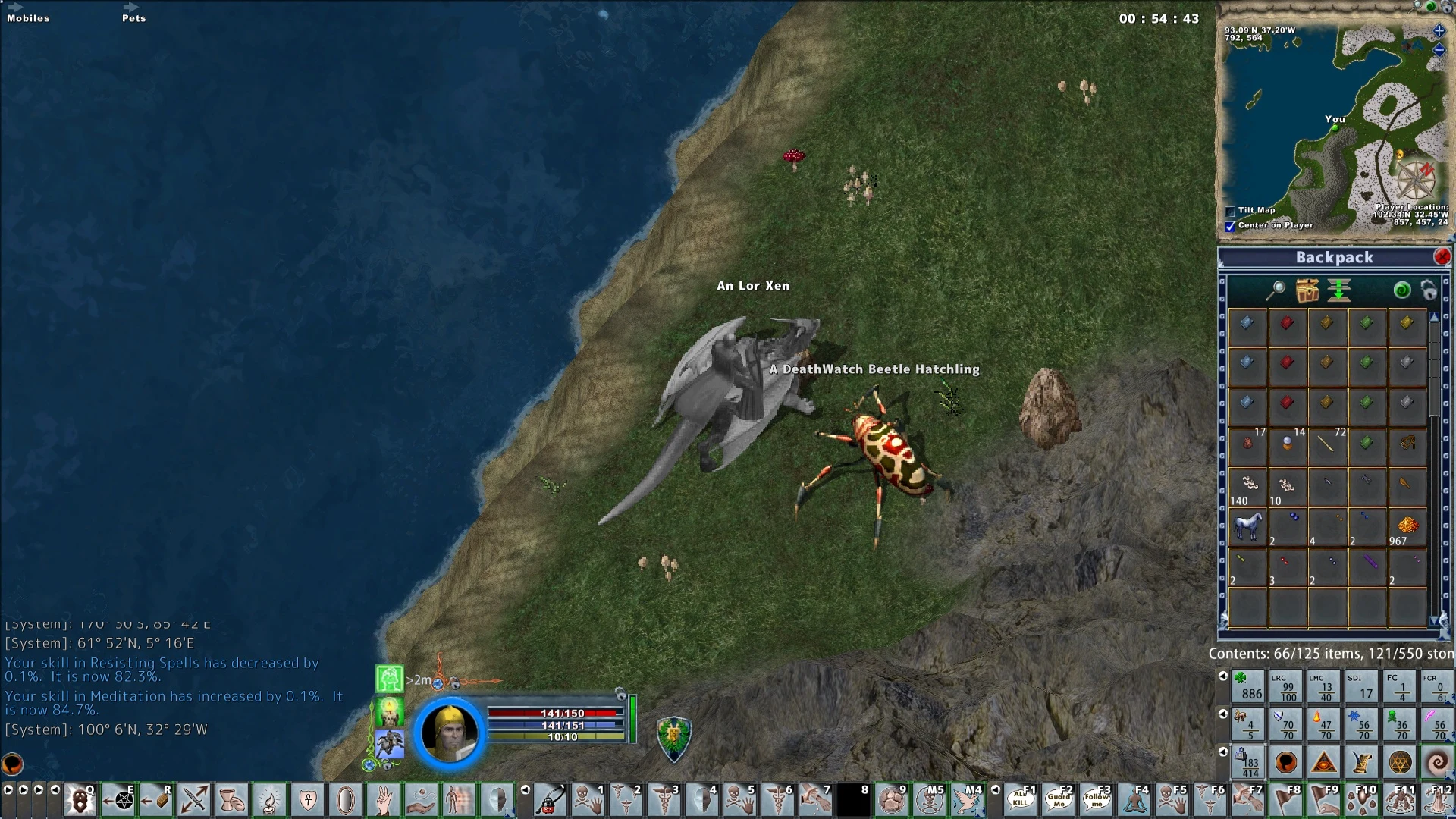
The Enhanced Client continues the redrawn approach with more configurable interface panels. Container grids, hotbars, and movable windows give it a modern MMO layout. The world still uses the fixed Ultima Online camera.
Ultima IX: Ascension
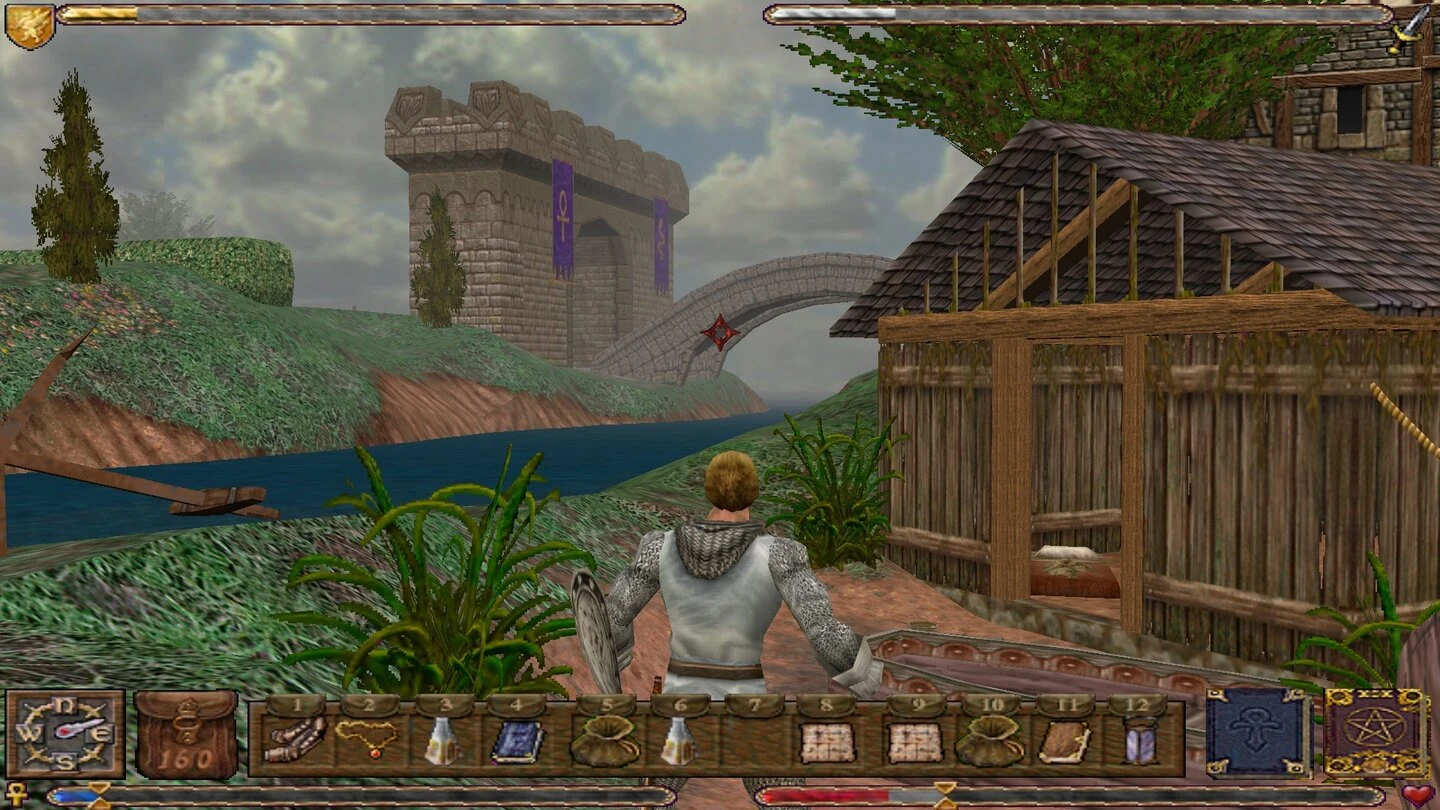
Ultima IX makes the main series fully 3D. A third-person camera follows the Avatar through modeled towns, ruins, forests, and dungeons. The screen carries fewer permanent panels than the earlier computer games.
Browser and Mobile Spin-Offs
Lord of Ultima
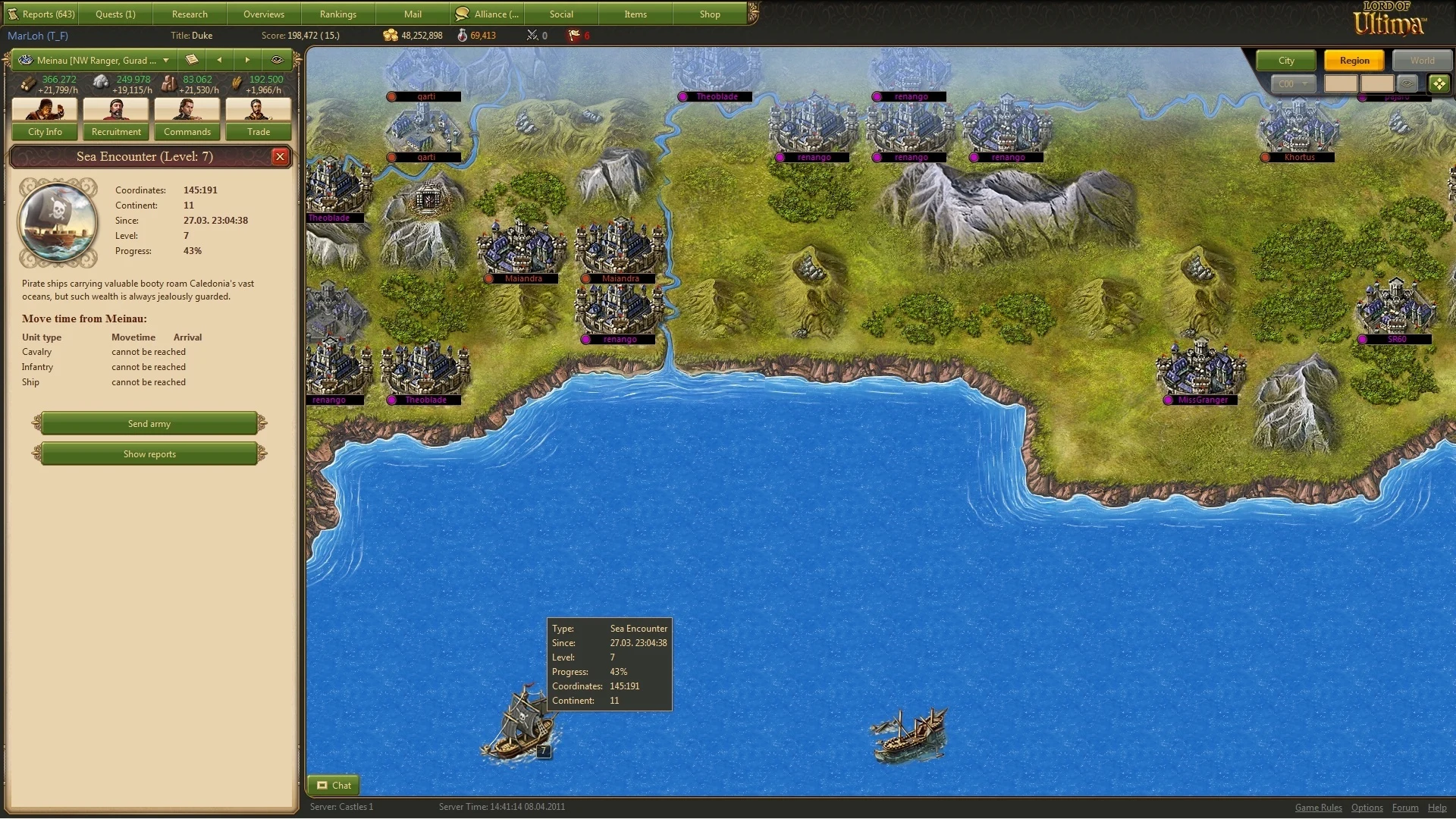
Lord of Ultima is a browser strategy game rather than a character-led role-playing game. Its zoomed city maps use illustrated buildings and terrain. Menus, resource bars, and timers occupy more space than the avatar interfaces of earlier releases.
Ultima Forever: Quest for the Avatar
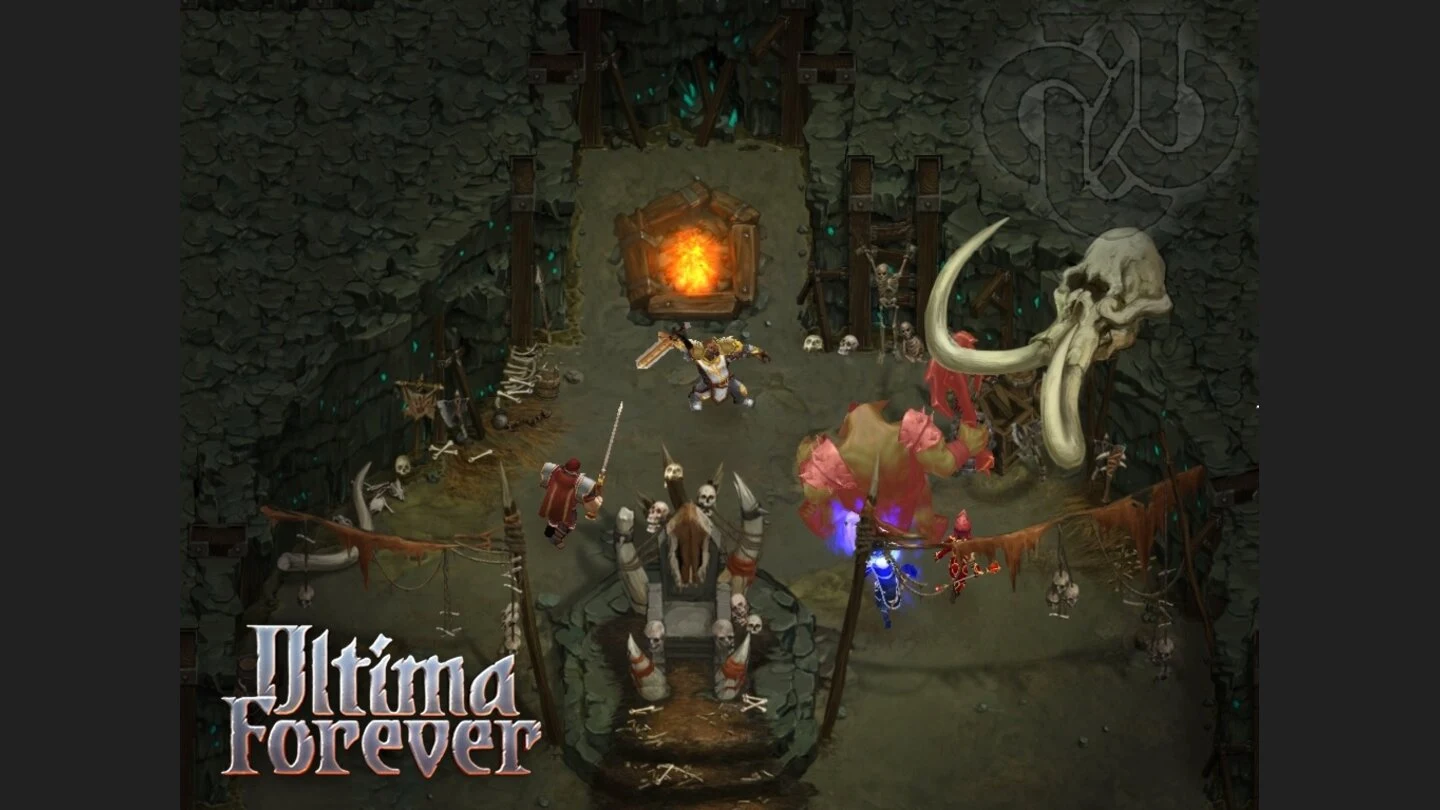
Ultima Forever uses the Quest for the Avatar name for a separate mobile action RPG. Its colorful 3D scenes use exaggerated characters and effects. Electronic Arts released the iOS game in 2013 and closed it in 2014.
Fan Engines, Remakes, and Original Projects
This group includes original games, engine recreations, and full remakes. It is not every Ultima fan project ever made. Each selection uses a different preservation or reinterpretation method.
Modern fan remakes now appear across many RPG series. Our Pokemon Gamma Emerald fan remake overview covers a newer project built around the same idea of visual reinterpretation.
EUO
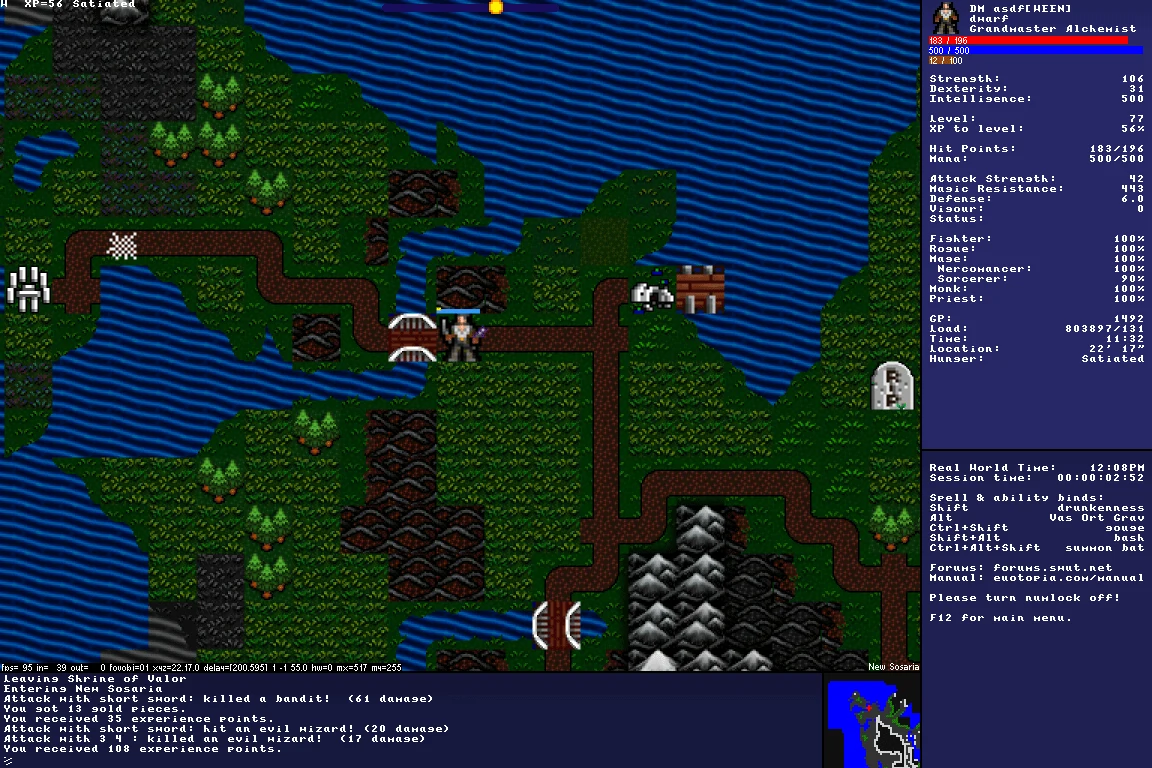
EUO began as a multiplayer roguelike inspired by early Ultima, Nethack, Diablo, and other computer RPGs. Its overhead tiles resemble the scale of Ultima IV and V. Dense status panels and chat make its online purpose visible.
xu4
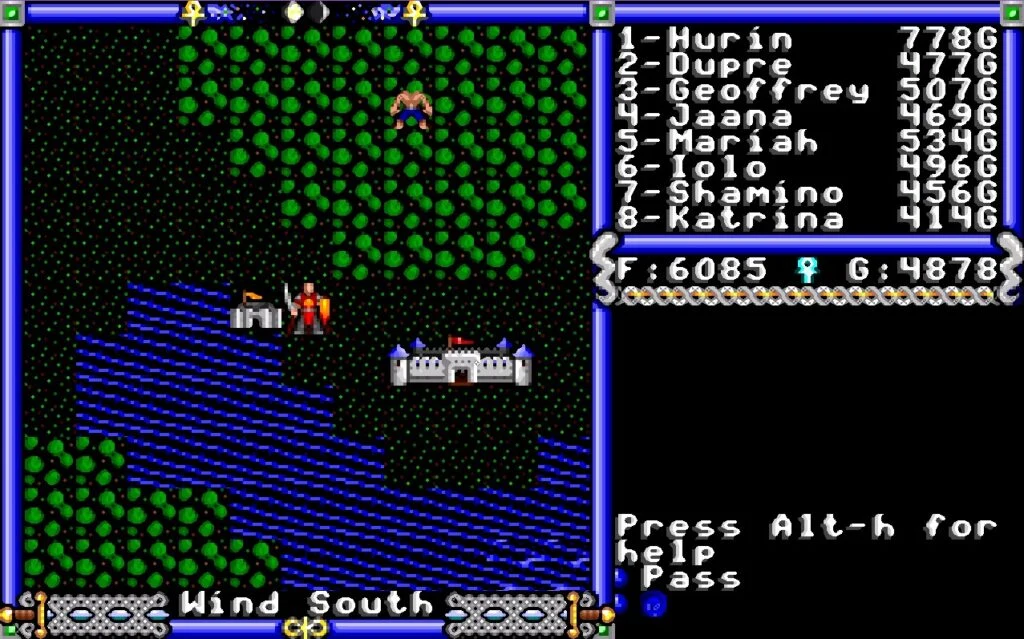
xu4 recreates the Ultima IV engine. It keeps the original map, roster, and command structure instead of replacing them with a new viewpoint. The project makes the old visual system easier to run and configure.
Nuvie
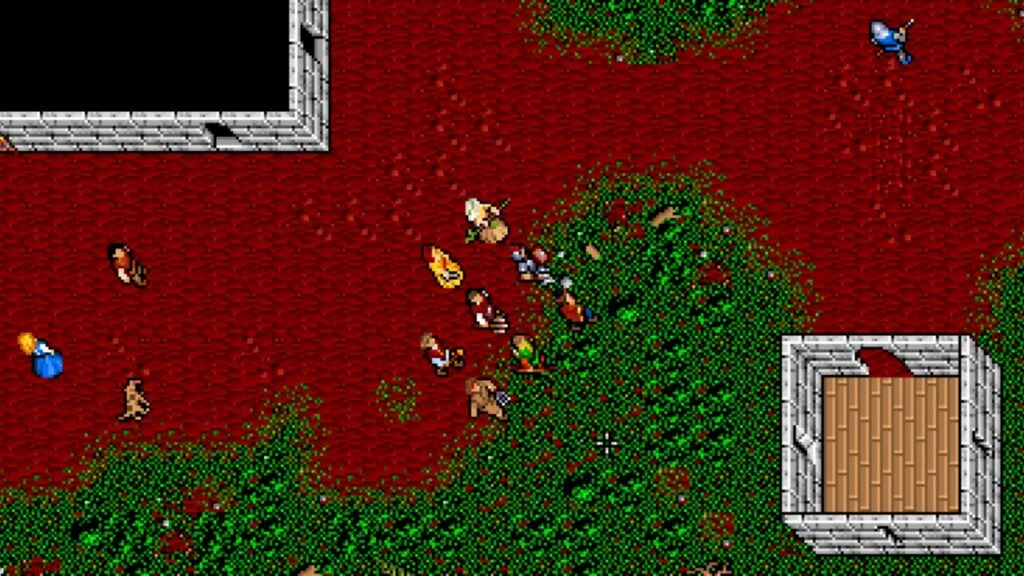
Nuvie recreates the Ultima VI engine. Its project scope also names The Savage Empire and Martian Dreams. Its larger viewport shows more terrain than the DOS layout. Optional tile sets can change the characters without abandoning the original grid.
Exult
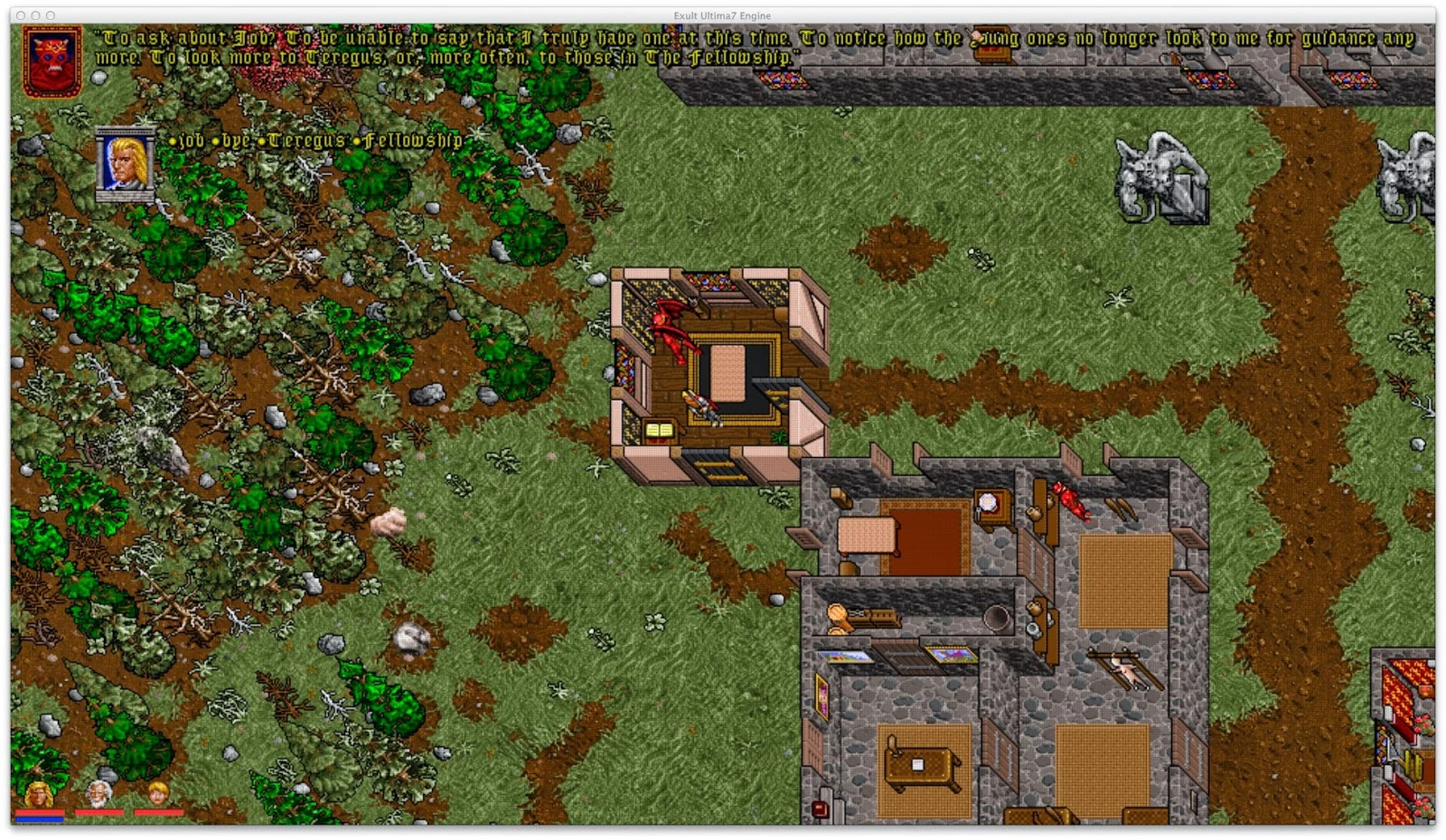
Exult recreates the Ultima VII engine for current systems. Higher resolutions widen the visible play area, but the sprites, oblique buildings, and movable objects remain recognizable. It preserves the original art instead of remaking it.
Ultima V: Lazarus
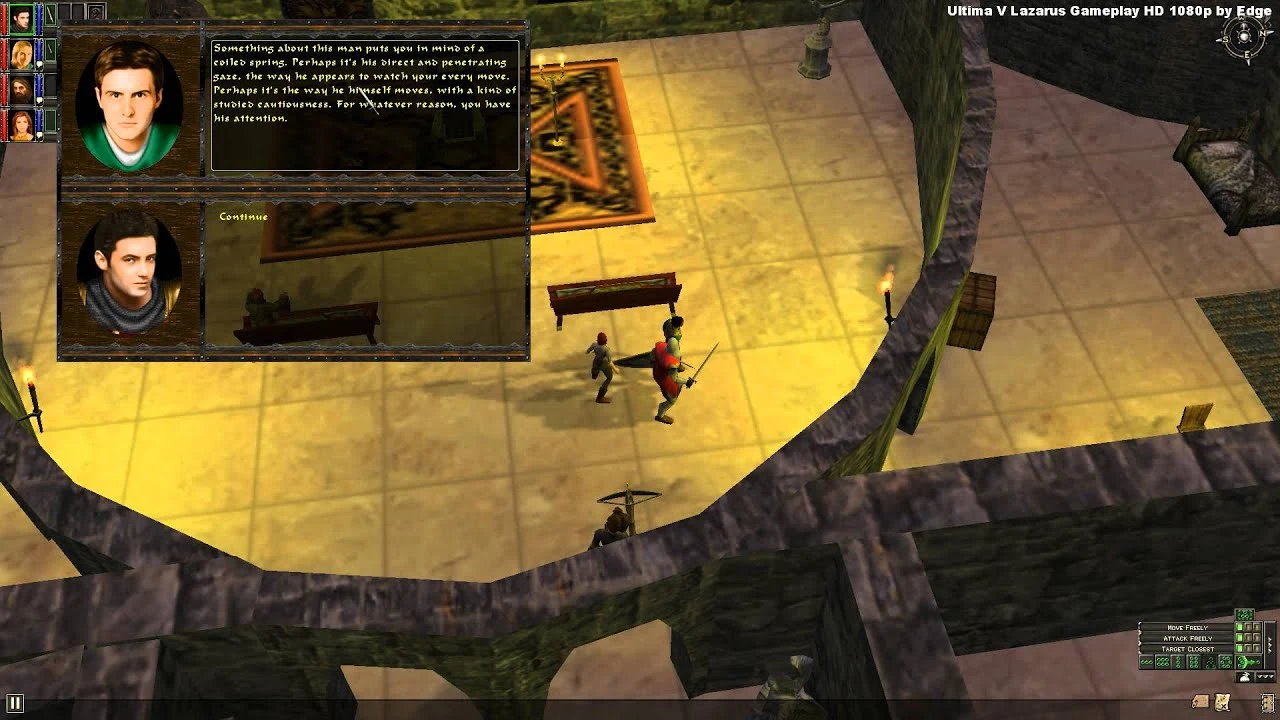
Ultima V: Lazarus rebuilds Warriors of Destiny in the Dungeon Siege engine. Britannia becomes a modeled landscape with free camera movement. Portraits and dialogue windows replace the compact tile-era interface.
The Ultima 6 Project
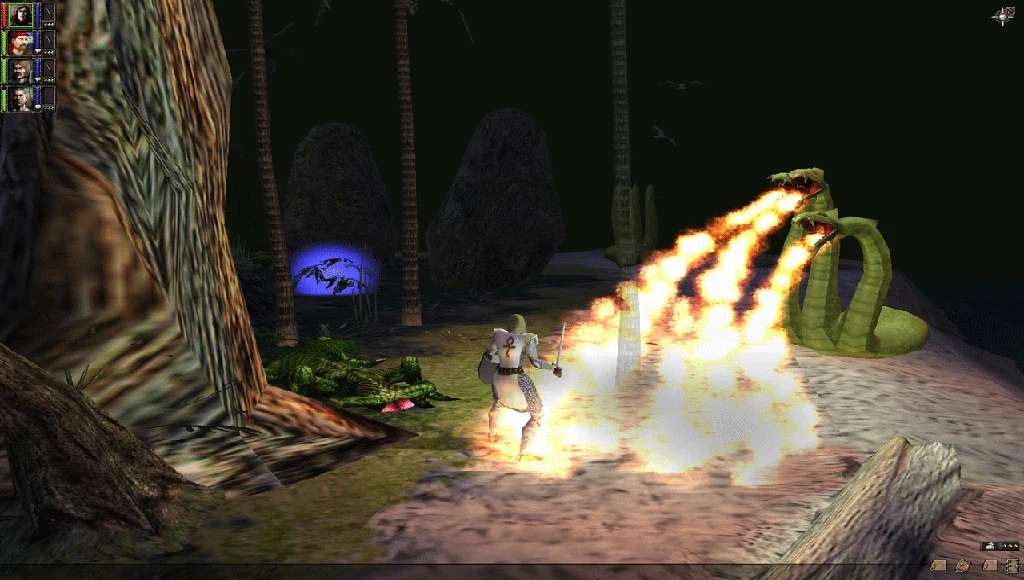
The Ultima 6 Project also uses Dungeon Siege. It converts the continuous 2D map into a 3D landscape while retaining party play and conversation portraits. Lighting and spell effects give its battles a different scale.
Ultima VI Online
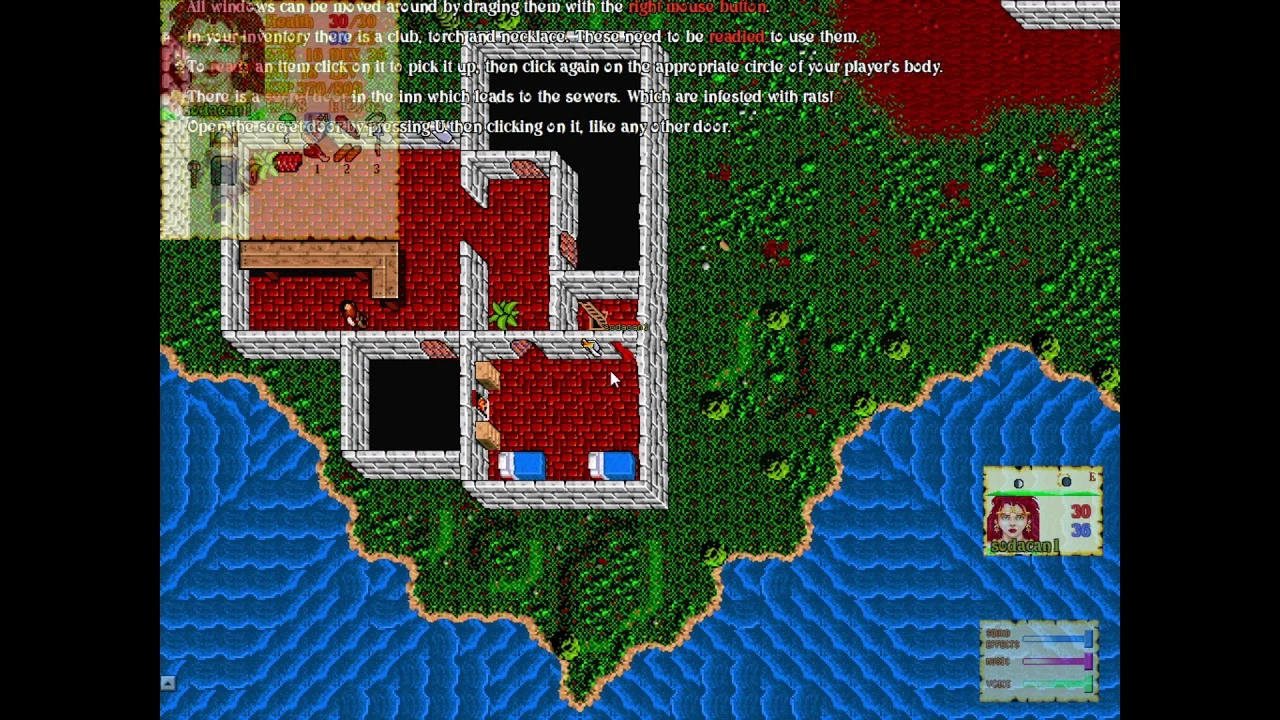
Ultima VI Online turns The False Prophet’s visual language into a multiplayer game. The world keeps its small overhead tiles. Chat and online character information make the interface closer to an MMO.
Ultima VII Revisited
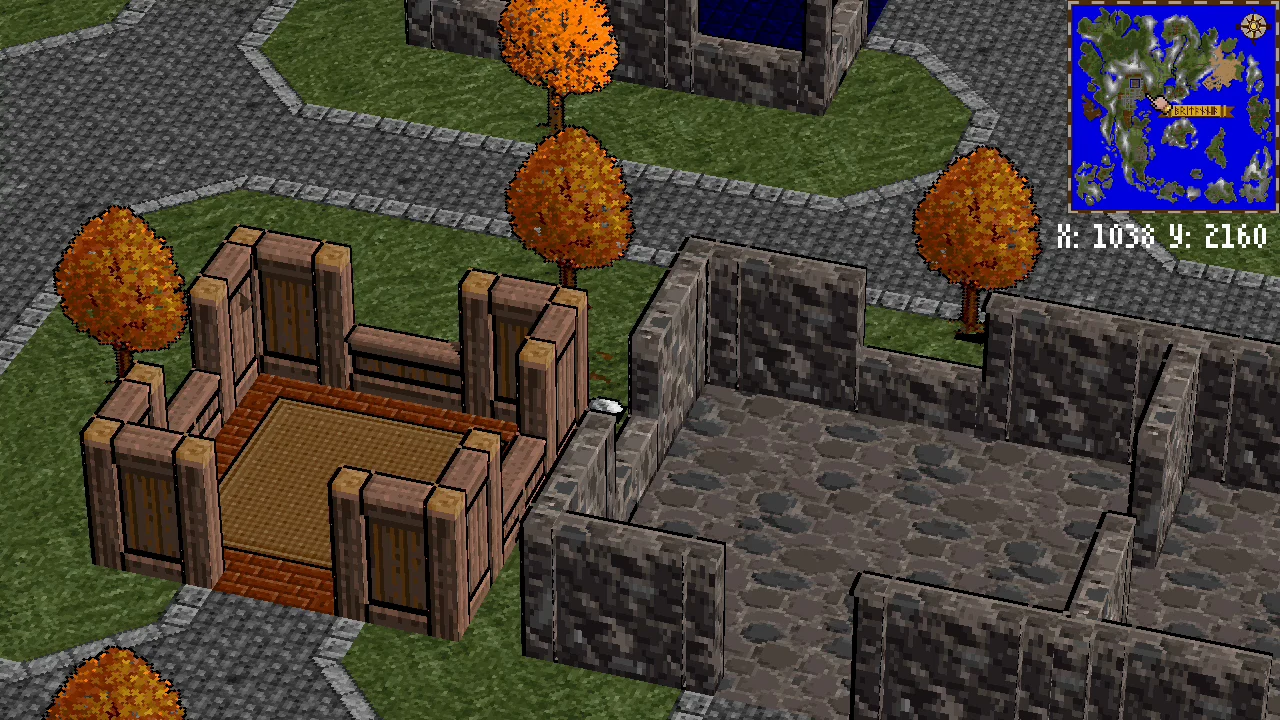
Ultima VII Revisited converts the Black Gate map into a rotatable 3D scene. Original-looking surface textures cover walls, roads, trees, and furniture. The view makes room height and building volume visible.
Ultima IV Rebirth
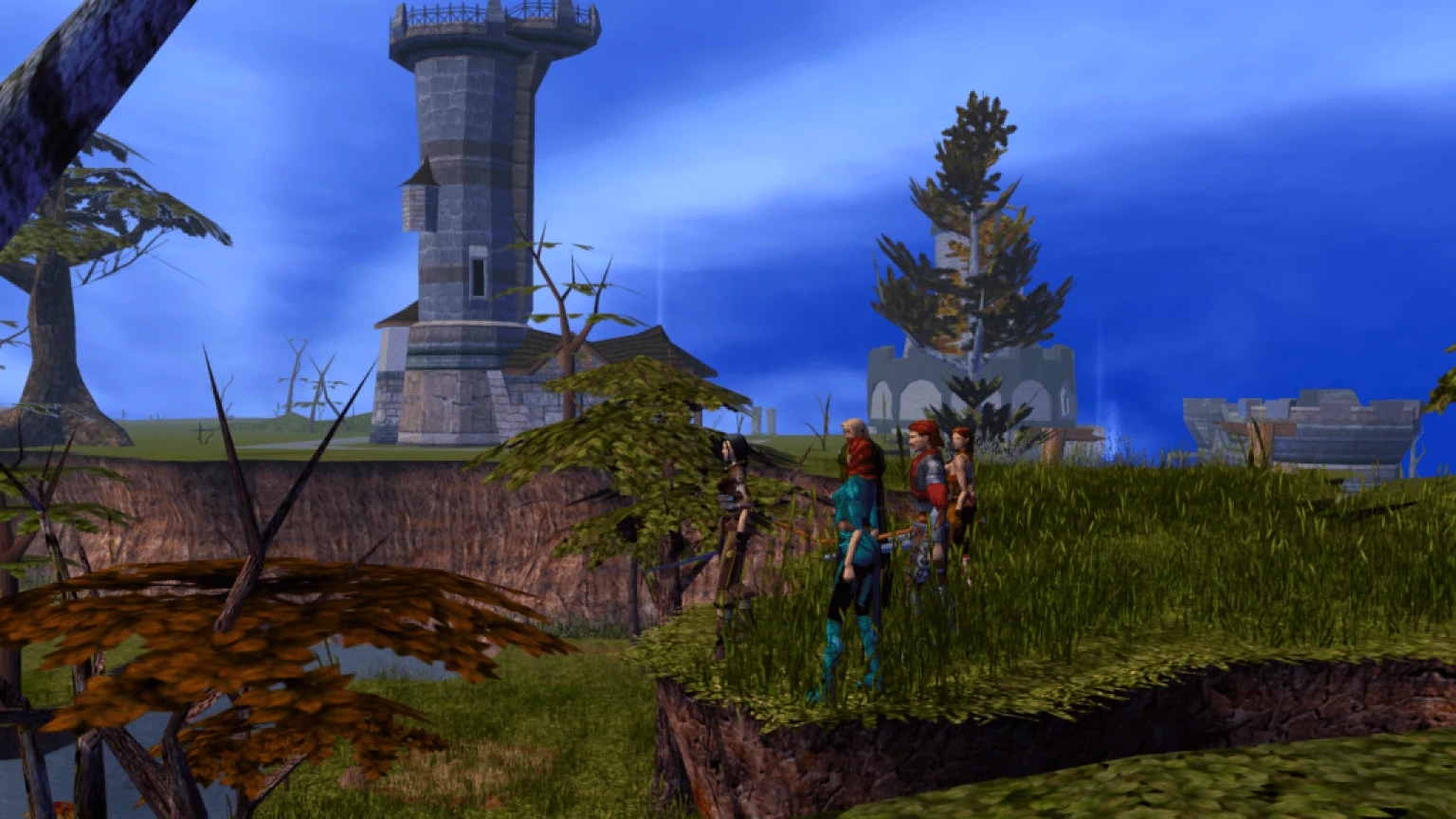
Ultima IV Rebirth recreates Quest of the Avatar with Neverwinter Nights. Its modeled towns and characters replace the symbolic tiles. Dialogue portraits and radial interface elements identify the host engine.
Ultima IX: Redemption
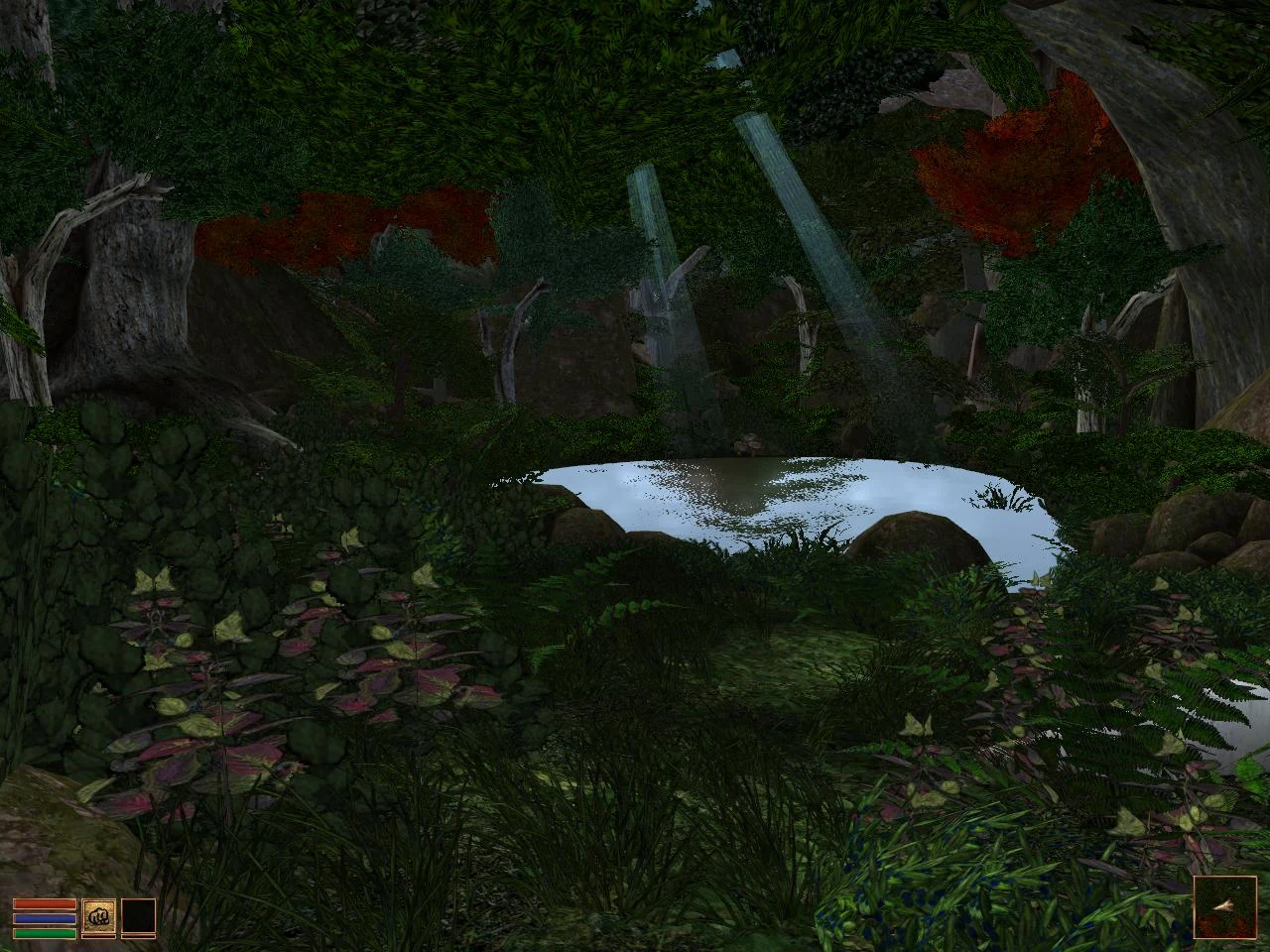
Ultima IX: Redemption was a canceled fan project built with a customized Morrowind engine. Its terrain, architecture, and first-person view differ from Ascension’s over-the-shoulder presentation. The project treated Britannia as an explorable 3D role-playing world.
How to Play These Styles Today
The first trilogy, middle trilogy, Ultima VII collection, Pagan, and Ascension remain available through GOG. Akalabeth is also available there without charge. These releases package the original game data with current compatibility tools.
- Use the original release when you want the exact interface, resolution, and pacing.
- Use xu4, Nuvie, or Exult when you want the original art with easier setup and display options.
- Use Lazarus, The Ultima 6 Project, or Rebirth when you want a full 3D reinterpretation.
- Use EUO or Ultima VI Online when multiplayer matters more than strict preservation.
Gear for Classic Ultima
The computer releases rely heavily on keyboard commands, precise cursor movement, and readable text. These three current deals match those needs. Prices were checked in September 2026.

RK Royal Kludge S98
The full function row and number keys suit command-heavy computer RPGs.

Logitech Signature M550
The compact wireless mouse fits inventory-heavy games without adding extra controls.

MSI PRO MP273 E14A
The 27-inch 1080p panel gives old interfaces room without demanding 4K scaling.
See our monitors for coding and gaming guide if you want a higher-resolution display for modern fan clients.
Frequently Asked Questions
Which Ultima game first used texture-mapped 3D?
Ultima Underworld replaced overhead tiles with a continuous first-person 3D dungeon. Ultima IX later moved the numbered series into a full third-person world.
Which Ultima game uses the detailed borderless 2D style?
Ultima VII gives its oblique world nearly the full screen. Classic Ultima Online applies a related isometric approach to a persistent multiplayer setting.
Is EUO an official Ultima game?
No. EUO is an independent online role-playing game inspired by early Ultima and several other computer RPGs. Its overhead tiles make that influence easy to see.
Are Exult, xu4, and Nuvie remakes?
They are engine recreations rather than full visual remakes. They run original game data while adding current system support and display options.
Can you still play the old Ultima games?
Yes. GOG sells most numbered releases and Akalabeth. Exult, xu4, and Nuvie provide other ways to run selected games when you own the required data.
Summary
Ultima moved from wireframes to tiles, then split into first-person 3D, oblique 2D, online clients, and polygonal worlds. The featured fan projects preserve several branches instead of forcing one visual standard. For another long-running visual timeline, see every Assassin’s Creed game in order.