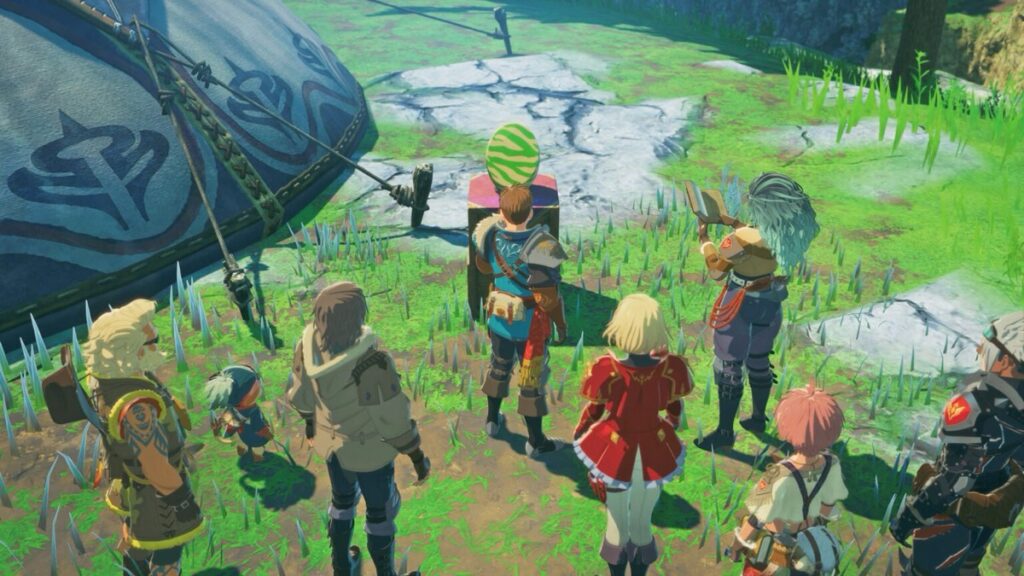
Habitat restoration in Monster Hunter Stories 3 is how you unlock mutations, dual-element monsties, and the strongest eggs in the game. The system opens at the end of Chapter 1 but the game barely explains what it does or why it matters. Most players release a few monsties, see a rank go up, and move on without understanding the multipliers, element stacking, or the specific conditions that unlock monsters like Thunderlord Zinogre and Dreadqueen Rathian. This Monster Hunter Stories 3 habitat restoration guide covers the full loop from unlocking your first camp to farming S-rank rainbow eggs. If you are still in the early game, start with our MHS3 beginner guide for the core systems.
Key Takeaways
- Level monsties before releasing them: a higher-level release gives significantly more Ecosystem Rank than a freshly hatched one. Invest the time to train before you release
- Match elements for rank multipliers: releasing monsties that share the same element as each other (not necessarily the area’s element) increases the rank multiplier
- S-rank Ecosystem unlocks S-rank genes on hatched monsties: this is the endgame goal. Higher ranks also mean monsties hatch at higher levels with better skills
- Mutations have specific cross-requirements: Thunderlord Zinogre needs both Zinogre AND Mizutsune at S-rank in the same area. Check the Monsterpedia for each unlock condition
- Use Eco Conservation to lock important monsties: press L3 on a released monstie to prevent it from being removed when you hit the slot limit
How to Unlock Habitat Restoration
Habitat restoration becomes available at the end of Chapter 1. To actually use it in a specific area, you need to defeat that area’s Feral monster. These are marked by blue powder-like energy with red icons above them and red dots on the map.
The three initial Feral monsters that unlock restoration camps:
| Feral Monster | Location | Region |
|---|---|---|
| Feral Brachydios | Blightstone Woods | Azuria |
| Feral Espinas | Mount Canalta | Canalta Timberland |
| Feral Glavenus | Bountiful Dunes | Tarkuan |
Defeating a Feral monster unlocks the campsite and the restoration menu for that area. Each region has its own element type that affects what dual-element combinations are possible.
How Habitat Restoration Works
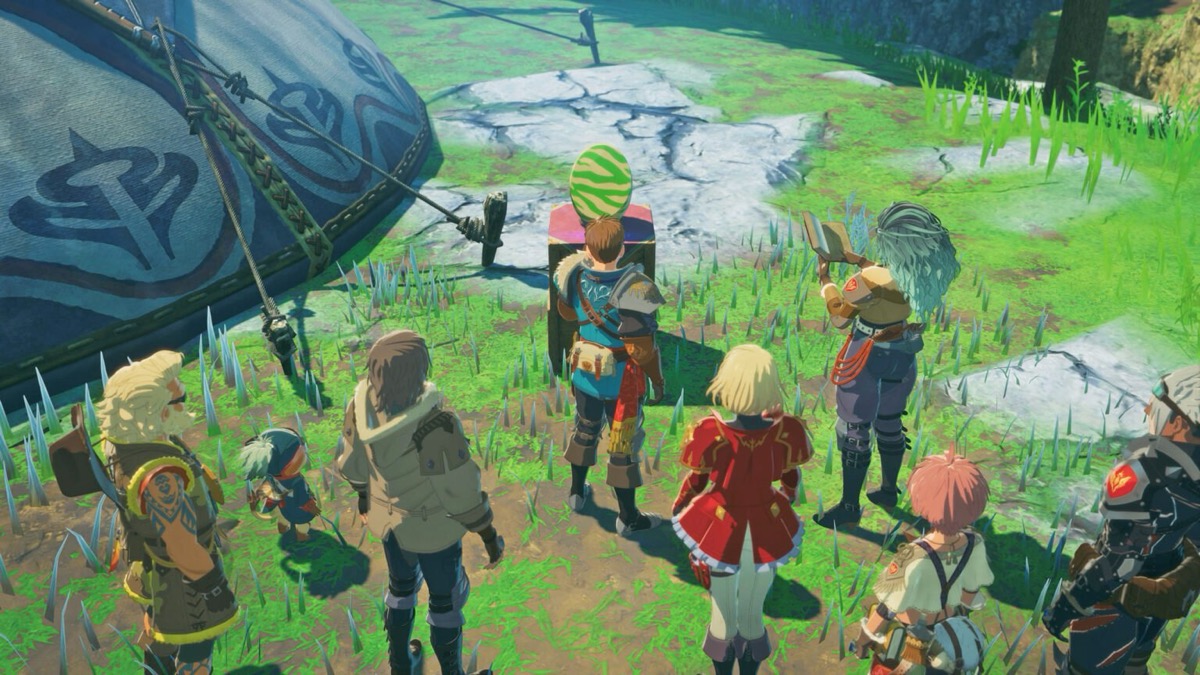
The core loop is straightforward: collect eggs from dens, hatch them, level them up, and release them into a habitat. Each release raises that species’ Ecosystem Rank in the area, which improves the quality of future eggs you find there.
Step-by-Step Process
- Collect eggs from monster dens (normal, rare, super rare, or retreat dens)
- Hatch them at any stable in camps, villages, or Azuria Castle
- Level up the monsties before releasing (higher level = more rank gain)
- Release them into the habitat via the restoration menu at any camp
- Monitor Ecosystem Rank as it climbs from releasing more of the same species
- Farm better eggs as the rank improves, creating an upward spiral
Slot Management
Each habitat holds 10 monsters total, split between fixed native species (which you cannot remove) and your introduced monsties. There is a limit of 5 restoration slots per unique species. Once released, monsties cannot be retrieved. When you exceed the limit, the game prompts you to choose which existing monstie to replace.
Use Eco Conservation (press L3 on a released monstie) to lock it in place. This prevents accidental removal when you are swapping monsties to optimize element combinations. Plan your slots before releasing since you cannot undo a replacement.
Monster Hunter Stories 3 Habitat Restoration: Ecosystem Rank System
Ecosystem Rank is the central progression mechanic of habitat restoration. Each species you release has its own rank in each area, progressing through letter grades up to S-rank. Higher ranks directly improve what you get from eggs.
What Each Rank Unlocks
- Higher ranks: eggs become easier to find and monsties hatch at higher starting levels
- B-rank and above: monsties can hatch with environmental skills (Region Powers) specific to that area
- A-rank: certain mutations unlock (like Ivory Lagiacrus, Green Nargacuga, Stygian Zinogre)
- S-rank: monsties can hatch with S-rank genes. This is the endgame target and the reason habitat restoration matters for competitive builds
How to Raise Rank Faster
Level before releasing. A level 30 monstie gives significantly more Ecosystem Rank than a level 1 hatchling. The time spent training before release is always worth it.
Stack the same species. Releasing multiple monsties of the same species into one area increases the rank multiplier. Five Rathalos in the same habitat rank faster than one Rathalos in five different habitats.
Match elements between released monsties. The element multiplier activates when your released monsties share the same element type as each other. This does not need to match the area’s native element. Releasing three Fire-type monsties into a Water-element area still triggers the element multiplier between those three monsties.
Dual-Element Monsties
Introducing monsties to areas with a different native element can produce dual-element variants. A Fire monstie released in a Water-element area may produce eggs that hatch as Fire/Water dual-type. These dual-element monsties get a special skill tied to the secondary element, and the skill is stronger at higher Ecosystem Ranks.
The Monsterpedia shows all possible dual-element combinations before you encounter them, so you can plan which monsties to release where. For the strongest dual-element builds, check our gene guide for how to optimize Bingo boards with dual-element genes.
Regional Elements
| Region | Available Elements |
|---|---|
| Azuria | Fire, Thunder, Water, Non-Elemental |
| Canalta Timberland | Thunder, Water, Fire, Non-Elemental, Ice |
| Tarkuan | Dragon, Thunder, Fire, Non-Elemental |
| Serathis | Water, Ice, Dragon |
Each region also provides Region Powers (environmental skills) that boost specific attributes like resilience, kinship building, and stamina recovery. Monsties hatched in areas where they have B-rank or higher can inherit these Region Powers.
Mutation Unlock Requirements
Mutations are rare variants that unlock when specific conditions are met in a habitat. Some only require a certain Ecosystem Rank. Others need multiple species at high rank in the same area, or the presence of specific rival species. Check the Monsterpedia for a blank entry with the unlock hint.
| Mutation | Unlock Condition |
|---|---|
| Pink Rathian | Ecosystem Rank B with Rathian |
| Dreadqueen Rathian | Rank S Rathian + 3+ poisonous monsters in the area |
| Ivory Lagiacrus | Ecosystem Rank A with Lagiacrus |
| Green Nargacuga | Ecosystem Rank A with Nargacuga |
| Silverwind Nargacuga | Rank S Nargacuga + 2+ wind-controlling monsters |
| Stygian Zinogre | Ecosystem Rank A with Zinogre |
| Thunderlord Zinogre | Rank S Zinogre + Mizutsune (purple-furred rival) at S-rank in same area |
| Soulseer Mizutsune | Rank S Mizutsune + Zinogre (electricity-charged rival) at S-rank in same area |
| Boltreaver Astalos | Rank S Astalos + thunderous power + 3+ thunder monsters |
| Deadeye Yian Garuga | Rank S Yian Garuga + many ferocious monsters + 3+ equal/greater rank monsters |
The cross-requirements are the most important detail here. Thunderlord Zinogre and Soulseer Mizutsune are essentially reciprocal unlocks. You need both Zinogre and Mizutsune at S-rank in the same area to unlock either mutation. Plan your habitat slots around these pairs if you want both. For a tier list of which monsties are worth building, see our monsties ranking guide.
Endangered Species
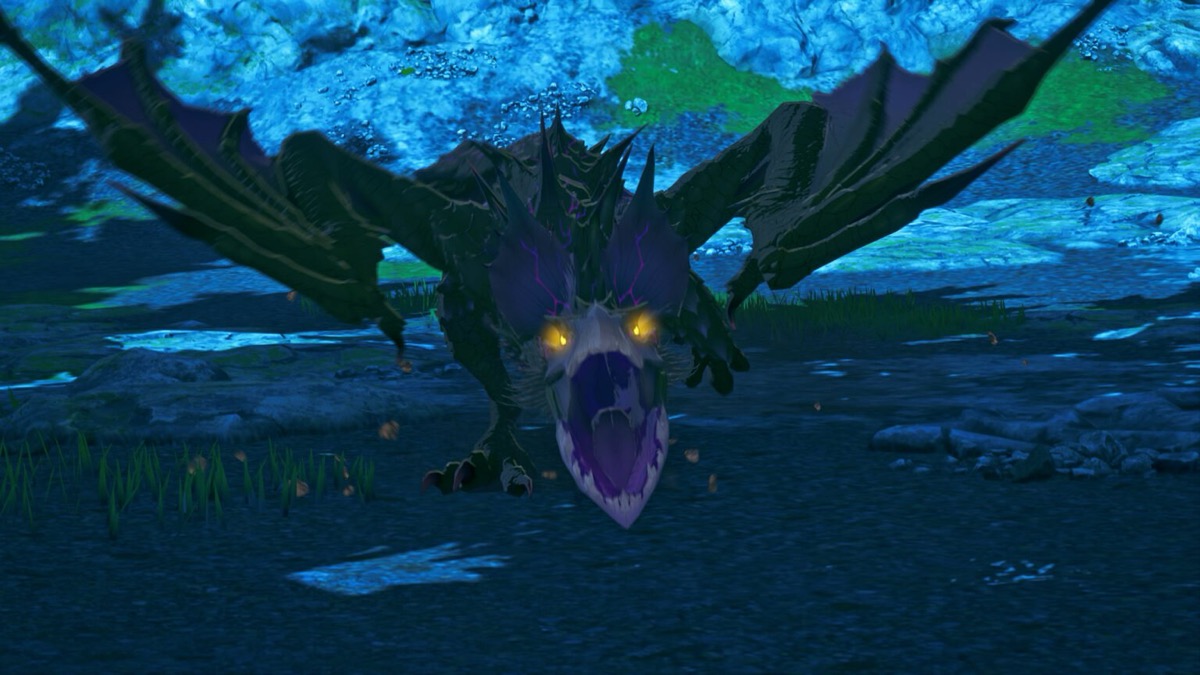
Endangered species are monsties whose eggs only appear after you defeat an Invasive Monster and access its Endangered Den. These eggs are not available from normal dens. If you lose an endangered species without releasing it into a habitat, it is gone permanently.
The safe approach: as soon as you hatch an endangered monstie, release it into a suitable habitat. Once established in a habitat, you can farm more eggs of that species from dens in the area. Build the Ecosystem Rank up from there. Never hold endangered monsties in your party without having at least one released into a habitat as insurance.
Egg Farming Strategy
Egg Quality Tiers
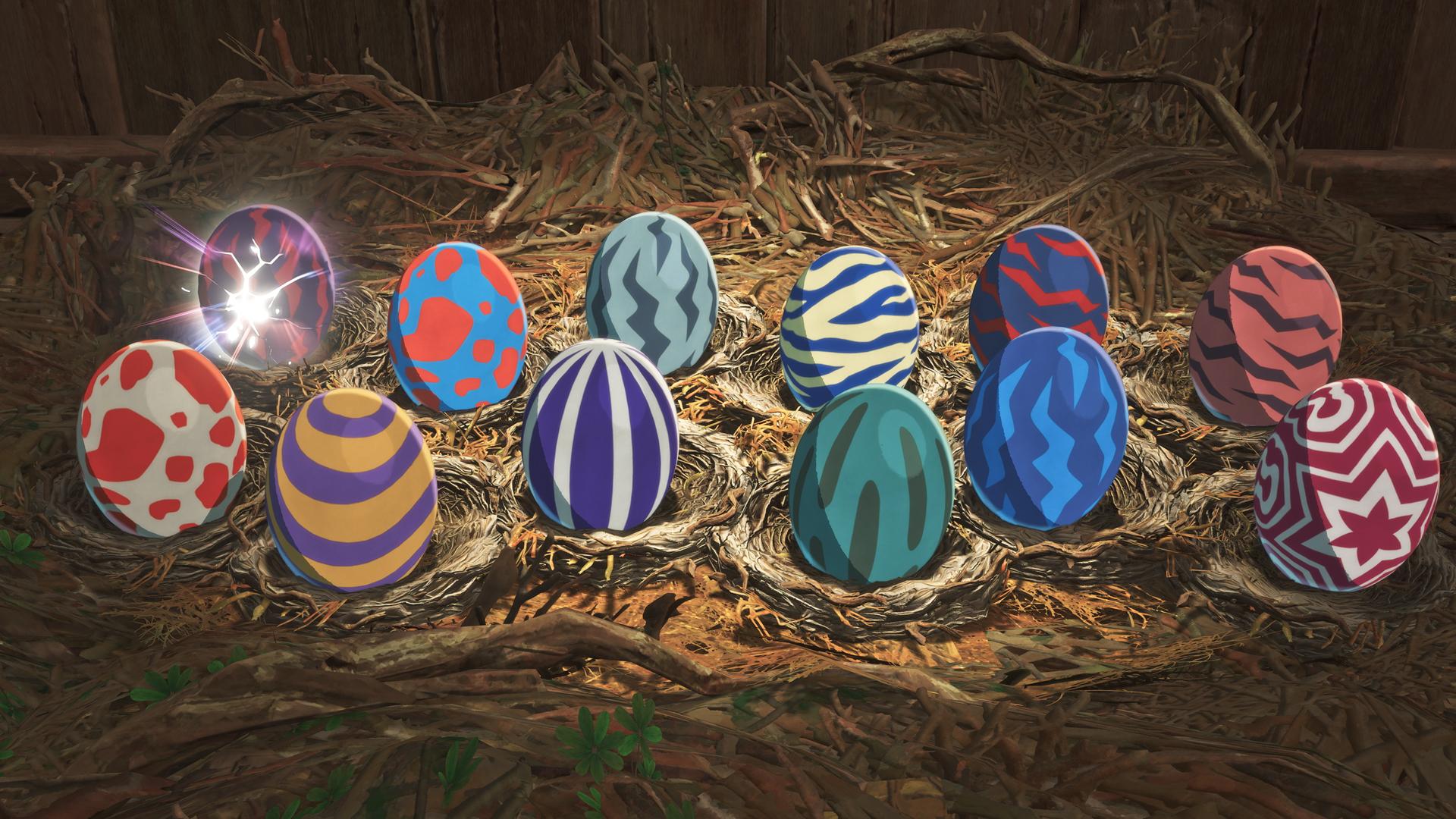
- Fairly Potent (no glow): basic genes, lowest quality
- Very Potent (gold glow): better genes, mid-tier
- Highly Potent (rainbow glow): rarest genes, strongest monsties
Egg quality determines gene rarity on the hatched monstie. Base stats stay the same regardless of quality, but rainbow eggs unlock access to the rarest genetic traits that feed into the Rite of Channeling system.
Den Types
| Den Type | Icon Color | Notes |
|---|---|---|
| Normal Den | White | Standard eggs, one nest |
| Rare Den | Yellow | Better drop rates |
| Super Rare Den | Blue | Spawns once per region per den refresh cycle |
| Retreat Den | Green | Created when a field monster flees. Two nests, pacified monster inside |
The Retreat Den Loop
Retreat Dens are the most efficient egg source. Defeat a monster in the field and it flees to a nearby den containing two nests with pacified monsters. Once a species hits S-rank Ecosystem in an area, its Retreat Dens become a reliable source of rainbow eggs. The farming loop: defeat field monsters, collect from Retreat Dens, hatch, level, release, repeat until S-rank, then farm rainbow eggs for competitive builds.
Optimization Tips
Focus on one species per area first. Getting one species to S-rank unlocks the mutation check and rainbow egg farming for that species. Spreading releases across many species delays all of them.
Batch your releases. Collect 5-10 eggs of the same species, hatch them all, level them in a group, then release the batch. This is faster than releasing one at a time and leveling individually.
Use food that increases items gathered before entering dens. This improves chest drops during den exploration, giving you more materials alongside the eggs.
Plan for cross-mutation pairs. If you want Thunderlord Zinogre, you need Zinogre and Mizutsune at S-rank in the same area. Start both species early in the same habitat so you are not blocked later when one hits S-rank and the other is still at B.
Check the Monsterpedia blank entries. Every mutation has a hint about its unlock condition. Read these before committing restoration slots so you know which species need to coexist in the same area.
Recommended Gear
MHS3’s restoration loop rewards long sessions of egg farming, hatching, and releasing. A comfortable controller and a second screen for tracking Monsterpedia conditions make the grind smoother.

Monster Hunter Stories 3: Twisted Reflection
Standard Edition – PlayStation 5

Monster Hunter Stories 3: Twisted Reflection
Standard Edition – Nintendo Switch 2

Nintendo Switch 2
7.9″ HDR10 touchscreen, 120Hz display
Frequently Asked Questions
Can I retrieve a monstie after releasing it into a habitat?
No. Once a monstie is released, it is permanent. You can replace it with another monstie if you exceed the slot limit, but the original is gone. Use Eco Conservation (L3) to lock monsties you want to keep.
What happens if I lose an endangered species?
It is gone permanently. Endangered species eggs only come from Invasive Monster dens. If you lose the monstie without releasing it into a habitat first, you cannot get another one. Always release endangered monsties into a habitat as soon as possible.
How many restoration slots does each area have?
Each habitat holds 10 monsters total, split between fixed native species and your introduced monsties. The limit is 5 restoration slots per unique species. Native species cannot be removed.
Does the area element need to match the monstie element for rank multipliers?
No. The element multiplier activates when your released monsties share the same element as each other, not the area’s element. The area element matters for dual-element combinations, not for rank speed.
What is the fastest way to reach S-rank Ecosystem?
Focus on one species per area. Collect eggs of that species, hatch and level them to 20-30 before releasing, and release in batches. Stacking the same species with matching elements activates both the species and element multipliers simultaneously.
Summary
Habitat restoration is the bridge between collecting monsties and building competitive teams. S-rank Ecosystem produces rainbow eggs with the rarest genes, which feed directly into the Rite of Channeling for endgame builds. Level your monsties before releasing, stack the same species and element for multipliers, plan for cross-mutation pairs like Zinogre and Mizutsune, and protect endangered species by releasing them into habitats immediately. The loop takes time but the payoff is access to mutations and dual-element monsties that are impossible to get any other way.