Monster Hunter Stories 3: Twisted Reflection throws a lot at you in the first few hours. Between the rock-paper-scissors combat triangle, the Wyvernsoul gauge, eight different weapon types, and an entire ecosystem restoration system, it’s easy to feel overwhelmed. This Monster Hunter Stories 3 beginner guide breaks down every core system so you can spend less time guessing and more time building a team of Monsties that hits like a truck.
TL;DR
- Learn the combat triangle: Power beats Technical, Technical beats Speed, Speed beats Power. Win Head-to-Heads to drain the Wyvernsoul gauge faster.
- Carry three weapons covering Slash, Blunt, and Pierce damage. Swap mid-fight to target monster weak points and break parts.
- The Rite of Channeling no longer destroys your Monsties. Experiment with gene transfers freely to build powerful combinations.
- Restore habitats by clearing Feral Monsters. Higher Ecosystem Ranks mean better eggs and rarer Monsties in the wild.
- Monster Hunter Stories 3 launches March 13 on PS5, Xbox Series X/S, Nintendo Switch 2, and PC. Demo progress carries over to the full game.
Master the Monster Hunter Stories 3 Combat Triangle
Every battle in Stories 3 revolves around three attack types: Power, Speed, and Technical. Power crushes Technical, Technical outmaneuvers Speed, and Speed overwhelms Power. If you and an enemy target each other on the same turn, you trigger a Head-to-Head clash where the winning attack type deals full damage while the loser takes a hit and deals none.
Here’s what separates good riders from great ones: matching your Monstie. If you and your Monstie both pick the winning attack type in a Head-to-Head, you trigger a Double Attack that deals serious bonus damage. Pay attention to your Monstie’s tendencies. A Power-type Monstie like Rathalos will lean toward Power attacks, so pick Power yourself when the enemy is using Technical.
Most monsters follow predictable patterns. After fighting one a few times, you’ll start reading which attack type they favor in each phase. When a monster rages or switches stance, its pattern often shifts, so don’t autopilot.
Break the Wyvernsoul Gauge
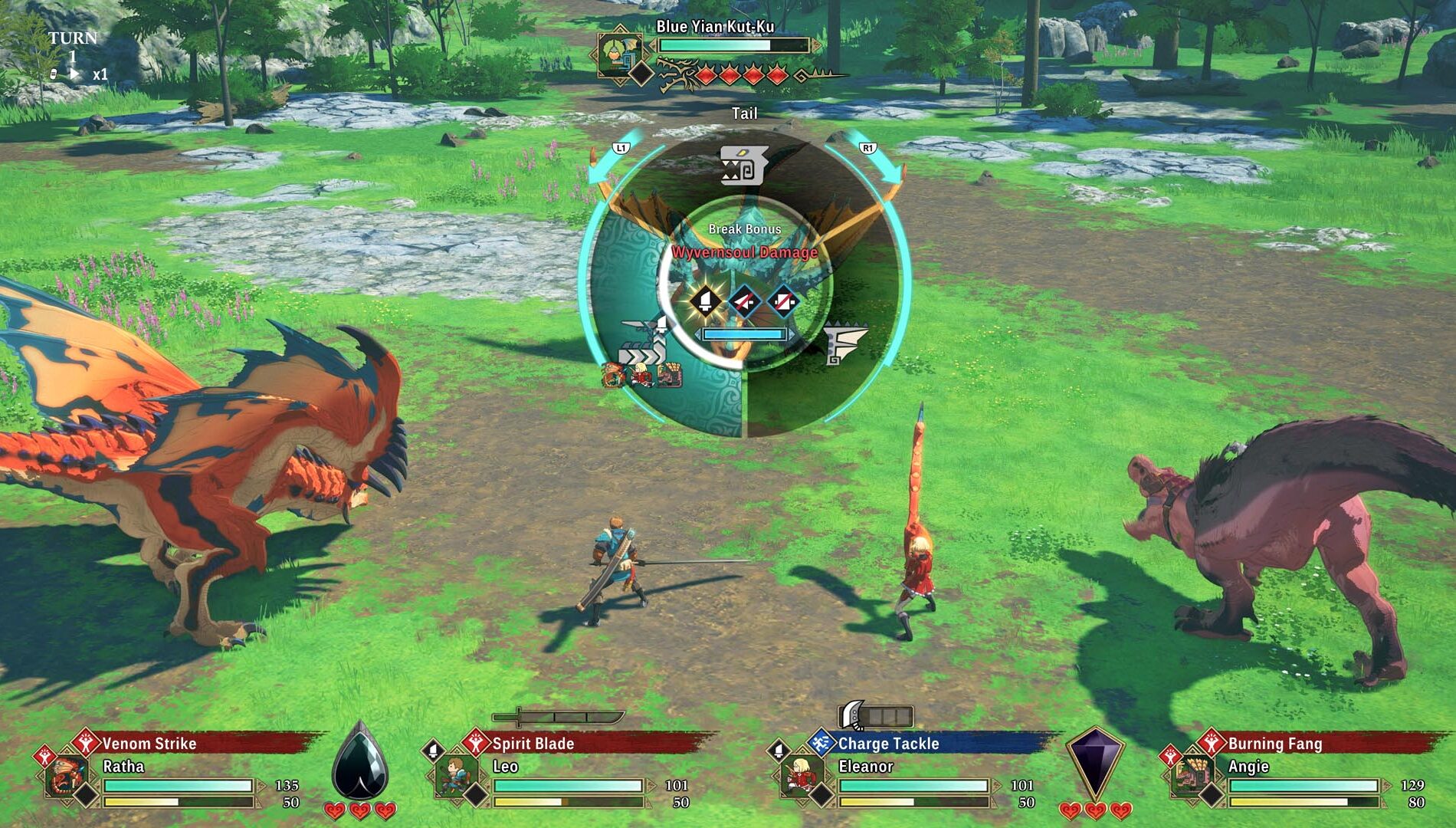
Underneath every monster’s health bar sits a row of red orbs called the Wyvernsoul gauge. This is your real target. Winning Head-to-Heads, landing super-effective weapon hits, and targeting weak body parts all chip away at it. Once you drain every red orb, the gauge flips to blue and becomes the Break gauge.
Deplete the Break gauge and the monster enters a Stunned state. That’s when the entire party unleashes a Synchro Rush, a coordinated barrage where every hit lands as a critical and Kinship skills cost nothing. This is where fights get won. A single Synchro Rush can shave off a third of a tough monster’s health bar if your team is built right.
While you’re working on the Wyvernsoul gauge, you’re also filling your own Kinship gauge through successful attacks. Once it’s full, you can ride your Monstie and unleash a flashy Kinship skill for massive damage. Time it after a Synchro Rush for maximum burst.
Choose the Right Weapons
Stories 3 gives you eight weapon types, and you can equip three at a time, swapping freely between them on your turn. Each weapon deals one of three damage types, and matching the right type to the right body part is how you break parts efficiently and drain Wyvernsoul faster.
| Damage Type | Weapons | Best Against |
|---|---|---|
| Slash | Great Sword, Longsword, Sword & Shield | Tails and severable parts |
| Blunt | Hammer, Hunting Horn | Heads and shells (KO damage) |
| Pierce | Bow, Gunlance, Lance | Wings, backs, and breakable parts |
The Longsword is new to the Stories series and hits hard right out of the gate. It’s a solid starting pick if you want raw Slash damage. For your loadout, carry one weapon from each damage type so you’re never stuck hitting a monster’s armored head with a Slash weapon when Blunt would do triple the work.
Each weapon also has unique skills. The Great Sword builds a Charge gauge for devastating charged strikes. The Hunting Horn buffs and heals your whole party through note combinations. The Sword & Shield has Guard skills for survivability. Experiment early and figure out which weapons suit your playstyle before you hit the harder fights.
Build Your Monstie Team
Your Monstie roster is the backbone of your party. You can carry up to six Monsties and swap between them mid-battle. Each one has an attack type tendency (Power, Speed, or Technical), unique skills, and a set of genes that define their abilities.
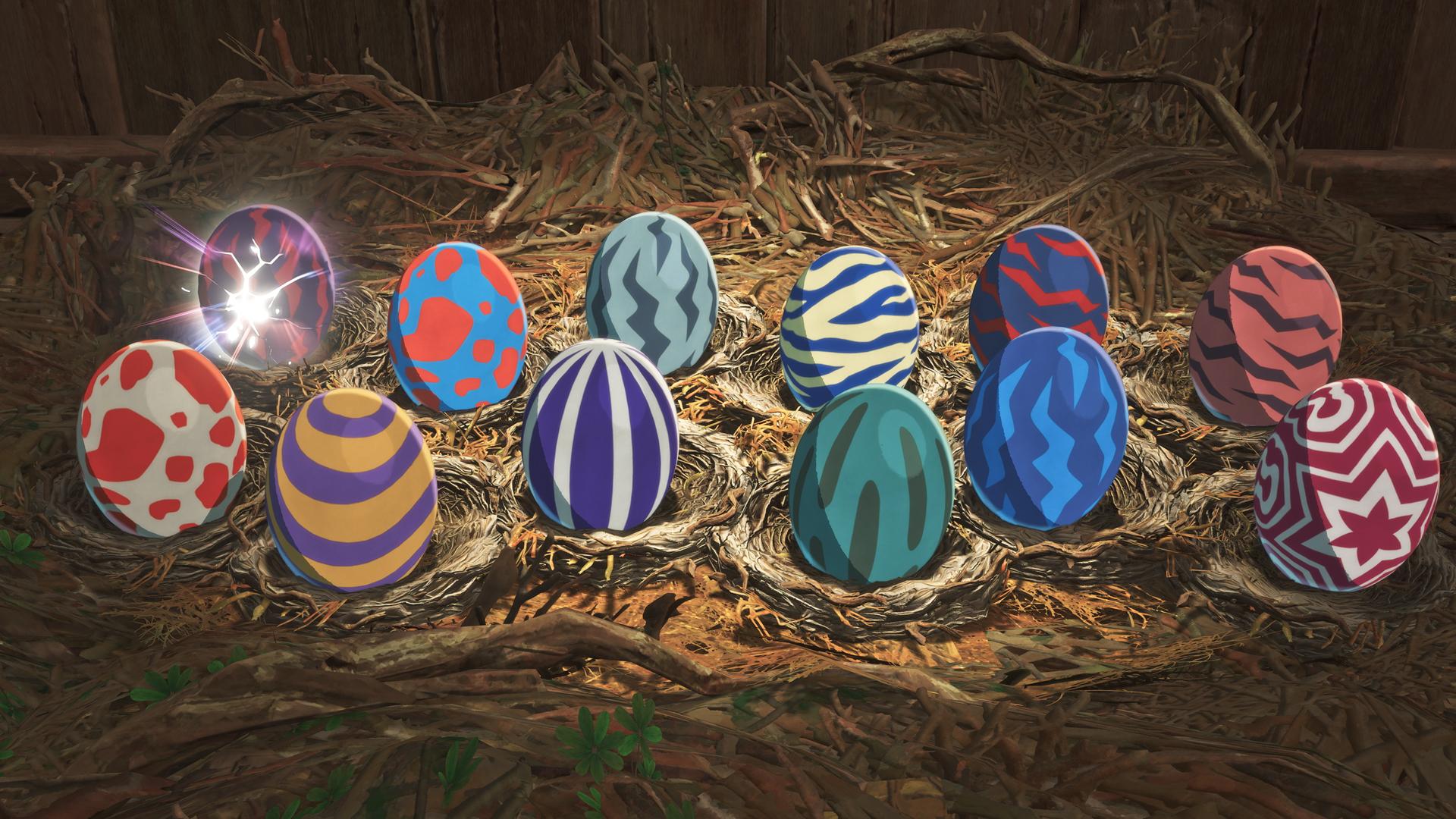
You collect Monsties by raiding monster dens scattered across the map and grabbing eggs from nests. Each egg’s pattern hints at what’s inside, and heavier, stinkier eggs generally carry better genes. Hatch them back at camp to add them to your roster.
The Rite of Channeling
This is the gene transfer system, and Stories 3 made it much more forgiving. In previous games, channeling genes consumed the donor Monstie permanently. That’s gone now. Neither the Monstie nor the genes get destroyed, so you can experiment freely without losing a favorite companion.
Genes sit on a 3×3 grid. Line up three genes of the same element or type in a row (horizontal, vertical, or diagonal) to trigger a Bingo Bonus, which boosts stats tied to that element. Planning your gene grid is where the real min-maxing lives. A new “Find in Field” option also lets you track specific genes you want, pointing you toward the right dens and eggs. Once you’re ready for endgame optimization, our gene guide has full 3×3 grid builds for every S-tier monstie.
For your early team, focus on covering all three attack types. One Power Monstie, one Speed, one Technical. That way you always have the right counter ready for Head-to-Heads regardless of what the enemy throws at you. Once you’re ready to optimize, check our best monsties tier list for the strongest picks at every stage of the game.
Restore Habitats for Better Rewards
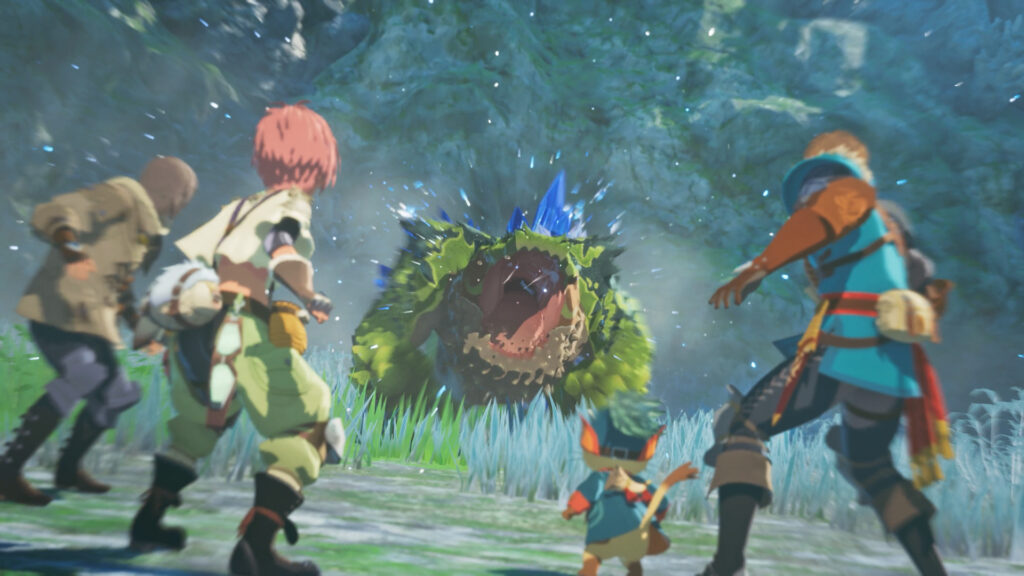
Habitat Restoration is the big new system in Stories 3, and it ties directly into how you get your strongest Monsties. Each region has ecosystems that have been disrupted by Feral Monsters. These crystallized creatures are aggressive and hit much harder than normal enemies. They also won’t go down easily through brute force alone.
Drive off the Feral Monsters occupying a territory and you can set up camp to begin restoring the habitat. As you clear out invasive species, endangered monsters start returning to the area. Their eggs begin appearing in local dens, and the quality of those eggs climbs as the Ecosystem Rank rises.
Higher Ecosystem Ranks mean higher-quality eggs, rarer gene rolls, and more wild monsters roaming the overworld. It’s a snowball effect: the more you invest in restoring a habitat, the better your rewards get. Don’t skip side areas just because the main story is pulling you forward.
⚡ Quick tip: Feral Monsters often have Blightstones on their bodies. Breaking these crystals weakens the monster, but be careful. Hitting a Blightstone can trigger an immediate counterattack. Watch for the telegraph before committing to the strike.
Use Your Full Party
Stories 3 runs four-member battles: you, your Monstie, an AI-controlled Battle Buddy rider, and their Monstie. This is a big change from the more isolated combat of previous entries. Your Battle Buddy’s attack type matters for triggering Double Attacks and building Wyvernsoul damage, so pay attention to what they’re doing and try to sync up.
You’ll unlock six squadmates as you progress through the story: Simon, Thea, Gaul, Ogden, Kora, and Eleanor. Each one brings different combat synergies. Eleanor, for example, can cook meals at camp that grant temporary stat buffs before tough fights. Completing each character’s Side Story unlocks new skills, weapon options, and Monstie partners for that companion.
One welcome change: party members who lose all their hearts now return after a few turns instead of causing an instant game over. This gives you breathing room during harder encounters, but don’t lean on it. A revived ally comes back weakened, and those lost turns add up fast against aggressive Feral Monsters.
Frequently Asked Questions
Does Monster Hunter Stories 3 demo progress carry over to the full game?
Yes. Your save data from the free demo transfers directly into the full release on March 13. Everything you collect, hatch, and build in the demo is yours to keep. The demo caps your party at level 10.
What’s the best starting weapon in Monster Hunter Stories 3?
The Longsword is new to the Stories series and deals strong Slash damage right from the start. Pair it with a Hammer for Blunt coverage and a Bow for Pierce to handle any monster weakness. Sword & Shield is another solid pick if you want Guard skills for survivability.
How many Monsties can you carry at once?
You can bring six Monsties into the field and swap between them freely during battle. Build a roster that covers all three attack types (Power, Speed, Technical) so you always have the right counter available.
Does the Rite of Channeling destroy Monsties in Stories 3?
No. Unlike previous games, channeling genes in Stories 3 no longer consumes the donor Monstie or the genes. You can transfer genes as many times as you want without losing anything, which makes experimenting with builds much less stressful.
What platforms is Monster Hunter Stories 3 available on?
Monster Hunter Stories 3: Twisted Reflection launches March 13, 2026 on PlayStation 5, Xbox Series X/S, Nintendo Switch 2, and PC via Steam. The standard edition is $70.
Summary
Monster Hunter Stories 3 has more depth than it lets on during the opening hours. Once the combat triangle clicks and you start building gene loadouts around specific team compositions, the strategic possibilities open up fast. Focus on learning monster patterns, keep a balanced weapon loadout, invest in Habitat Restoration for the long game, and don’t be afraid to experiment with the Rite of Channeling now that it’s risk-free. Once you unlock camps by defeating Feral monsters, the habitat restoration system becomes your path to mutations and the strongest eggs in the game.
If you’re jumping between Monster Hunter titles, check out our Monster Hunter Wilds beginner guide for tips on the mainline series, or dig into our Wilds armor progression guide if you’re looking to optimize your gear path there.
If you want another creature collector that is free to start, our Aniimo gacha guide explains its paid shortcuts and free routes.