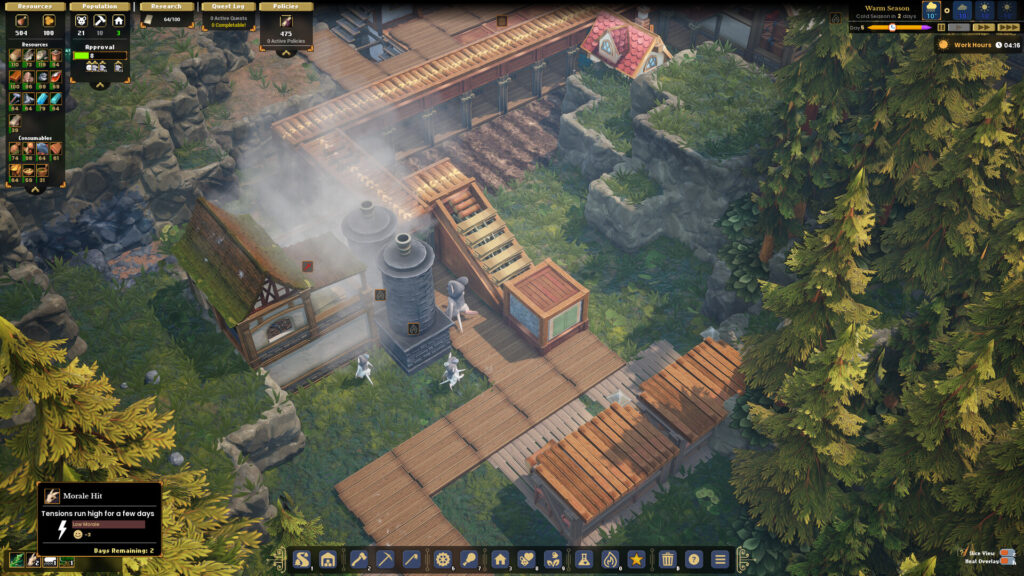
Key Takeaways
- Treat approval as a resource, not a happiness meter: you spend approval to recruit colonists, enact policies, and move stuck Whiskers, so don’t let it sit unused
- Build vertically from the start: your islands are small and flat land runs out fast. Stairs are free and fully refundable, so stack buildings early
- Overpay your taxes at 125%: this gets you two Gifts per collection, and the supplies, schematics, and Diplomacy Seals you receive are worth more than hoarding resources
- Prepare for winter or your mice will freeze: place campfires near housing and workplaces before Fall ends, and stockpile food and logs for the cold months
Whiskerwood drops you on a tiny island with a handful of mice and a tax bill from your cat overlords. Within a few in-game days, you’re juggling food production, housing, mining operations, and seasonal weather shifts while the Claws demand increasing tribute. After losing two colonies to winter freezes and a third to runaway industrial taxes, I figured out what the game actually wants you to prioritize. This guide covers the systems that tripped me up so you can skip the painful trial-and-error phase.
Core Mechanics You Need to Understand
Whiskerwood looks like a standard city-builder, but three systems make it play differently than anything else in the genre.
The Guild System
Every Whisker (your mouse colonist) belongs to one of four guilds: Explorer, Miner, Farmer, or Engineer. Each guild has three specialized traits that affect work efficiency. A Miner working a mine is significantly more productive than a Farmer doing the same job. When hiring new colonists, check their guild before accepting them. Assigning mice to non-guild jobs wastes productivity you can’t afford early on.
Approval as a Resource
This is where most new players get confused. Approval isn’t a happiness meter. It’s a spendable resource. You use approval points to recruit new colonists, enact policies, and relocate stuck Whiskers (costs one point per move). Letting approval accumulate overnight without spending it is like leaving gold on the ground. Build services like the Bathing Dock and Cafe to generate approval, then spend it on growing your colony.
The Tax Cycle
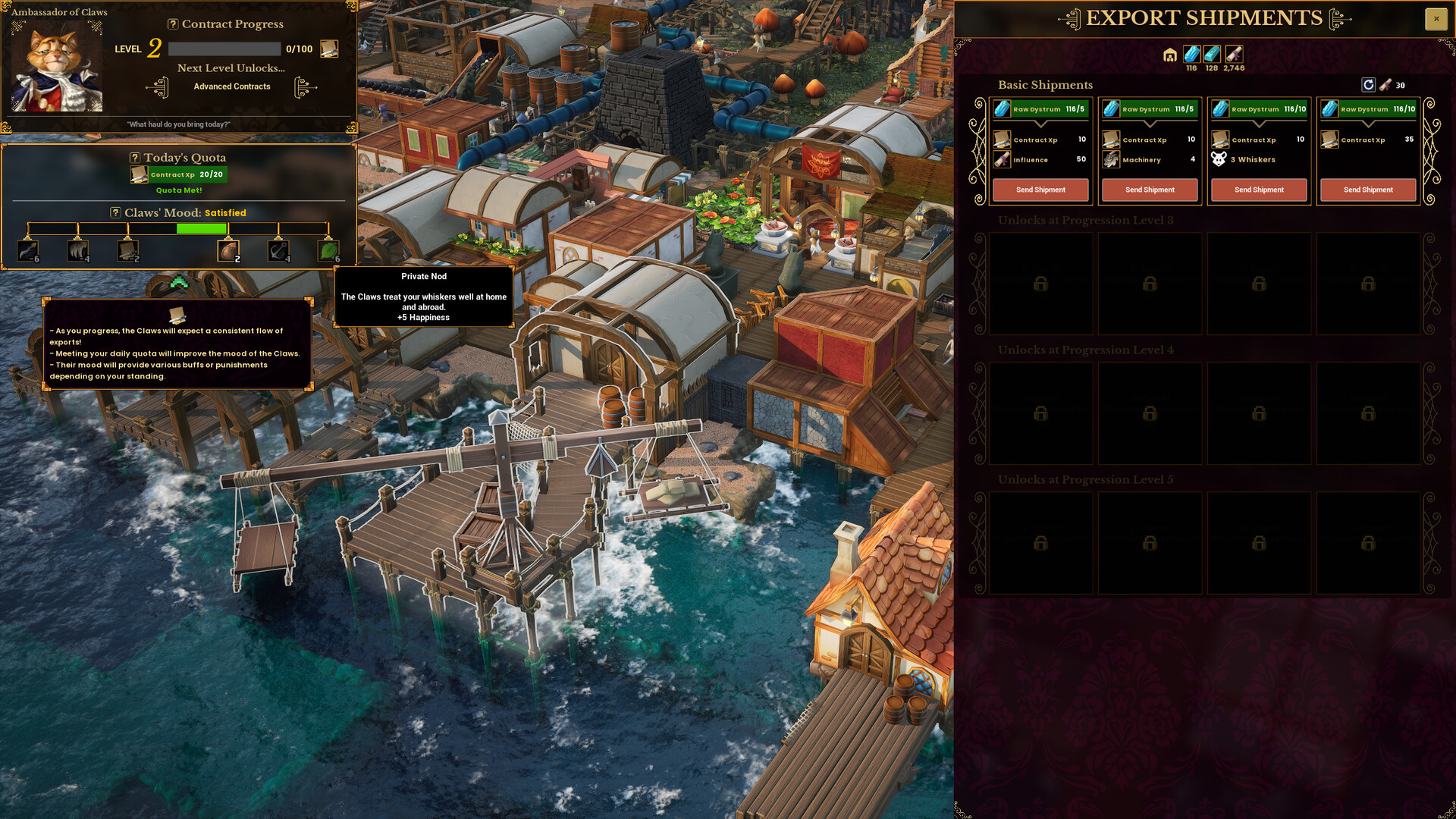
The Tax Collector arrives every three days to collect tribute for the Claws. You can pay at five different levels, from underpayment to 175% overpayment. Underpaying drops your Crown trust, and if trust hits zero, it’s game over. Overpaying builds trust and sends back rewards. This cycle dictates everything you build and when.
Setting Up Your First Colony
When you land, place your Export Dock near trees and berry bushes. Build a warehouse immediately, before signing your Charter. The moment you sign, the tax clock starts ticking.
Your first priorities in order:
- Warehouse near the dock for storage
- Houses for your starting Whiskers (stone houses work fine early)
- Berry gathering or fishing for food
- Wood chopping for building materials and tax payments
- Mining for ore to pay taxes efficiently
One important early-game trick: you can survive for weeks without producing your own food by using Supply Ships and Gifts from overpaying taxes. This means you can delay farming and focus on mining and infrastructure instead. Copper and gold ore are far more valuable per unit than berries or wood, so getting a mine running early makes your tax payments easier.
Grow slowly. Add one new Whisker per season at most. Every colonist increases your population tax, and a large colony with nothing to do drains resources faster than a small, efficient one.
Vertical Building and Space Management
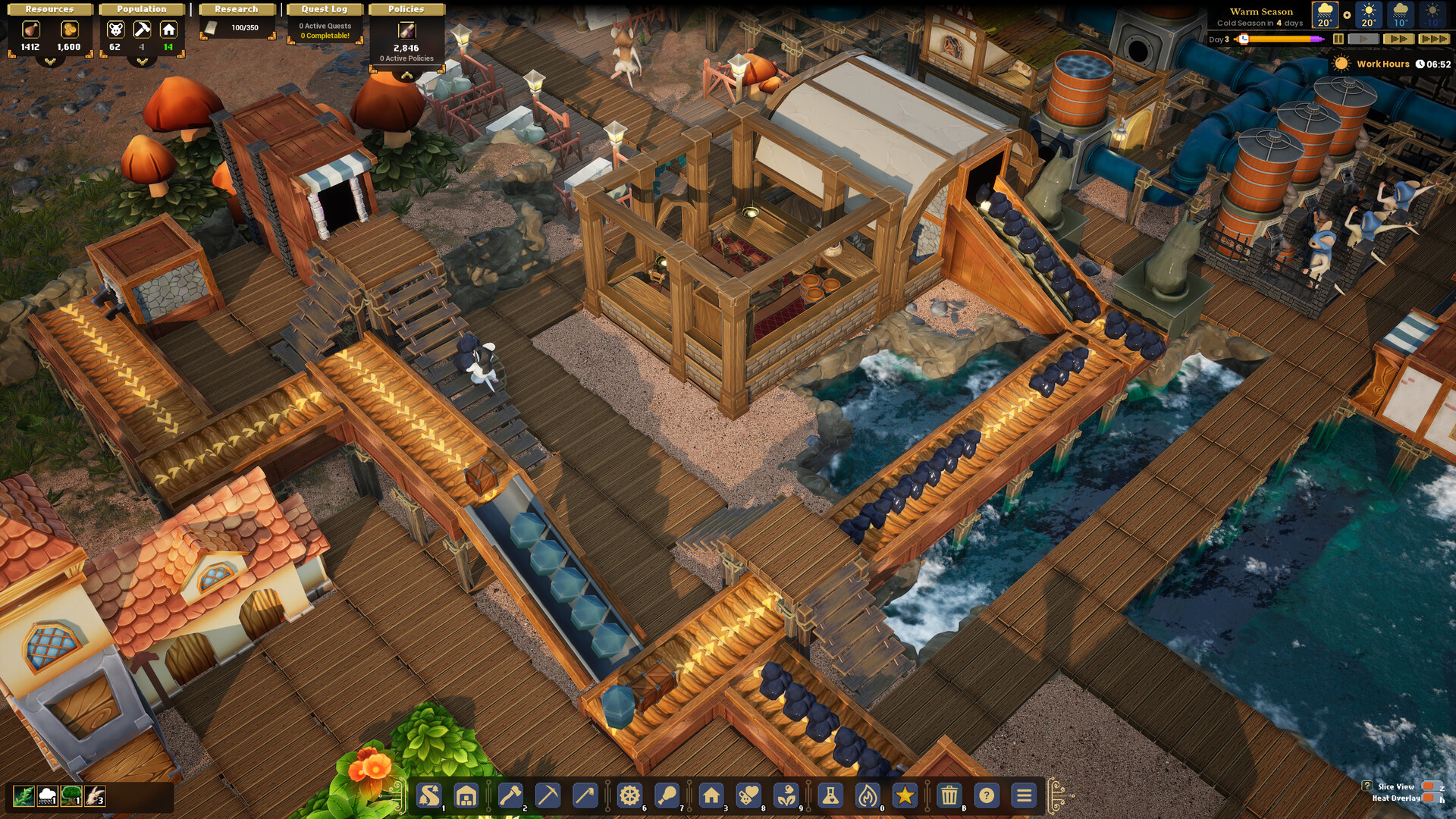
Your islands are tiny. You’ll run out of flat land within the first few in-game days, and that’s by design. Whiskerwood wants you to build up, down, and across water.
The good news: stairs cost nothing to build and give a full refund when you remove them. This makes vertical experimentation risk-free. Stack production buildings on top of each other, connect levels with ramps and slides, and dig underground for mushroom farms and storage.
Multi-level colonies also use less fuel to heat. Buildings stacked together share warmth, which becomes critical when winter hits. Keep housing, production, and storage close together to minimize walking distances. A Whisker who has to walk across the entire island to eat dinner won’t make it back to bed before morning.
For crossing water, you have two options: bridges (fast but log-intensive) and Earthworks land bridges (slower, cheaper, use stone). If you’re expanding to a new resource deposit across a gap, Earthworks is usually the better call unless you’re in a rush.
Tax Strategy and Economy
Here’s the counterintuitive part: mining is more important than farming in the early game. The rewards you get from overpaying taxes, like food, clothes, logs, and Diplomacy Seals, are often worth more than what you’d produce yourself.
Pay 125% taxes to receive two Gifts per collection. This is the most efficient early setup. Don’t push to 175% until your economy is stable.
Goods have different values for tax purposes:
- Gold Bullion: 233 value
- Cotton: 21 value
- Coal: 13 value
- Logs: 8 value
- Berries: 5 value
Gold bullion from Smugglers is extremely valuable. If a Smuggler ship offers gold, take the deal. You can also convert wood into planks for roughly 5x the tax value per unit of wood, making plank production a strong mid-game income source.
Watch your Industrial Tax. Every production building increases it, and it builds up fast. Delay heavy industrialization until your core economy is solid. If you’re choosing your scenario, Far Frontier offers the most balanced start with roughly two tax ships and one pirate per season.
Surviving Winter
Winter will kill your mice. This isn’t an exaggeration. Your Whiskers freeze to death if they’re too far from a heat source, and the Claws stop visiting during cold months, which means no tax collections but your debt keeps building.
Before Fall ends:
- Place campfires near housing, workplaces, the Bathing Dock, and the Cafe
- Press H to toggle the heat overlay and check for cold spots
- Stockpile food, clothes, and logs
- Max out your Royalty satisfaction to get the best supply shipments
Don’t cluster campfires together. Too many in one spot causes heavy pollution, which makes your Whiskers sick. Spread them out along common walking routes. Water naturally absorbs and stabilizes heat, so buildings near water stay warmer.
When spring arrives, that first tax bill will be brutal. Pay only 50% to recover financially, even if it drops your satisfaction temporarily. Rebuilding trust is easier than recovering from bankruptcy.
If you enjoy the seasonal survival loop here, check out our Timberborn beginner guide. Both games are published by Hooded Horse and share that “prepare or die” rhythm, but Timberborn swaps winter for droughts and mice for beavers.
Common Mistakes to Avoid
Hiring too many colonists too fast. Every Whisker adds to your population tax. One new mouse per season is plenty. A colony of 8 efficient workers outperforms 15 idle ones every time.
Building flat instead of vertical. If you’re placing all your buildings on ground level, you’ll run out of space before your first winter. Stairs are free. Use them.
Ignoring the guild system. A Farmer assigned to a mine works significantly slower than a Miner. Check guilds before assigning jobs.
Skipping the Bathing Dock. It’s the most approval-efficient service building in the game. Build it before the Cafe, before decorations, before anything else.
Overfilling warehouses. When a warehouse is full, production stops. Build multiple smaller warehouses near production sites and disable item receivability to control what goes where.
For another city-builder with complex production chains, our Satisfactory beginner guide covers similar automation and logistics principles. For idle games with incremental progression, our Perfect Tower II beginner guide breaks down a free-to-play tower defense game built around factory automation and prestige resets.
Frequently Asked Questions
What’s the best starting scenario in Whiskerwood?
Far Frontier offers the most balanced experience for beginners. You get roughly two tax ships and one pirate per season, with colonists who have balanced traits. Pirates emphasizes defense, and Monarchists gives you frequent tax visits with cheaper hiring costs but reduced production efficiency.
How do I stop my Whiskers from freezing in winter?
Place campfires near housing, workplaces, and service buildings before Fall ends. Use the heat overlay (H key) to find cold spots. Don’t cluster campfires too close together or pollution will make your colonists sick. Buildings near water stay warmer because water absorbs and stabilizes heat.
Should I focus on farming or mining first?
Mining. Ore is worth significantly more per unit for tax payments than food. Gold bullion has a tax value of 233 compared to 5 for berries. You can survive on Supply Ships and tax Gifts while building your mining operation.
How does the approval system work?
Approval is a spendable resource, not a happiness meter. You earn it through services (Bathing Dock, Cafe, decorations) and spend it to recruit colonists, enact policies, and move stuck Whiskers. Build approval-generating buildings early and spend it on colony growth.
Is Whiskerwood similar to Timberborn?
Both are published by Hooded Horse and share city-builder DNA with survival elements. Timberborn uses beavers facing droughts, while Whiskerwood has mice under cat overlords facing winter. Whiskerwood puts more emphasis on vertical building, tax management, and production chain complexity.
Gear for Long Sessions
City-builders like Whiskerwood turn into marathon sessions fast. Here’s what we use for those “one more season” nights.

SteelSeries Arctis Nova 7
Wireless with 38-hour battery life

SteelSeries Apex Pro TKL
Adjustable actuation for fast inputs

Logitech G502 X Plus
Wireless with HERO 25K sensor
Summary
Whiskerwood rewards patience and planning over rapid expansion. Focus on mining for tax payments, build vertically from day one, and prepare for winter before Fall ends. Keep your colony small and efficient, pay 125% taxes for double Gifts, and let the Claws fund your growth. The learning curve is steep for the first few in-game years, but once the tax cycle clicks, everything else falls into place. For another production-heavy management game, use our Graveyard Keeper 2 beginner guide for the opening technology, energy, and corpse systems. If you enjoy colony builders on the go, see our roundup of the 10 best village simulation games on mobile.