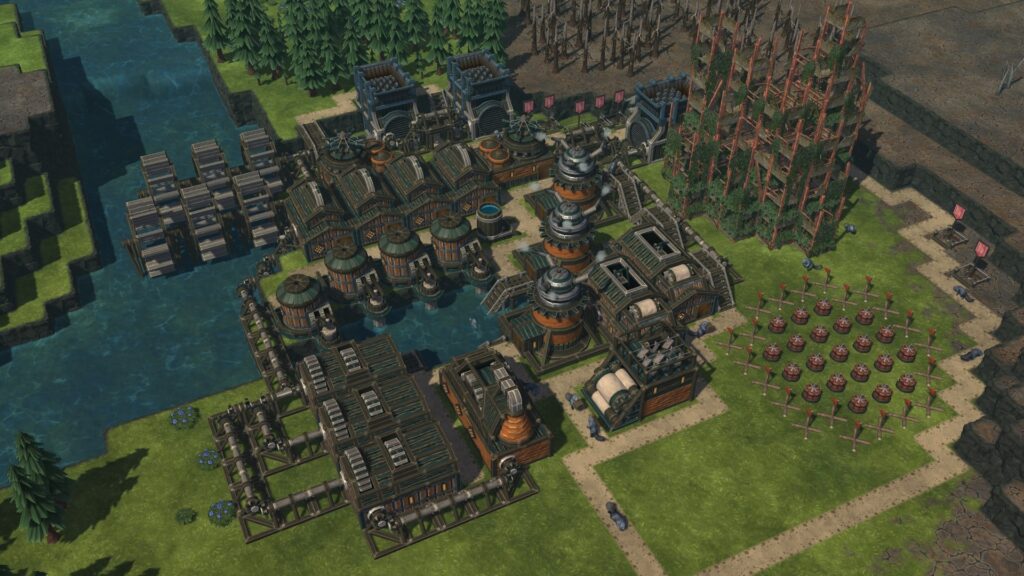
Timberborn drops you into a world where humanity is long gone and beavers are rebuilding civilization. Sounds simple until your first drought kills half your colony because you didn’t store enough water. After spending dozens of hours watching colonies thrive and crumble, here’s everything you need to survive your first few seasons and actually enjoy the process.
Key Takeaways
- Water is survival: build dams and storage tanks before your first drought arrives around day 20, because dried-up colonies don’t recover
- Build order matters: Log Pile first, then Water Pump, Gatherer Flag, housing, and a Campfire for morale
- Green land is for farming: only place crops on arable (green) land near water sources, and keep buildings on the brown terrain
- Start with Folktails: they’re the beginner-friendly faction with natural breeding and simpler resource needs
What Is Timberborn?
Timberborn is a city-building survival game where you lead a colony of beavers in a post-human world. The core loop is straightforward: gather resources, build infrastructure, grow food, and survive recurring droughts that shut off every water source on the map. It launched into early access in 2021 and hit version 1.0 on March 12, 2026 after five years of development.
The game runs on PC via Steam and supports mods through Steam Workshop. There are currently two playable factions (Folktails and Iron Teeth), 16+ maps ranging from easy river valleys to brutal desert scenarios, and a weather system that gets progressively harder the longer you play. If you’ve played city builders like Satisfactory or Frostpunk, the survival pressure will feel familiar, but the water physics are what make Timberborn unique.
Your First Build Order
Hit pause the moment you start a new game. Plan before you unpause. Here’s the priority order that gets you through your first drought:
- Log Pile. Beavers refuse to chop trees without one. Place it near the closest forest and mark trees for harvest.
- Water Pump + Small Water Tank. Water is your most critical resource. Connect these with a path so beavers start stockpiling immediately.
- Gatherer Flag. Place next to berry bushes for an early food source. Berries don’t require farming and feed your colony while you set up crops.
- 4 Lodges. Housing gates population growth. Without vacant lodges, no new beavers will spawn.
- Campfire. Covers the “social life” wellbeing stat. Skip this and your beavers get miserable.
- Inventor Hut. Assign one beaver to generate science points. Your first unlock should be the Forester, because without replanting, you’ll run out of trees permanently.
After the Forester, expand to at least 4 builder job slots. More builders means faster construction, which is critical when you’re racing to finish a dam before the dry season hits.
Water and Drought Survival
This is the mechanic that defines Timberborn. During temperate seasons, rivers flow and water sources produce freely. During droughts, everything stops. No river flow, no natural water. If you didn’t prepare, your crops die, your trees wither, and your beavers follow.
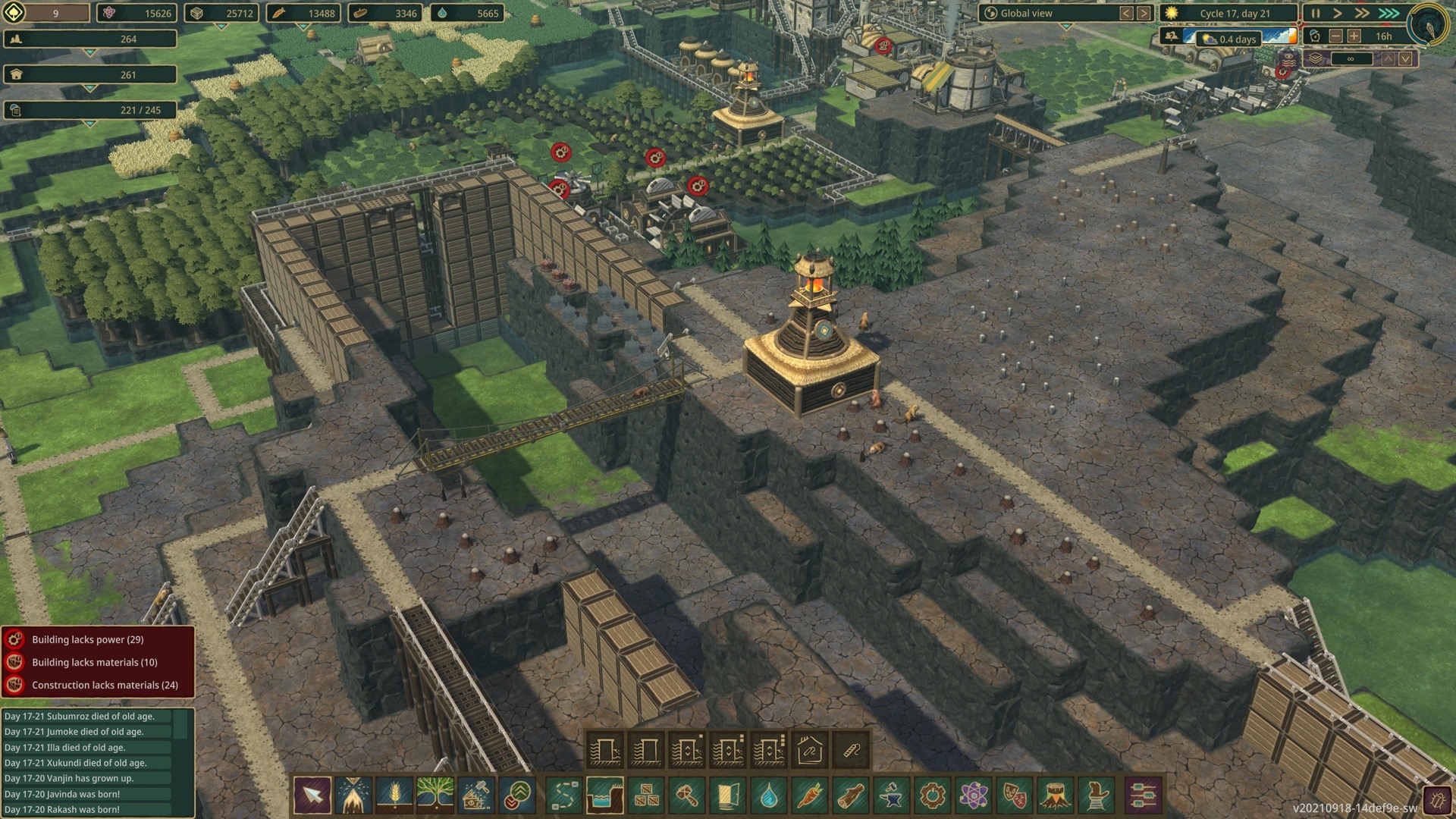
Dam your river first. Even a basic dam raises the water level and creates a reservoir that lasts into the drought. Levees block water completely while regular dams allow overflow. Floodgates give you manual control over water flow and come in single, double, and triple-height variants.
Build more water tanks than you think you need. Water in tanks doesn’t evaporate, so every tank is drought insurance. A good rule of thumb: 2 units of stored water per beaver per day of drought. Your first drought lasts 2-3 days on normal difficulty, but each successive drought gets longer.
Separate your drinking water from irrigation. Place water pumps away from your crops. Pumps consume large amounts of water, and if they’re next to your farmland, they’ll drain the water your plants need to survive. Keep pumps in dedicated locations and use your dam reservoir to irrigate crops naturally.
Badtide Events
After your first few droughts, you’ll encounter badtides. These flood your water sources with contaminated water that poisons crops, kills trees, and sickens beavers on contact. The simplest defense: use floodgates to cut off contaminated water from your reservoir and treat it like a drought until the badtide passes.
Farming and Arable Land
Land near water turns green. That green, arable land is the only terrain where crops grow. Treat it like prime real estate: farms, crops, and foresters go on the green. Housing, warehouses, and industry go on the brown.
Start with at least 40 carrot plots and one farm building. Carrots grow faster than wheat and hold up slightly longer during droughts. Once you have a stable food supply, expand to potatoes and eventually bread production (which requires wheat, a windmill, and a bakery).
Harvest everything before a drought starts. You’ll get a warning showing how many days remain. Pull your crops immediately. Vegetables wilt within a day or two once the water stops, so harvesting early saves food that would otherwise rot in the field.
Folktails vs Iron Teeth
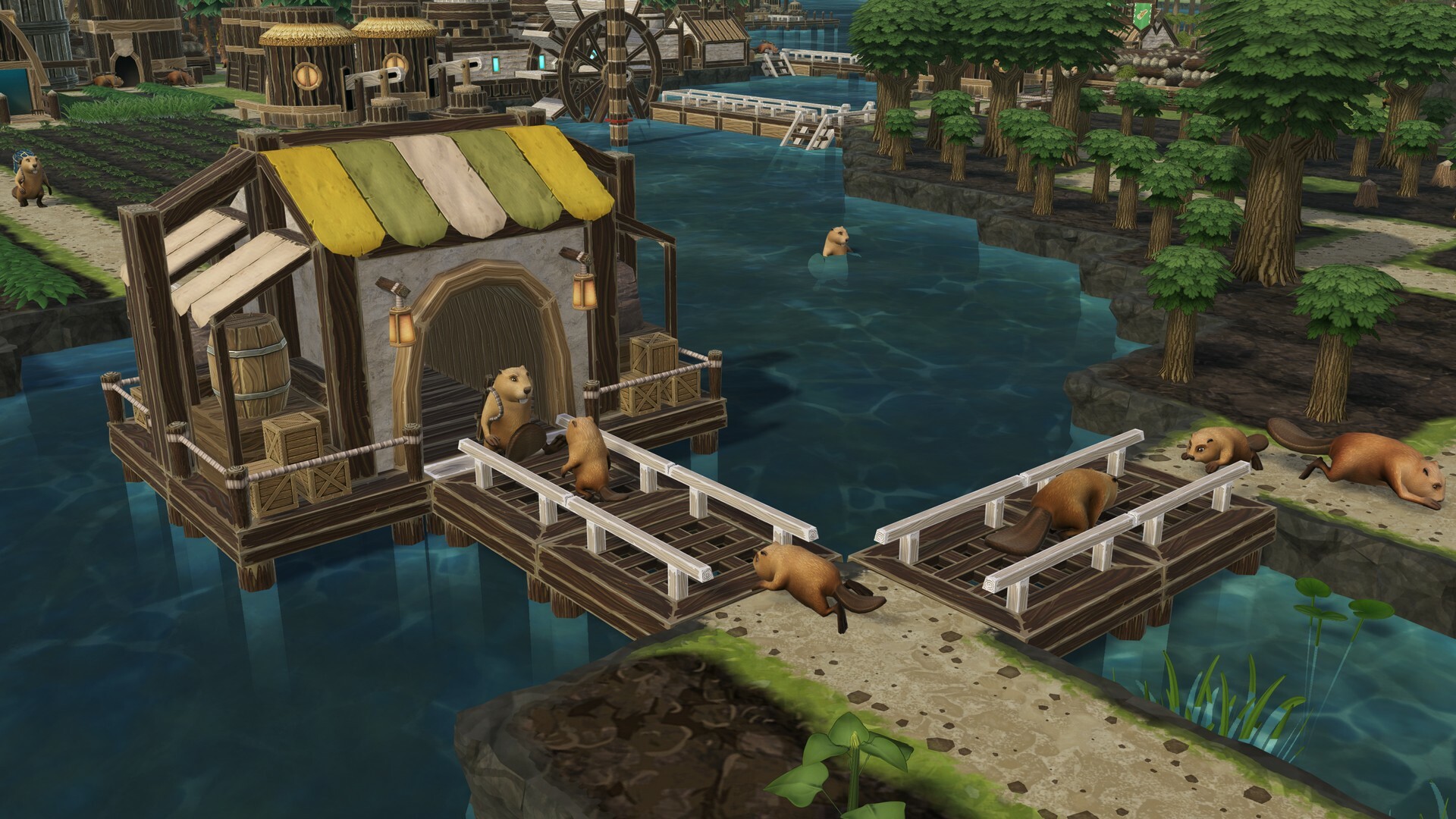
Folktails are the starter faction. They breed automatically through housing (just build lodges and wait), use water wheels and windmills for power, and have access to Irrigation Towers that water your crops. Their aesthetic is natural and wooden. Start here.
Iron Teeth unlock after reaching an average wellbeing score of 8 with the Folktails. They use breeding pods instead of natural reproduction, which requires feeding berries to kits. Their buildings are industrial and cramped, they rely on engines for power (which need fuel), and they get access to Deep Water Pumps and the Shredder for recycling. They’re not harder exactly, but they demand a different approach to resource management.
Neither faction is objectively stronger. Folktails have easier population growth but struggle with wood supply during droughts. Iron Teeth have powerful late-game tools but need metal early, which isn’t always accessible. Play Folktails first, then try Iron Teeth once you understand the core systems.
Districts and Expansion
Districts are independent sub-colonies, each with its own population, resources, and wellbeing. Think of them as separate towns connected by trade routes. You’ll want to create a new district when your beavers are walking too far to reach resources (the path indicator turns red past 70 blocks from the District Center).
To create a new district, build a District Center in an area separated from your existing path network by a District Crossing. New centers are free and don’t need builders. Then migrate beavers from your main district using the settlement panel. Prioritize sending adults so they can start working immediately.
Resources don’t transfer between districts automatically. Assign workers to District Crossings (up to 10 per side) to haul goods back and forth. Plan your districts around resource clusters: put one near your main water source, another near a distant forest, a third near metal deposits if you’re playing Iron Teeth.
What’s New in 1.0
The 1.0 release adds several major systems on top of the early access foundation:
- Automation. Over 20 logic-based objects (sensors, counters, timers, AND/OR/NOT gates) let you automate building operations, control water flow, and manage power grids without micromanagement. The community asked for this since early access, and it reshapes late-game play completely.
- Aquifer Drills. Tap underground water sources for drought-proof water supply. On maps with scarce surface water, these solve the biggest survival bottleneck.
- Geothermal Engines. Renewable endgame power that doesn’t depend on water flow or wind.
- Spiral Staircases. Compact vertical movement replacing bulky ramps. Huge quality-of-life improvement for vertical builds.
- Two new maps. “Pressure” (underground water sources) and “Oasis” (explosive hazards in a desert setting).
- Full UI overhaul. Redesigned interface, Steam Achievements, faster load times, and improved tutorials.
Common Mistakes
- Not building a dam before the first drought. This is the number one colony killer. Dam your river on day 1.
- Placing buildings on arable land. Every green tile occupied by a warehouse is a carrot plot you’ll miss during the drought.
- Ignoring the Forester. Trees don’t regrow on their own. Without a Forester replanting, you’ll deforest your entire map and run out of building materials permanently.
- Expanding population too fast. More beavers means more water and food consumption. Only grow your colony when your surplus can handle it.
- Relying on one power source. Water wheels stop during droughts, windmills depend on wind strength. Always diversify.
- Starting on a hard map. Play Lakes or Waterfalls first. Islands and Pressure are for experienced players.
For another Steam game with deep resource management and automation mechanics, our Perfect Tower II beginner guide covers a free-to-play idle game where you build factories, power grids, and automated production chains.
Frequently Asked Questions
How long does a drought last in Timberborn?
On normal difficulty, your first drought lasts 2-3 days. Each successive drought gets slightly longer. On hard mode, early droughts last 3-6 days and ramp up faster. The game uses a handicap system that gradually increases drought severity over 15 cycles.
Which faction should I pick first?
Start with Folktails. They breed automatically through housing, use straightforward power sources, and have a gentler learning curve. You’ll unlock Iron Teeth after reaching 8 average wellbeing with the Folktails.
How do I get more beavers?
Build vacant lodges and keep your beavers happy. Folktails breed naturally when they have spare housing and enough leisure time. Iron Teeth use breeding pods that require feeding berries to kits. In both cases, housing supply is the bottleneck.
Does water evaporate in tanks?
No. Water stored in tanks and barrels is safe from evaporation. Only surface water (rivers, reservoirs, lakes) evaporates at a rate of 0.045 per day per exposed tile. This is why tanks are essential drought insurance.
What is badwater and how do I deal with it?
Badwater is contaminated water that appears during badtide events. It kills crops, poisons trees, and sickens beavers. The simplest defense is closing floodgates to cut off the contaminated flow and treating the badtide like a drought until it passes.
Gear for Long Sessions
Timberborn players regularly log 500+ hours. If you’re settling in for long colony management sessions, comfortable gear makes a difference.

SteelSeries Arctis Nova 7
Wireless, comfortable for all-day wear

SteelSeries Apex Pro
Adjustable actuation for precise hotkeys

Logitech G502 X Plus
Precise clicks for building placement
Summary
Timberborn’s challenge comes down to one thing: water. Dam your rivers early, store more than you think you need, and respect the drought cycle. Start with Folktails on an easy map like Lakes, follow the build order above, and don’t expand until your colony can survive a dry season comfortably. Once you have the fundamentals, the 1.0 automation system opens up a whole new layer of colony management that’ll keep you busy for hundreds of hours. If you like base builders with real consequences, Timberborn is worth your time. And if you want another Hooded Horse city-builder with a different survival twist, our Whiskerwood beginner guide covers the mouse colony game where winter and cat overlords are your biggest threats. For a management game with graveyard restoration and production chains, use our Graveyard Keeper 2 beginner guide. For more colony builders you can take on the go, check out our list of the best village simulation games on mobile.