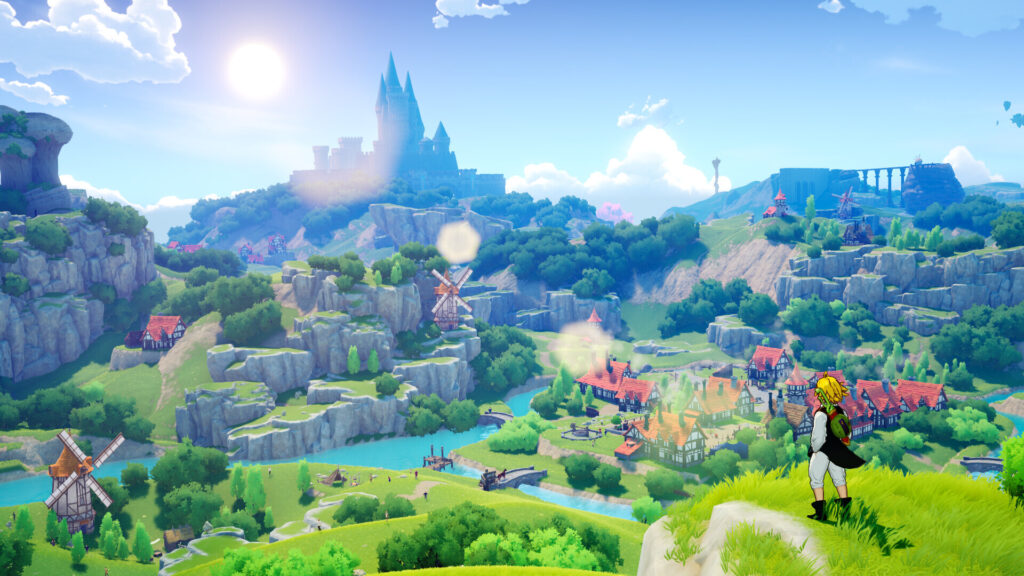
Seven Deadly Sins: Origin drops you into a 30 km² open world with a combat system that punishes you for playing it like every other action RPG. Your whole team shares one HP bar. Weapons are crafted, not pulled from gacha. And the Burst mechanic that actually wins fights takes hours to figure out without guidance.
I spent my first few hours ignoring half the systems the game barely explains. This guide covers what actually matters: how combat works under the hood, which free characters carry you through the story, how weapon crafting replaces the usual gacha grind, and the exploration habits that separate efficient players from ones stuck farming the wrong zones.
Key Takeaways
- Shared HP pool: your entire party draws from one health bar, so every character’s survivability matters
- Weapons are crafted, not pulled: no weapon gacha exists, you build everything at the Workbench
- Burst system wins fights: matching elemental attacks fills the Burst Gauge for massive damage and status effects
- Mastery Level 30 is the first power spike: it unlocks your second and third weapon slots per character
- Warp points first, everything else second: unlocking fast travel and clearing fog of war saves hours of backtracking
How Combat Works
The single most important thing to understand: your team shares one HP bar. It is not split per character. The total is calculated from the combined HP of all four party members. If one character is underleveled, the whole team feels it.
Combat revolves around three interlocking systems: tag skills, the Burst Gauge, and elemental advantage. Ignore any one of them and boss fights become a wall.
Tag Skills and Hero Switching
Switching characters mid-combat is not just a convenience. Each swap grants roughly 0.5 seconds of invincibility and accelerates your Burst Gauge fill rate. During boss fights, watch for blue-glowing icons that signal counter-attack windows. Swapping at that moment interrupts the boss and opens a damage window.
When two paired characters meet specific conditions, they unleash a Tag Skill: a joint attack that hits hard and pushes the Burst Gauge toward activation. Build your team around pairs that trigger these consistently.
The Burst System
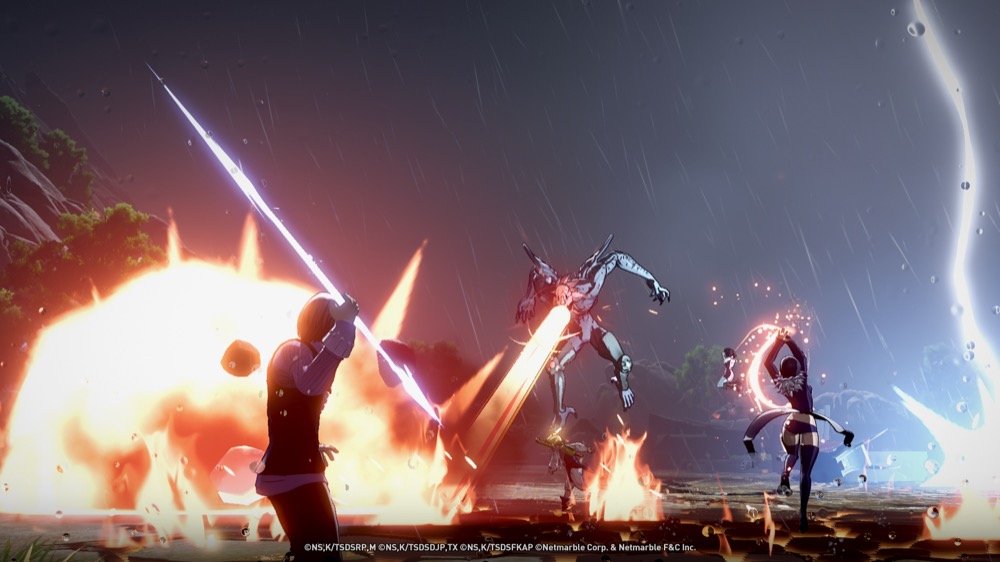
Every attack with a matching element adds to the Burst Gauge. Once it fills, activation triggers a team-wide buff plus an elemental status effect. Fire Burst amplifies damage output. Cold Burst freezes enemies. Earth Burst applies Petrify. Each element brings something different to the fight.
The trick is stacking same-element attacks in sequence. If your team has three Fire characters, the gauge fills fast. Mixed elements fill it slower but give you more flexibility against varied enemy weaknesses. There is no single right answer here, but knowing the tradeoff matters.
Elemental Advantage
Eight elements exist: Fire, Cold, Earth, Lightning, Wind, Physical, Holy, and Darkness. Hitting an enemy with a favorable element increases damage and builds Burst faster. Some exploration puzzles also require specific elemental attacks to solve, so having element diversity on your team matters outside combat too.
Building Your Team
Every team needs three roles covered: DPS (primary damage), Sub-DPS (secondary attacker who builds Burst faster), and Support (healing and buffs). Because the team shares one HP bar, your support characters directly determine how long everyone survives.
Free Characters You Get From the Story
The game hands you four characters for free as you progress through Act 1. These carry you through the entire early game without spending on gacha:
| Character | Unlock | Role | Element |
|---|---|---|---|
| Tristan | Start | DPS | Fire |
| Tioreh | Chapter 2 | Sub-DPS / Debuffer | AoE |
| Slader | Chapter 10 | DPS | Fire |
| Howzer | Chapter 39 | DPS | Wind |
Tristan and Slader stack Fire for fast Burst fills. Tioreh adds debuffs and AoE clear. Howzer brings Wind for elemental diversity later in Act 1. This free squad handles everything up through mid-game comfortably.
Reroll Advice
Gacha unlocks at Act 1, Chapter 10. The pity system guarantees an SSR at 80 pulls (50/50 chance for the featured character). If you lose that 50/50, the next SSR is guaranteed to be the featured character. At 120 total pulls, you get a free copy of the featured character regardless.
Target Meliodas on the launch banner. His healing support is strong since the shared HP pool means healing benefits everyone at once. Jericho is the strongest DPS in the game right now and can inflict Freeze with her Dual Sword kit. Either one gives you a massive head start.
Weapons, Gear, and Progression
Here is where Origin breaks from the gacha mold: you do not summon for weapons. Every weapon is crafted at the Workbench using materials you gather from the open world. This is a big deal. Your gear progression is entirely skill-based, not wallet-based.
Weapon Crafting and Equipment
Each character equips three weapons simultaneously. The main weapon provides 100% of its stats while the secondary weapons contribute 30% each. Even if you only fight with one weapon, upgrading all three boosts your overall stats. SSR weapon crafting unlocks at account level 5.
Weapon type changes how a character plays. Equipping a Darkness weapon on Meliodas converts his basic skills into area bursts. A different weapon type on the same character produces a completely different kit. Experiment with weapon combinations before committing upgrade materials.
Mastery and the Level 30 Spike
Mastery is the main leveling system. You spend experience materials to increase a character’s level, stats, and unlock weapon slots. The critical milestone is Mastery Level 30, which unlocks the second and third weapon slots. This is a massive power spike since you go from one weapon’s stats to three.
Maxing weapon mastery on each slot rewards a free character duplicate. Four free dupes are available per character through this system alone. That cuts the typical 11-copy gacha requirement nearly in half.
Costumes and Armor
Costumes are stat blocks, not just cosmetics. Each costume set provides meaningful stat boosts. If you find a costume with better stats but hate how it looks, the transmog system lets you keep the appearance of any previously unlocked costume while wearing the stronger piece.
Armor consists of seven pieces per character: Top, Belt, Bottoms, Boots, and three accessories. Armor enhancement unlocks at Mastery 30, so focus your resources on getting there first before worrying about gear optimization.
Exploration and Early Game Priorities
The moment the game gives you free movement, stop doing quests. Your first priority is unlocking every Warp Point you can physically reach. These reveal fog-of-war sections of the map, enable fast travel, and expose ore nodes on your minimap. Spend 20 minutes touching every teleport crystal in the starting zones before anything else.
Book of Stars
The Book of Stars is your core exploration tool. It consumes energy (replenished at stone monuments on the map) and lets you interact with puzzles like moving pedestals, assembling boats, and activating mechanisms. Completing puzzles increases the Book’s level and rewards Star Fragments and Hero Draw Tickets. Every 10 levels gained increases your Cube Key capacity by 5.
Pets and Traversal
Four pet categories exist: Common, Ride, Flight, and Glide. Flight and Glide pets are by far the most valuable since they let you bypass terrain and reach areas faster. You capture pets using Potion of Charm items, with rarer pets requiring stronger potions. The game unlocks pet types at specific chapters: Glider at Chapter 22, Ride at Chapter 27, and Flight at Chapter 39.
Cooking and Healing
HP recovery in the open world is limited to stone monuments called Angel Statues. If you are between statues, you need potions or food. Cooking is one of the most underused systems in the game. Crafting a Power Steak or Iron Stew before a boss fight gives +25% attack and +20% defense for 30 minutes. That is a free power boost most players ignore entirely.
Register recovery items to your Quick Slots for instant healing during combat. Do this before every boss encounter. If you are like most people who played open-world action RPGs like Crimson Desert, you already know that preparation wins more fights than raw skill.
Common Mistakes to Avoid
Spreading resources across every character. Pick your core team of four and commit. Mastery materials, weapon crystals, and enhancement stones are all limited in the early game. A focused team of four will outperform a spread roster of eight every time.
Ignoring the main story too long. Side quests and exploration are tempting, but the main story gates almost every system. Guilds, PvP, co-op dungeons, and higher World Levels all require story progression. Push the story until you unlock a new system, then take a break to explore.
Not spending Cube Keys daily. Cube Keys are your stamina currency. They replenish at 11:00 AM PST and do not stack beyond the cap. Spend them on boss fight dungeons every day for equipment drops. Unused keys are wasted keys.
Dismantling gear too early. Salvaging surplus equipment provides crystals used for crafting, but wait until your primary weapons are fully upgraded before you start breaking things down. You might need a piece you thought was junk once you unlock a new weapon slot at Mastery 30.
Skipping merchant shops. Towns have merchants selling potions, crafting materials, and resources with daily purchase limits. Town potions are significantly stronger than early crafted ones. Check every merchant in every new town.
Gear for Long Sessions
Origin plays on PC, PS5, and mobile. The game itself recommends controller for PC players, and co-op dungeons with up to five players benefit from a solid audio setup. If you are settling in for long sessions in Britannia, here are three picks that pair well with the game. For more audio options, check our best gaming earbuds roundup.

8BitDo Ultimate 2
Wireless controller with hall effect joysticks

SteelSeries Arctis Nova 1
Lightweight wired headset with noise-cancelling mic
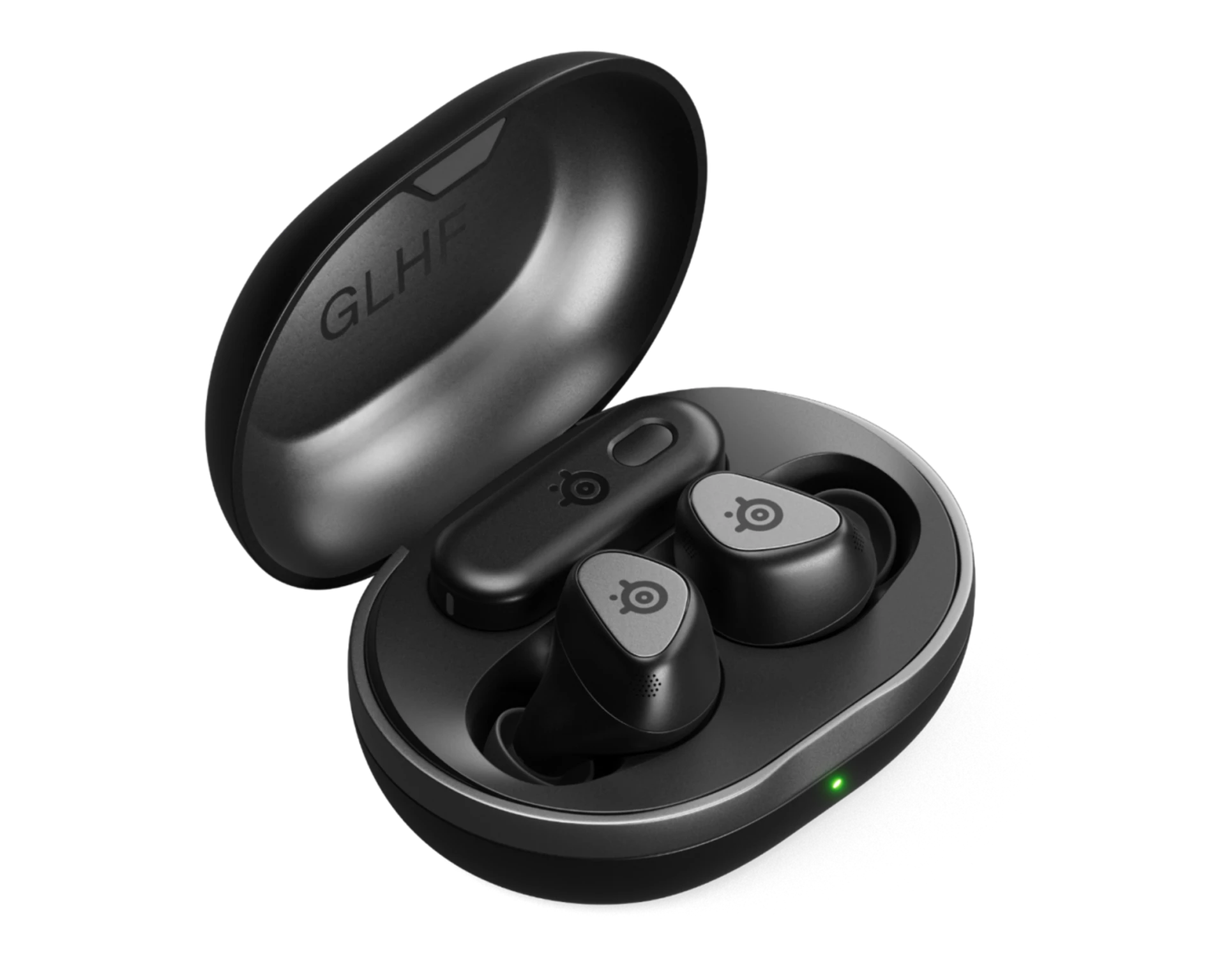
SteelSeries Arctis GameBuds
Cross-platform wireless earbuds with low-latency dongle
Frequently Asked Questions
Is Seven Deadly Sins: Origin free to play?
Yes. The game is completely free on PC (Steam), PS5, and mobile. There is a gacha system for characters, but no weapon gacha. All weapons are crafted through gameplay.
Do I need to watch the anime before playing?
No. The story is set between the original series and Four Knights of the Apocalypse, but it is a standalone original story. You can enjoy it without any prior knowledge of the franchise.
What is the pity system for gacha pulls?
You get a guaranteed SSR character at 80 pulls with a 50/50 chance for the featured character. If you lose the 50/50, your next SSR is guaranteed to be the featured character. At 120 total pulls, you receive a free copy of the featured character.
Can I play Seven Deadly Sins: Origin with a controller on PC?
Yes. The game supports controllers on PC and the developers recommend it. Configure your controller in settings before starting the tutorial for the smoothest experience.
How does co-op work?
Co-op supports up to five players for dungeons and missions. It unlocks through main story progression. All players can swap between their full team rosters during co-op encounters.
Summary
Seven Deadly Sins: Origin does a few things differently from the usual free-to-play RPG formula, and the shared HP pool and crafted weapons are the big ones. Focus your first session on unlocking Warp Points, pushing the main story to Chapter 10 for gacha access, and building toward Mastery Level 30 for the triple weapon slot unlock. Keep your resources focused on four characters, cook food before bosses, and spend your Cube Keys daily.
The combat system rewards elemental planning and character switching more than raw button mashing. Learn the Burst timing for your team composition and use Tag Skills to survive the boss encounters that will otherwise flatten you. For more gaming guides covering new releases, check out our best gaming desk accessories if you are building out your setup.