Mewgenics breeding looks simple on the surface. Stick two cats in a room, pass the day, collect kittens. But 30 hours in, you realize the system is running you instead of the other way around. Your colony is full of mediocre cats with ugly mutations, and the ones you actually want keep dying on runs. This mewgenics breeding guide breaks down how stat inheritance, room optimization, and multi-generational planning work so you can stop rolling dice and start engineering cats.
TL;DR
- Kittens only inherit base stats (3-7 range), not bonuses from items or collars.
- Stimulation is the single most important room stat for breeding. It determines whether kittens get the higher or lower parent stat.
- Keep breeding rooms at exactly 4 cats. Every cat beyond 4 drops Comfort by 1, which kills breeding frequency.
- Body shapes matter: Triangle heads breed Intelligence for Mages, Square heads breed Defense for Tanks.
- Use the “One and Done” rule for inbreeding: one generation to lock traits, then immediately breed out with a stray.
- Raise your Appeal stat early to attract higher-quality strays for genetic diversity.
How Breeding Works
Breeding happens overnight when a male and female cat share a room. Gender-fluid cats can breed with either sex. Gay cats only breed with cats of the same sex. The game checks each eligible pair at the end of the day, and if the room’s Comfort stat is high enough, you get one or sometimes two kittens.
The core loop: Adventure > Loot > Manage House > Breed > Adventure Again. But the house management portion is where your long-term power comes from. Runs are temporary. Your breeding program is permanent. If you’re new to the broader systems, our beginner guide covers the full gameplay loop, while this guide focuses entirely on the breeding side.
Mewgenics Breeding Guide: Stat Inheritance
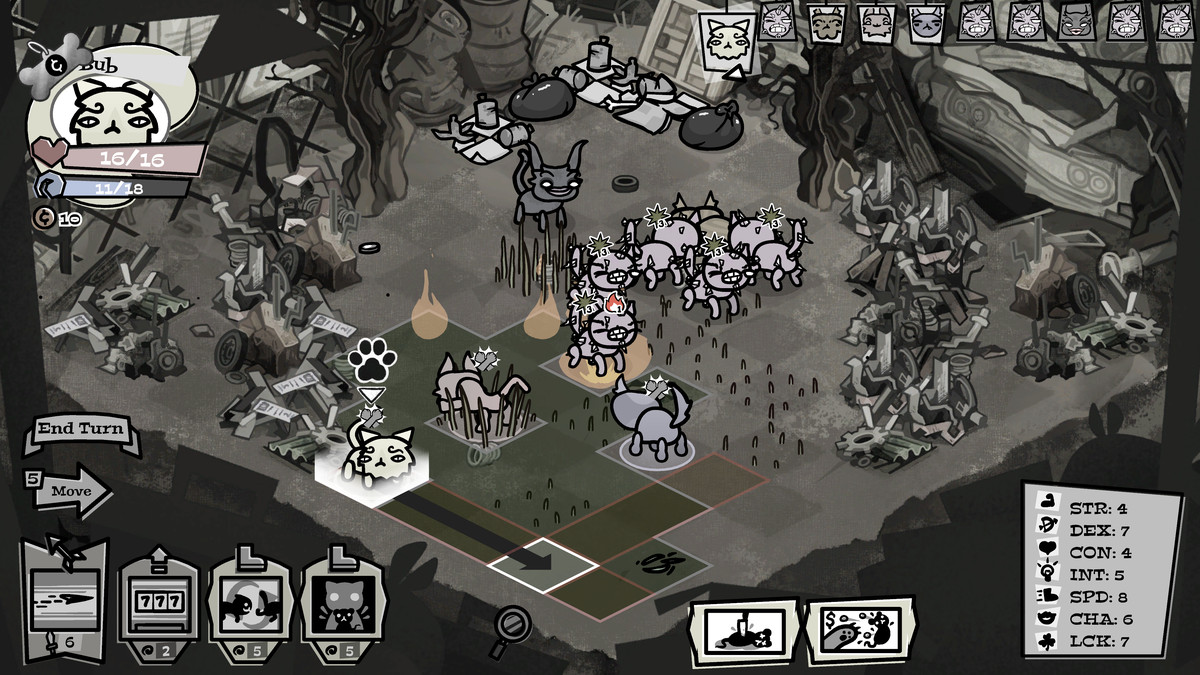
Every cat has 7 base stats, rolled between 3 and 7 at birth. Here’s what each one does:
| Stat | Combat Effect | Formula |
|---|---|---|
| Strength (STR) | Melee damage | 1 STR = 1 melee damage |
| Dexterity (DEX) | Ranged damage | 2 DEX = 1 extra ranged damage |
| Constitution (CON) | Max HP | HP = CON x 4 |
| Intelligence (INT) | Mana regen per turn | Gained at end of turn |
| Speed (SPD) | Movement tiles + turn order | Higher = moves first and farther |
| Charisma (CHA) | Max mana | Mana = CHA x 3 |
| Luck (LCK) | Crit chance + random rolls | +2% crit per point, 10% extra roll per point from baseline 5 |
⚡ The inheritance rule: Kittens inherit base stats only. Bonuses from items, collars, and buffs don’t transfer. When you’re evaluating a breeding pair, look at the raw numbers, not the modified ones.
The highest base stat a cat can have through normal inheritance is 7. Stats above 7 come from mutations applied at birth, not from breeding. This is why your mutation strategy matters just as much as your pairing choices.
Your Breeding Room Setup
Five room stats control what happens overnight. For breeding, two of them matter more than the others.
| Room Stat | Effect on Breeding | Priority |
|---|---|---|
| Stimulation | Higher = kittens inherit the better parent stat instead of random | Max this first |
| Comfort | Higher = more breeding, fewer fights | Keep at 4+ |
| Health | Overnight injury/disease recovery | Moderate |
| Mutation | Higher = more spontaneous mutations overnight | Situational |
| Appeal | Affects stray quality (whole-house stat) | Raise early |
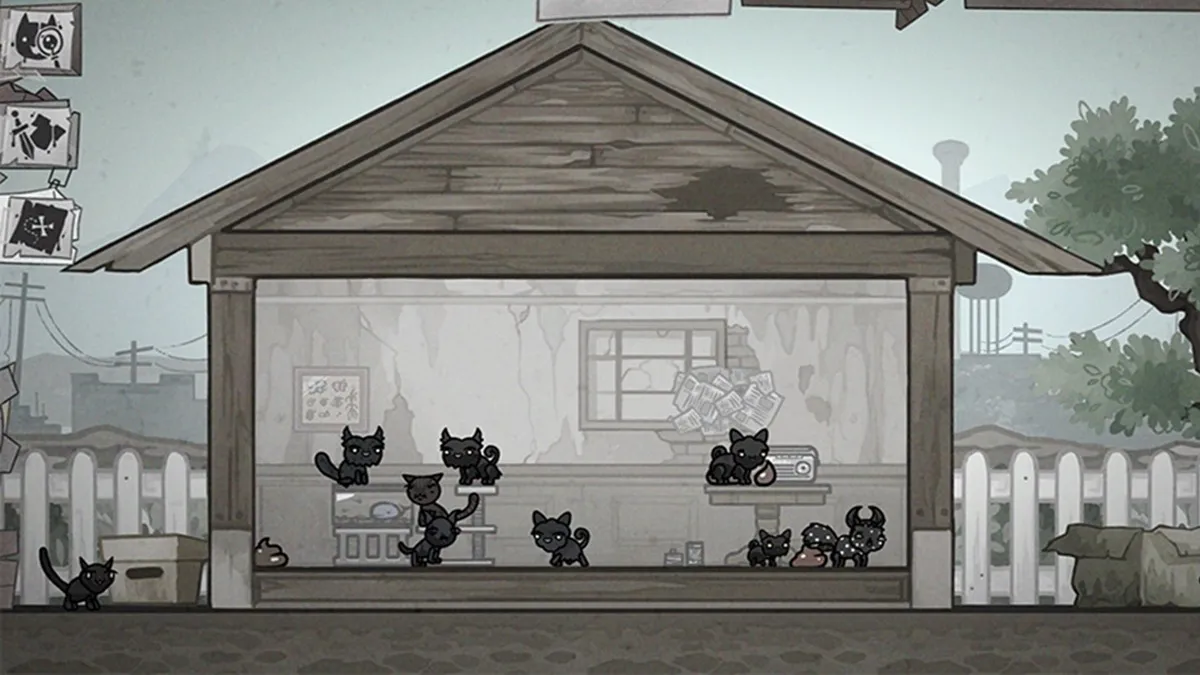
Stimulation is king. The Steam community’s meta breeding guides agree on this: your first priority after unlocking Baby Jack’s furniture store should be buying Stimulation furniture. At high Stimulation (20+), kittens reliably inherit the higher stat from each parent. At low Stimulation, you’re gambling. For detailed furniture recommendations, check our house guide.
The 4-cat rule: Every cat beyond 4 in a room drops Comfort by 1. Cram 8 cats into one room and Comfort tanks, breeding slows, and cats start fighting. Keep your breeding room at 2 pairs (4 cats total). Expand to more rooms instead of overcrowding.
Body Shapes and Breeding for Classes
Cat body shapes aren’t cosmetic. They directly influence stat distributions, which means they determine what class collar a cat will perform well with. If you’re building a specific team comp, breed for the right shapes first.
| Body Part | Shape | Stat Lean | Best For |
|---|---|---|---|
| Head | Triangle | High INT/Mana | Mage, Psychic, Cleric |
| Head | Square | High DEF/HP | Tank, Fighter |
| Head | Round | Balanced | Flexible, but mediocre at everything |
| Body | Slender | High SPD/Evasion | Hunter, Thief |
| Body | Fat | High HP/DEF | Tank (pair with Square head) |
| Tail | Long | Increased ability range | Mage, Hunter (ranged builds) |
| Tail | Stubby | Knockback bonus | Tank, Fighter (frontline) |
| Tail | Curly | Carry capacity | Utility/hauling |
When breeding for a Cleric or Tank (the S-tier classes), you want Triangle + Long for Clerics and Square + Fat + Stubby for Tanks. Avoid shape conflicts like Square head + Slender body. The stats fight each other and you end up with a cat that’s bad at everything.
Multi-Generational Stat Stacking
You can’t breed a perfect cat in one generation. It takes 2-3 generations minimum, often more. The strategy:
- Find a “Stud” with high stats in one area (e.g., STR 7, CON 7)
- Pair with a Stray that has high stats in a different area (e.g., SPD 7, INT 6)
- Breed in a high-Stimulation room so the kitten inherits the better stat from each parent
- If the kitten inherits both high stats, it replaces the parent in your next breeding pair
- Repeat with the next missing stat until you have a cat with 6-7 across the board
One thing the meta guides stress: breed for abilities early, stats later. In your first 10-15 hours, focus on passing down useful grey abilities like damage spells, Brainstorm (cost reduction), healing, and AoE attacks. Once your cats have a solid ability pool, switch focus to stat optimization.
⚡ Charisma warning: High-Charisma cats breed more often, which sounds good but usually isn’t. Extra Charisma dilutes your stat focus because mutations that boost Charisma detract from combat stats. Cull high-CHA cats unless you specifically need mana for your build.
For Tanks and Fighters, overall power scales as Strength x Constitution, so multiplicative gains matter more than raw numbers. A cat with STR 6 and CON 6 (36 effective power) outperforms one with STR 7 and CON 4 (28 effective power).
Inbreeding: When It Works, When It Kills
You’re going to end up with inbred cats. It’s nearly unavoidable in a closed colony. The question isn’t whether to inbreed, it’s how to manage the risk.
Each consecutive generation of inbreeding increases the defect chance by roughly 15%. The defects get ugly fast:
- Fragile Bones – 2x damage taken
- Hemophilia – bleeding never stops
- Conjoined Body – +2 CON but -3 SPD
- Sterile – can’t breed at all (ends the lineage)
The “One and Done” rule: Inbreed one generation to lock a recessive trait or rare mutation, then immediately breed the offspring with an unrelated stray to reset the defect counter. This lets you capture valuable genetics without spiraling into a colony of broken cats.
Track lineage through Tink (more on that below) and assign visual icons to family groups so you can spot related pairs at a glance.
Stray Cats and Appeal
Strays are your genetic lifeline. They have no relation to anyone in your colony, so they won’t produce inbred offspring. More importantly, high-quality strays bring stat values and abilities you can’t get from your existing gene pool.
Appeal drives stray quality. It’s the only room stat that applies to your entire house rather than a single room. Higher Appeal attracts strays with better base stats, more diverse abilities, and occasionally special traits. Invest in Appeal furniture early because the quality of strays you attract in your first 20 hours shapes your entire breeding program.
When a good stray shows up (look for base 7s in stats you need), breed it immediately with your best cat of the opposite gender. If the stray is mediocre, send it on a dangerous run or donate it to Tink for information upgrades.
Tink and Breeding Intelligence
Tink is the NPC who turns your breeding program from guesswork into strategy. You unlock Tink’s upgrades by donating kittens (1 day old). Each level reveals information you can’t see otherwise:
- Level 1: Base stats revealed, showing the real genetic values without item/level inflation
- Level 2: Family tree access, letting you prevent accidental inbreeding
- Level 3: Orientation data, so you don’t waste breeding attempts on incompatible pairs
Donate unwanted kittens to Tink as soon as possible. The information upgrades are worth far more than keeping a mediocre cat. Level 2 (family tree) is the most important unlock because it makes inbreeding management possible instead of hoping for the best.
Frequently Asked Questions
What is the highest base stat a cat can inherit through breeding?
The highest inherited base stat in Mewgenics is 7. Stats above 7 come from mutations applied at birth, not normal breeding. Focus on getting multiple stats to 7 through generational stacking, then let mutations push individual stats higher.
Does Stimulation affect mutation inheritance?
Yes. At Stimulation 35+, kittens are more likely to inherit beneficial (green) mutations from their parents. Red mutations happen regardless of Stimulation level, so high Stimulation selectively favors good mutations while doing nothing to increase bad ones.
How many cats should I keep in a breeding room?
Four cats maximum. That gives you two breeding pairs with no Comfort penalty. Every cat beyond 4 reduces the room’s Comfort by 1, which decreases breeding frequency and increases fighting. If you need more pairs, expand to additional rooms through Frank donations.
Should I keep high-Charisma cats for breeding?
Usually not. High Charisma increases breeding frequency, but the extra mutations it attracts pull stats away from combat-relevant attributes. Unless you specifically need max mana for a Psychic or Cleric build, remove high-CHA cats from your breeding pool.
How do I know if two cats are related?
Donate kittens to Tink until you unlock Level 2 (family tree access). Before that, assign visual icons to family groups and track pairings manually. If you’re unsure, breed with a stray because strays are always unrelated to your colony.
Summary
Breeding in Mewgenics is a long game. Max your Stimulation furniture first. Pair cats with complementary stats and bring in strays regularly for fresh genetics. Keep breeding rooms at 4 cats. Use the “One and Done” rule if you inbreed. Donate kittens to Tink early for family tree visibility. And always breed for the class builds and team comps you actually want to run.
If you’re spending dozens of hours engineering tactical cats, a comfortable setup helps. The Steam Deck OLED is a great fit for Mewgenics since the turn-based combat works perfectly on a handheld, and the 8BitDo Ultimate 2 Controller gives you a clean controller experience if you’re playing on PC.