
Hollow Knight: Silksong can be brutal for newcomers. As of March 2026, the game has received multiple patches since launch, but the core challenge remains steep. Hornet handles completely differently than the Knight, and the game gives you almost no guidance on its deeper systems. After mastering the Bind mechanic, clearing the Skarrgard, and learning the hard way why you should buy maps early, here’s what will save you hours of frustration. If you enjoy punishing action games, you might also want to check our Hades 2 beginner guide.
TL;DR
- Master Bind in mid-air. You can heal while airborne, which is far safer than healing on the ground.
- Buy Shakra’s maps immediately. Get the map, Compass, and Quill as soon as you find her in the Marrow.
- Practice the diagonal Pogo. Hornet’s downward attack is diagonal by default. Learn to bounce off enemies to survive Hunter’s March.
- Get Swift Step before the Skarrgard. The huge skull ant near the Jail Bench is nearly impossible without the dash ability.
- Convert Rosaries to Strings. Rosary Strings survive death, protecting your hard-earned currency.
Understanding Core Mechanics
The Bind Healing System
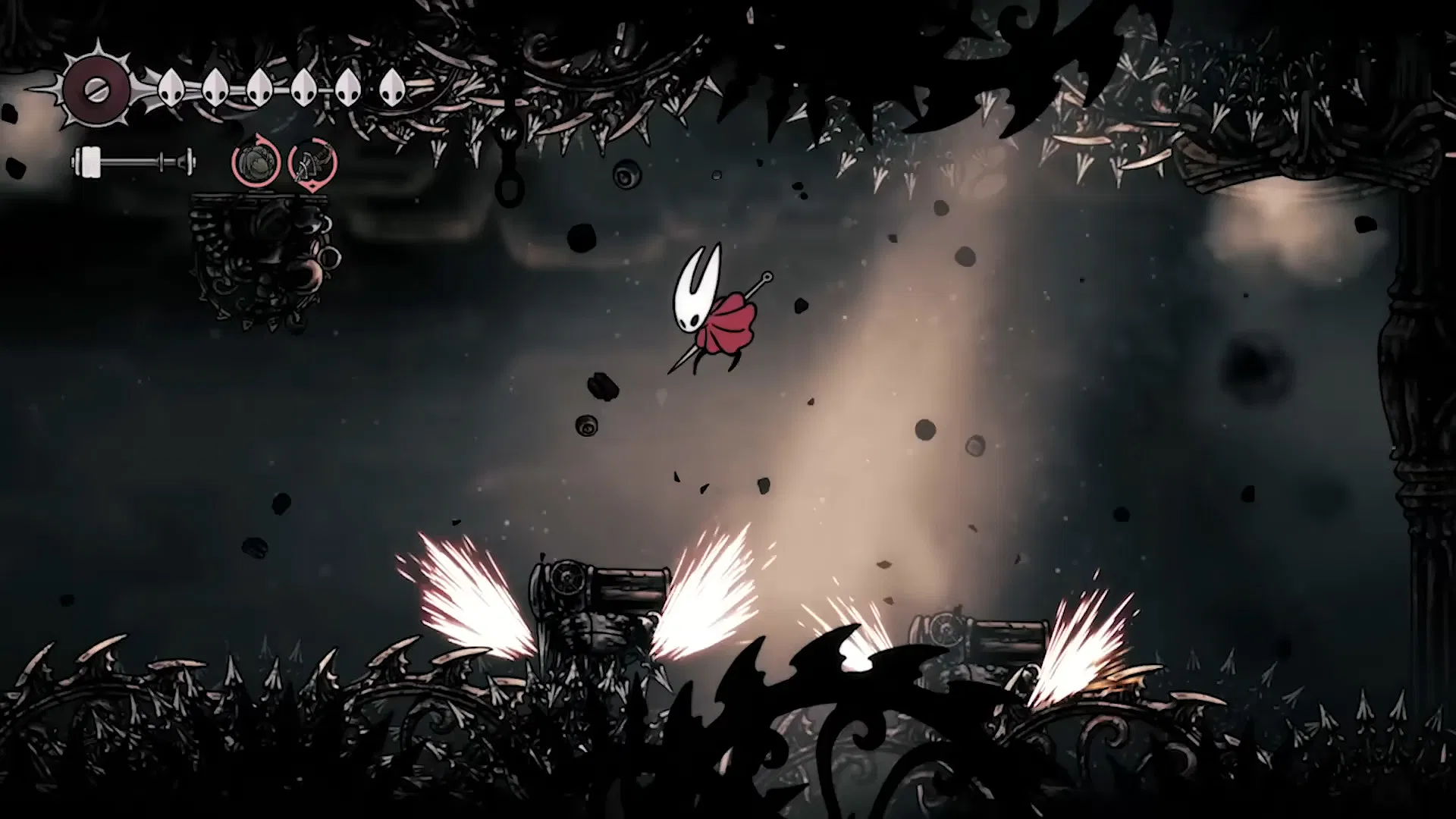
Forget everything you know about Focus from Hollow Knight. Hornet uses Bind, a healing ability powered by Silk that you accumulate by attacking enemies. Unlike the original game, Bind heals multiple masks at once (typically three in the early game) but consumes your entire Silk meter regardless of how much health you need.
The critical difference: you can Bind in mid-air. Master this immediately. Since Bind makes Hornet vulnerable for a brief moment, jumping and healing is significantly safer than standing still on the ground where enemies can easily interrupt you. An enemy hit mid-Bind costs you all accumulated Silk AND skips the heal entirely. Time your heals during safe openings, preferably while airborne.
The Tool System
Silksong replaces Hollow Knight’s Charm system with Tools, organized into color-coded categories:
- Red Tools: Active abilities requiring button input. The Straight Pin (throwing projectile) is your early-game ranged option.
- Blue Tools: Passive defensive abilities like the Magma Bell, which protects against heat damage.
- Yellow Tools: Exploration and utility passives, such as the Shard Pendant for collecting more Shell Shards.
- White Tools: Special Skills that use Silk, like Swift Step (your dash/sprint ability).
Different Crests let you equip tools from different categories. You can only swap Crests at Benches, so plan your loadout before heading into new areas.
Rosaries and Currency
Rosaries are Silksong’s version of Geo, and they follow Soulslike rules: die, and you drop them all. Return to your death location and strike the Cocoon to reclaim them, but die again before getting there, and they’re gone forever.
The solution: Rosary Strings. These can be purchased from merchants and convert your Rosaries into a protected bundle that survives death. Buy them whenever you’re carrying a significant amount and heading into dangerous territory.
Early Game Strategy
Find Shakra and Buy Everything
Shakra is Silksong’s cartographer, and finding her should be your first priority when entering any new region. You’ll hear her distinctive humming when she’s nearby. In the Marrow (the first major area), she’s easy to find if you explore westward.
Buy everything she sells: the Area Map (basic overview), the Compass (shows your position), and the Quill (fills in unexplored areas when you rest at a Bench). Without all three, your map is nearly useless. Shakra moves to new regions as you unlock them, so purchase her full inventory before progressing.
Prioritize Swift Step
The Swift Step ability transforms how Silksong plays. Found in the upper area of the Deep Docks (look for a magma ball you can hit in the ceiling to create a new passage), this dash/sprint ability opens up combat options and makes exploration far more enjoyable.
Getting Swift Step should be your second major goal after getting maps. Without it, the Skarrgard miniboss near Hunter’s March becomes a painful roadblock.
Farm Rosaries in Mosshome
West of where you first meet Shakra in the Marrow, you’ll find Mosshome, a village filled with pilgrim bugs who attack on sight. There’s a Bench nearby, and these enemies respawn every time you rest. This makes Mosshome an excellent early-game farming spot when you need Rosaries for maps, Rosary Strings, or Tool upgrades.
Essential Tips
Learn the Diagonal Pogo
Hornet’s Pogo attack works differently than the Knight’s. When you attack downward while jumping, Hornet slashes at a 45-degree angle instead of straight down. You’ll need the Crest of Wanderer to unlock a direct downward strike.
Nailing the diagonal Pogo takes practice but it becomes essential for platforming and combat. In Hunter’s March, you’ll encounter red flowers that require Pogo-bouncing to reach higher areas. Master this technique early. Count how many hits it takes to kill each enemy type. If you’re Pogo-bouncing on something that dies mid-combo, you’ll fall and potentially take damage.
Attack Every Wall
Pharloom is packed with breakable walls, and most aren’t obvious. Make a habit of swinging at suspicious walls, dead ends, and any surface that looks slightly different from its surroundings. You’ll find hidden Rosaries, shortcuts, and occasionally Benches or important NPCs.
Listen for audio cues. Breakable walls often make a distinct sound when struck. Some walls require multiple hits to break through.
Study Enemy Behaviors
Pay attention to how enemies telegraph their attacks and how much damage they deal. Some enemies in Silksong hit for two masks at once, which can quickly end a run if you’re caught off-guard. Always heal enough to survive at least one hit before engaging.
Don’t Fight Everything
Not every enemy drops Rosaries, and some fights simply aren’t worth the risk. When you’re low on health and heading toward a known Bench or objective, dodge past enemies rather than engage. The explosive grubs in the Marrow rarely drop anything valuable and can deal significant damage.
Watch for Attack Pushback
Every time Hornet lands a hit, she experiences slight pushback. This can knock you off platforms when fighting near edges, especially against flying enemies. Secure your footing before committing to attacks, and be mindful of your positioning throughout combat.
Use the Sprint Wisely
Once you get Swift Step, it’s tempting to sprint everywhere. Be careful: you can’t immediately change direction while sprinting, and if you jump while holding sprint, you’ll perform a super jump that locks your trajectory mid-air. To cancel sprint momentum quickly, hold back and do a short hop.
Look Before You Leap
Use the right stick to look down before dropping into unknown areas. This prevents nasty surprises like landing on enemies, spikes, or lava. Silksong’s vertical exploration can be punishing if you fall blindly into hazards.
Common Mistakes to Avoid
- Hoarding Silk for emergencies. Silk is shared between healing and offensive abilities. Aggressive Silk use often ends combat faster than playing defensively.
- Ignoring the Compass and Quill. The map without these items is nearly worthless. Budget for them immediately.
- Fighting the Skarrgard early. This huge skull-wearing ant near the Jail Bench hits like a boss. Get Swift Step first.
- Assuming all enemies respawn the same way. Some enemies stay dead permanently, some respawn when you rest, and others return just by leaving a room.
- Healing on the ground. Ground heals are easily interrupted. Get airborne before Binding whenever possible.
Best Setup for Silksong
Silksong is available on PC and Nintendo Switch. With individual exploration sessions running 30 minutes to several hours, portable play on the Nintendo Switch OLED or Steam Deck OLED works well. A responsive controller makes a real difference for parrying and Pogo timing. For our top picks, see the best controllers for Steam Deck guide.

Nintendo Switch OLED
Gorgeous OLED display for exploring Pharloom

Steam Deck OLED 512GB
Play the Steam version anywhere
Frequently Asked Questions
Do I need to play Hollow Knight first?
No. Silksong is a standalone game with its own story. Playing Hollow Knight first will enhance your appreciation of certain characters and references, but it’s not required to enjoy or understand Silksong.
Is Silksong harder than Hollow Knight?
Generally yes, though it depends on playstyle. Hornet is faster and more agile, but enemies are tuned to match. The diagonal Pogo and Bind system have a learning curve even for Hollow Knight veterans.
How do I get more Tool slots?
Find Memory Lockets scattered throughout Pharloom. These items unlock additional slots on your Crests, letting you equip more Tools simultaneously. They’re often hidden in secret areas or rewarded for completing side quests.
Where do I save my game?
Rest at Benches. Unlike some games, Silksong doesn’t auto-save at story moments. If you quit without resting at a Bench, you’ll lose progress since your last rest.
What are Wishes?
Wishes are Silksong’s side quests, given by NPCs throughout Pharloom. Completing them rewards useful items. Check your inventory to track active Wishes.
Summary
Silksong rewards patience. Get your maps early, heal in the air, and don’t rush the Skarrgard without Swift Step. Pharloom doesn’t hand you anything, but that’s what makes every breakthrough feel earned.