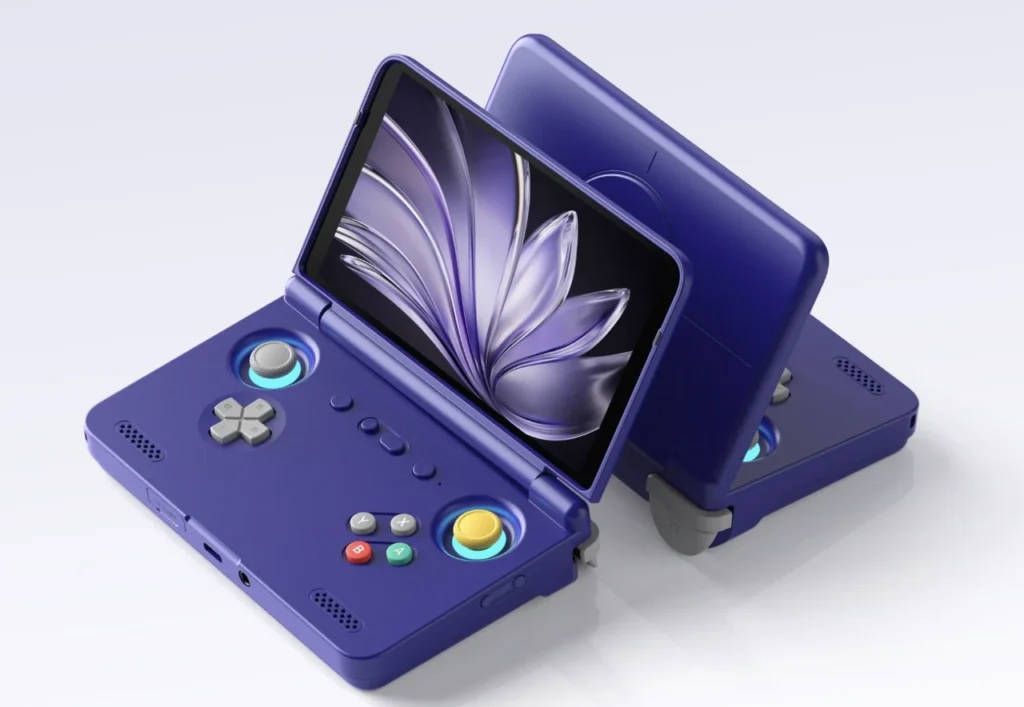
Key Takeaways
- No-budget winner: The Valve Steam Deck is the objectively best PS2 handheld — PCSX2 runs natively on SteamOS with no driver drama. Buy direct from Valve at $399 LCD or $549 OLED, not from Amazon third parties.
- Best Android pick under $250: The Retroid Pocket Flip 2 Snapdragon 865 variant is the community consensus for playable PS2 on a clamshell, thanks to mature Adreno drivers that the spec sheet alone would never predict.
- Strongest silicon: The Anbernic RG557 runs a Dimensity 8300 with a 1080p AMOLED, but its Mali-G615 GPU introduces real-world PS2 compatibility quirks that its benchmarks do not reflect.
- Budget AMOLED option: The Anbernic RG556 pairs a 5.48-inch OLED with a Unisoc T820 chip, hitting the floor for PS2 with tuning, and actually runs GameCube more consistently.
- If PS2 is out of scope: The foldable Anbernic RG34XXSP, the square-screen Anbernic RG CubeXX, and the pocketable Miyoo Mini Flip cover GBA, SNES, and PS1 era libraries at a fraction of the price.
PS2 emulation is the line that separates a nice retro handheld from a genuinely capable one. Sony’s console used custom hardware that modern ARM chips have to brute-force, and the only actively maintained Android emulator, NetherSX2, still runs better on a 2020 Snapdragon than on some newer MediaTek chips with higher synthetic scores. Picking a handheld for PS2 means paying attention to the GPU driver story, not just the core count. Prices verified April 15, 2026.
The short version is that Snapdragon 865 plus Adreno 650 is the reliable floor for playable PS2, and anything below it struggles no matter how much marketing copy promises “retro emulation support.” Above it, the story gets complicated. The Dimensity 8300 in the newest Anbernic flagship benchmarks twice as high as the old Snapdragon 865, yet reviewers routinely report it underperforming the Snapdragon on the exact PS2 games buyers care about. That gap traces back to driver maturity, not raw compute.
This guide pulls seven handhelds from our deals tracker and ranks them across three honest tiers. The Valve Steam Deck sits at the top as the uncapped-budget winner, bypassing the entire Android driver conversation. Three Android handhelds make up the value tier that can actually run PS2 at a playable level today. The last three are excellent GBA, SNES, and PS1 machines that should never be sold to a PS2 buyer. Deal data is live from our tracker and refreshes continuously.
What PS2 Emulation Actually Demands From a Handheld
AetherSX2, the app that put PS2 emulation on Android in the first place, stopped development in January 2023 after its solo developer was driven off by persistent death threats. The continuation fork, NetherSX2, is now the only actively maintained option and ships in two parallel builds. The Standard build ships with the newest compatibility fixes, while the Classic build is a more stable legacy branch that actually performs better on older or Mali-based hardware.
The original AetherSX2 developer flagged Snapdragon 845 with four Cortex-A75 class cores as the practical floor for playable PS2 at native resolution. In practice, Snapdragon 865 with Adreno 650 is where playable turns into comfortable, because Qualcomm updates its drivers often enough to keep emulator edge cases working. Mali GPUs from MediaTek and Unisoc do not get the same driver cadence, and there is no community port of the Turnip Vulkan driver to patch the gap.
This is why the Retroid Pocket Flip 2 ends up the practical winner despite using a 2020-era chip, and why the technically more powerful Anbernic RG557 runs into compatibility potholes that its benchmarks would suggest it should clear. Before buying, check whether the handheld’s GPU has a reputation for PS2 edge cases in reviews from actual hands-on testers, not just synthetic benchmark tables.
Best Overall No-Budget Pick: Steam Deck
If budget is not a constraint, the Steam Deck is the only answer. Valve’s handheld runs PCSX2 natively on SteamOS, uses an x86 AMD Zen 2 CPU with an RDNA 2 GPU and the mature Mesa RADV Vulkan driver stack, and simply removes the entire GPU driver debate that defines the rest of this guide. PS2 emulation stops being a tuning exercise here. It is a mature Linux application running at native resolution, holding 60fps on the titles that break every Android handheld in the next tier.
For PS2 specifically, the Steam Deck’s advantage is not a matter of degree. Gran Turismo 4, God of War II, Shadow of the Colossus, Jak 2, and every other notorious PS2 edge case runs out of the box with minimal tinkering. Save states travel cleanly, there is no Classic-vs-Standard NetherSX2 fork decision to make, and the community has already built every tool the rest of us still wish we had on Android.
Valve Steam Deck

The price tag above is the Amazon third-party listing our tracker indexes, not the MSRP. Valve does not sell the Steam Deck first-party on Amazon, so every Amazon listing is a reseller marking the device well over its direct pricing. The correct purchase path is direct from Valve at $399 for the 64GB LCD and $549 for the OLED, both dramatically below the Amazon markup. If you need the Amazon listing for an expense account or gifting flow, it is live and tracked. For everyone else, order direct from Valve.
The Steam Deck is not a cheap recommendation, but it is the only handheld in this guide where PS2 emulation is a solved problem rather than an ongoing compatibility puzzle. If the entire reason to buy a handheld is PS2 and the budget is there, the rest of this roundup is academic. The Steam Deck also doubles as a great PC game-streaming client, letting you play your full library on it over your home network.
- x86 AMD Zen 2 CPU with RDNA 2 GPU running SteamOS and PCSX2 native Linux build
- 7 inch 1280×800 IPS LCD or HDR OLED depending on model, trackpads, and gyro aiming
- MSRP $399 LCD / $549 OLED direct from Valve; Amazon listings are third-party resellers at markup
Which Android Handhelds Can Actually Play PS2 Games?
These three handhelds all cross the practical floor for PS2 emulation, though each one makes a different tradeoff. The Retroid Pocket Flip 2 wins on driver maturity and compatibility. The Anbernic RG557 wins on display, ergonomics, and synthetic horsepower. The Anbernic RG556 wins on price, as long as you are willing to tune per-game settings and accept GameCube as the stronger use case.
Retroid Pocket Flip 2

Retroid Pocket Flip 2 Retro Game Console, 5.5″ AMOLED 1080P Display, Hall Effect Sticks, 5000mAh Battery, Portable Android Handheld (Black)
The Snapdragon 865 with Adreno 650 is the reason this clamshell keeps showing up at the top of PS2 compatibility lists on Reddit and in long-form reviews. Android Authority’s hands-on found that most PS2 titles run at 2x upscaling on NetherSX2 Classic without slowdowns, which no other handheld under $250 has matched in public testing. The 5.5 inch 1080p AMOLED at 500 nits and the Hall-effect sticks make it feel like a flagship device rather than a clearance-shelf alternative.
Two caveats are worth knowing before clicking buy. Retroid also sells a cheaper Dimensity 1100 variant that has meaningfully worse PS2 compatibility and does not support the Linux dual-boot that frees up overhead on retro systems, so confirm the listing specifies Snapdragon 865 before ordering. Retroid also acknowledged hinge hairline cracks reported during 2025 and offered free replacements through its support channel for affected units.
- Qualcomm Snapdragon 865 with Adreno 650 GPU and 8GB LPDDR4X
- 5.5 inch AMOLED 1080p at 60Hz with 500 nit peak brightness
- 5000mAh battery with 27W fast charging and active cooling
Anbernic RG557

Anbernic RG557 Retro Handheld Game Console, 5.48 Inch AMOLED Screen, Dimensity 8300 Processor, WiFi 6E, Bluetooth 5.3 (White)
On paper, this is the strongest handheld in the roundup. The Dimensity 8300 benchmarks roughly 2x over the Snapdragon 865, ships with 12GB of LPDDR5X and 256GB of UFS 4.0 storage, and is wrapped in the most comfortable grip Anbernic has ever shipped per Retro Handhelds. The 5.48 inch 1080p AMOLED and WiFi 6E future-proof it for game streaming and Switch-era targets.
The catch is the Mali-G615 MC6 GPU. Multiple hands-on reviews found inconsistent PS2 behavior, with Gran Turismo 4 and Jak 2 stumbling where a Snapdragon 865 would not, because Mali drivers lack the community Turnip alternative that Adreno users have relied on for years. Buy this for its display, ergonomics, and headroom on GameCube and Switch emulation, but keep expectations in check for the most demanding PS2 titles until Mali driver work catches up.
- MediaTek Dimensity 8300 with Mali-G615 MC6 GPU, 12GB LPDDR5X, 256GB UFS 4.0
- 5.48 inch 1920×1080 AMOLED with Hall-effect joysticks and triggers
- Android 14 with WiFi 6E, Bluetooth 5.3, and active cooling
Anbernic RG556

Anbernic RG556 Retro Handheld Game Console, 5.48 inch OLED Touch Screen, Android 13, 5500mAh Battery, Hall Joysticks
The RG556 runs a Unisoc T820 with a Mali-G57 quad core GPU and pairs it with an OLED panel that almost nothing else at this price tier can match. Retro Game Corps confirmed the T820 can emulate up to PS2 and GameCube for the most part, while Chronik Spartan managed solid gameplay on Ratchet and Clank at 2x upscaling after tuning high-performance mode and Vulkan. GameCube is actually where this chip shines more consistently than PS2.
Treat the RG556 as the budget AMOLED option for buyers who want the Anbernic ergonomics and display upgrade without jumping to the flagship tier. The sticks get called out as the weakest component in the build, the plastic is thin, and battery drains fast under high-performance mode. It is still the cheapest way to get a 1080p OLED retro handheld running NetherSX2 Classic at a usable level.
- Unisoc T820 with Mali-G57 GPU, 8GB LPDDR4X, 128GB UFS2.2
- 5.48 inch 1080p OLED touch display with Hall-effect analog sticks
- 5500mAh battery, Android 13, and USB-C DisplayPort video output
What If You Do Not Need PS2?
Most people buying a retro handheld do not actually play many PS2 titles. The real daily driver library is Game Boy Advance, Super Nintendo, Mega Drive, arcade, and first-party PlayStation. For that library, the budget tier below is where the value lives, and every device here ships at a fraction of the price of the flagship Android clamshells.
None of these can run PS2 in any meaningful sense, and the listings should never be marketed for it. Positioned honestly, though, they are some of the best-feeling retro machines released in the past year, with the kind of hinge quality and d-pad action that larger Android handhelds still have trouble matching.
Anbernic RG34XXSP Foldable

The clamshell GBA SP tribute that actually nails it. An Allwinner H700 with a Mali-G31 MP2 is not going to run anything past the PS1 era, but for Game Boy Advance, Super Famicom, Mega Drive, arcade, and first-party PlayStation, this is the pocket machine to beat. The hinge is the standout mechanical element, described by Retro Handhelds as so solid that a user never gives it a second thought.
Dual microSD slots, KNULLI compatibility, and a 3.4 inch IPS 3:2 panel mean the software story keeps improving long after the box is opened. Treat it as a travel companion, not a GameCube-tier device.
- Allwinner H700 with Mali-G31 MP2, 64-bit Linux firmware, dual microSD slots
- 3.4 inch IPS 720×480 3:2 display with clamshell hinge and magnetic sleep
- 3300mAh battery rated for about 6 hours with KNULLI custom firmware support
Anbernic RG CubeXX

Anbernic RG CubeXX Retro Handheld Game Console, 3.95 Inch IPS Screen, Linux System, 64GB TF Card, WiFi, Bluetooth 4.2 (Gray)
The 3.95 inch 1:1 square display is the whole pitch here. For Game Boy, Game Boy Color, arcade, and pixel art era systems where content is already square or near-square, the panel simply looks correct in a way that widescreen handhelds cannot match. Retro Handhelds called the form factor thoroughly enjoyable, and the floating Mega Drive-style d-pad is one of the better budget d-pads around.
The tradeoff is another pass of Anbernic’s Allwinner H700, which every reviewer is tired of by now. PSP renders with black bars and nothing above PS1 runs well. Buy it for the d-pad, the square screen, and the 3800mAh battery, not for any emulator demanding real horsepower.
- Allwinner H700 with Mali-G31 MP2 GPU, 1GB LPDDR4, 64-bit Linux
- 3.95 inch IPS 720×720 square display with front-facing RGB lighting
- 3800mAh battery for roughly 6.5 hours of playtime, HDMI video output
Miyoo Mini Flip
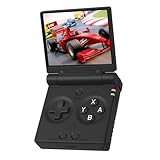
Same SigmaStar silicon as the original Miyoo Mini V4, wrapped in a clamshell that fits in a jacket pocket. Eight-bit and 16-bit libraries are the natural home here, with Time Extension calling 8/16-bit and arcade rock-solid and first-party PlayStation running with occasional hiccups. OnionOS remains the community favorite custom firmware and fits this device like a glove.
Expect a 3 to 5 hour battery depending on brightness and audio volume, no analog sticks, and a single USB-C port that doubles as the audio output. This is a purpose-built retro machine for the smallest form factor, not a jack-of-all-trades.
- SigmaStar SSD202D dual Cortex-A7 with 128MB RAM and Linux firmware
- 2.8 inch IPS 750×560 display at 4:3 native ratio with clamshell cover
- 2500mAh battery, OnionOS compatible, dirt-pocketable clamshell form factor
Frequently Asked Questions
Why is the Steam Deck’s price so high on the card above?
Valve does not sell the Steam Deck first-party on Amazon. Every Amazon listing our tracker indexes is from a third-party reseller marking the device well above Valve’s direct MSRP of $399 for the 64GB LCD and $549 for the OLED. The card above reflects the actual live Amazon price, which is why it sits above $1,000. The correct purchase path is ordering directly from Valve at its storefront. We surface the Amazon listing for completeness since some buyers use Amazon for expense accounts or gifting, but every reader who can order from Valve directly should do so.
Is the Retroid Pocket Flip 2 really better than the Anbernic RG557 for PS2 emulation?
For PS2 specifically, yes. The Snapdragon 865 inside the Retroid Pocket Flip 2 uses an Adreno 650 GPU with mature drivers and a community-maintained Turnip Vulkan port, which lets NetherSX2 handle PS2 titles that trip up the Mali-G615 inside the Anbernic RG557 even though the Dimensity 8300 scores higher in benchmarks. If PS2 is the priority, the Flip 2 is the safer pick. If GameCube, Switch, or general Android performance matters more, the RG557 has more headroom.
Which PS2 emulator should I install on an Android retro handheld?
NetherSX2 is the only actively maintained PS2 emulator on Android and the de facto continuation of AetherSX2, which stopped development in 2023. It ships in two concurrent builds. The Standard build has the newest fixes, and the Classic build is a legacy fork that tends to perform better on older or Mali-based hardware. Save states are not compatible between the two builds, so pick one per device and stick with it.
Can the Anbernic RG34XXSP, RG CubeXX, or Miyoo Mini Flip run PS2 games?
No. The Anbernic RG34XXSP and Anbernic RG CubeXX share the same Allwinner H700 chip, which tops out at PS1 and Dreamcast for playable results. The Miyoo Mini Flip uses a dual-core Cortex-A7 that is well below the Snapdragon 845 floor the AetherSX2 developer named as the practical minimum. These handhelds are excellent choices for GBA, SNES, Mega Drive, arcade, and first-party PlayStation libraries, not for PS2.
Why does raw chipset performance not predict PS2 compatibility?
PS2 emulation leans heavily on GPU driver maturity for Vulkan and OpenGL edge cases rather than peak compute. Qualcomm’s Adreno drivers get regular updates and have a community port of the Turnip open-source Vulkan driver that fixes emulator-specific bugs. Mali GPUs from MediaTek and Unisoc receive fewer driver updates and have no equivalent community alternative, so even a chip with double the raw performance can run PS2 worse than an older Snapdragon in the games that actually matter.
Is the Dimensity 1100 Retroid Pocket Flip 2 variant worth saving money on?
Not for PS2 buyers. Retroid offers a cheaper Dimensity 1100 version that lacks Linux dual boot and the custom GPU drivers that the Snapdragon 865 model uses, and hands-on reviews from Retro Game Corps confirm meaningfully worse PS2 compatibility as a result. If the reason to buy is PSP or GameCube, the Dimensity 1100 variant is fine. For PS2, stay on the Snapdragon 865 listing.
Discounts across the Android tier range from 7 percent on the Anbernic RG CubeXX to 12 percent on the Anbernic RG557, with the Retroid Pocket Flip 2 currently running a Limited time deal at 10 percent off. The no-budget winner remains the Valve Steam Deck for anyone who can order direct from Valve at $399 or $549. Under $250, the standout Android pick is the Retroid Pocket Flip 2 on the Snapdragon 865 configuration, which is the one mainstream clamshell where the community sentiment and hands-on testing actually line up. For buyers who mostly live in the Game Boy Advance and SNES era, the Anbernic RG34XXSP and Miyoo Mini Flip are the strongest values on this list.
Discounts on Android retro handhelds move quickly and are rarely deep. Most of these products have sat between 7 and 15 percent off for long stretches, and the Limited time deal tag on the Retroid Pocket Flip 2 generally lasts a handful of days at a time rather than weeks. If your timing is flexible, tracking the SlashSkill deals page and waiting for a matching Limited time deal is the cleanest way to capture the lowest price of a given month. If you already know which tier you are buying, there is no real reason to wait.
For readers comparing retro hardware and emulation against the broader controller ecosystem, our full 8BitDo controller roundup is the companion pairing for docked and desktop play. If you are looking for smaller and cheaper retro handhelds that stop short of PS2 territory, our best retro gaming handhelds under $100 guide covers the tier below everything here. For broader retro hardware context, our complete video game console collecting guide is the deep reference.
If you shop for home goods, kitchen gear, or deals outside of gaming and tech, Berry Finds covers those categories with the same deal-tracking format used here.
Original hardware is the other route. Our console price tracker lists current used values for the PS2 and every other retro system.