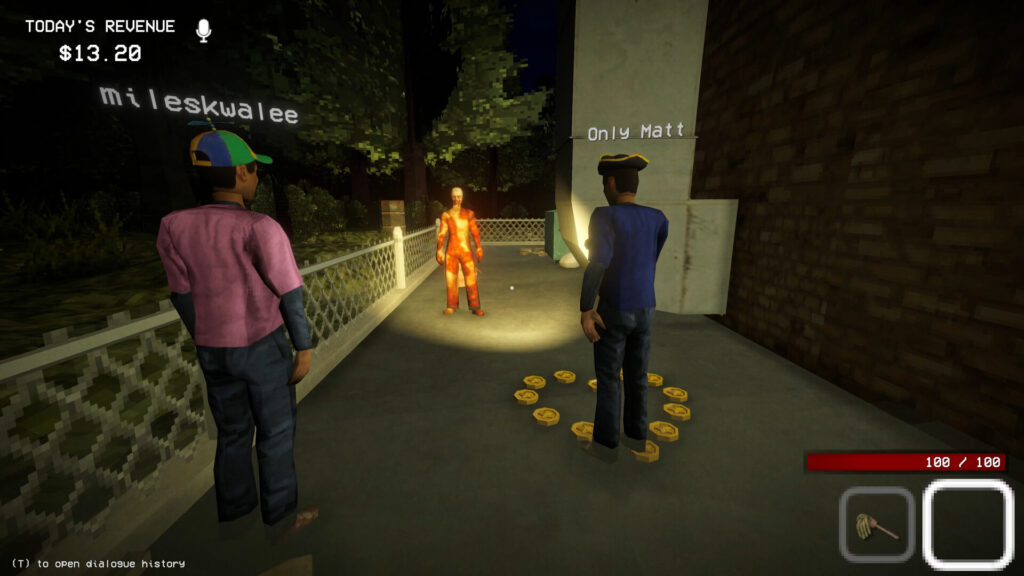
Every customer who walks into your gas station is a test you can fail twice. Wave through a doppelganger and it comes back later that shift as something with claws. Shoot a real person over a misread birthdate and you just orphaned two kids for nothing. Here are all the Shift At Midnight doppelganger tells we could verify: the database checks, the Verify menu, the Emotoscope, pump duty, and the exact procedure to follow when a customer fails the test. If you enjoy this kind of methodical monster ID work with friends, our Phasmophobia ghost identification guide scratches the same itch, and Steam even sells the two games as a bundle.
Key Takeaways
- The computer is always right: the NET Database profile is verified and accurate. Any mismatch between what a customer says and what the screen says is a tell.
- You get five checks per customer: the magnifier counter tracks them. Spend them on the categories the database lists, not random questions.
- Never act on one clue: a single odd answer can be a misread. Two or three stacked clues, like a wrong job plus a suspicious scan, is a confirmed doppelganger.
- Shoot before you finish the sale: completing the transaction and then shooting still counts as a miss, and the end-of-shift attack comes anyway.
- The Emotoscope can be fooled: its readings are accurate, but some doppelgangers replicate human emotions, so treat it as one clue among several.
- How Doppelganger Detection Works
- The Four Database Checks
- The Verify Menu and Behavioral Tells
- The Emotoscope: Useful but Not Foolproof
- Every Shift At Midnight Doppelganger Tell in One Checklist
- Pump Duty and the Bus Driver Check
- When You Confirm a Doppelganger
- What Happens if You Miss One
- Gear for Co-op Horror Nights
- Frequently Asked Questions
- Summary
How Doppelganger Detection Works
Shift At Midnight is set in 1993, during a reported wave of doppelganger sightings. Your job at the counter has three layers: the paperwork, the person, and the tools. When a customer scans their ID, a profile opens on the store computer, the NET Database. The game treats this database as verified and accurate, so it is your ground truth for every decision.
That changes how you should think about tells. You are not trying to guess whether someone seems off. You are hunting for contradictions between three sources: what the database says, what the customer says, and what your own eyes and tools tell you. A real human matches on all three. A doppelganger always slips somewhere.
Never execute on a single clue. Players have shot innocent customers over one misread birthdate, and the game makes you clean up the mess. A suspicious scan plus a wrong job title plus a mismatched ID tells a clear story. One odd answer on its own does not.
The Four Database Checks
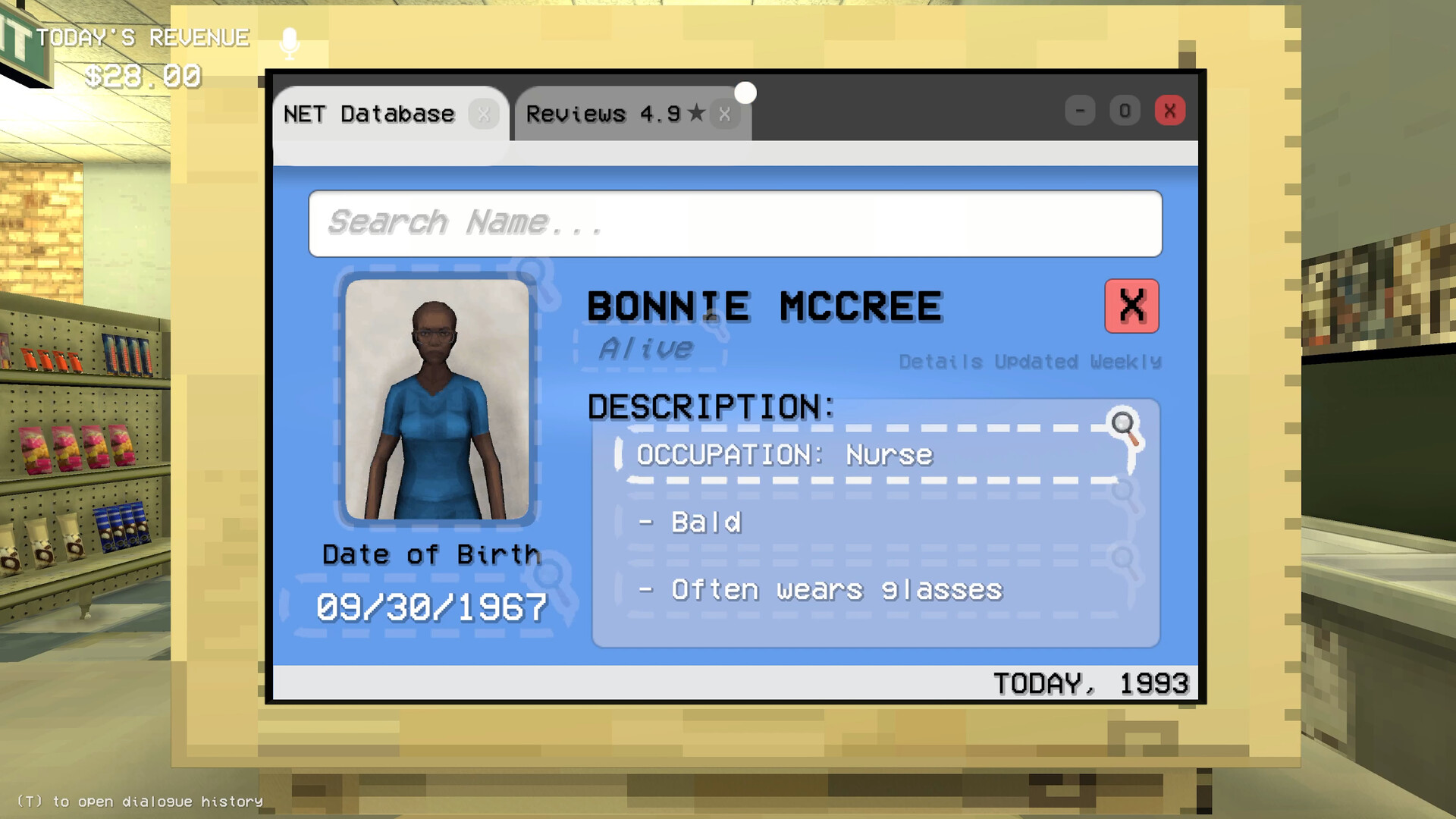
Every profile gives you four fields to cross-check against the ID in your hand and the person at your counter. Run through them in the same order every time so nothing gets skipped when the line builds up.
| Check | What to Compare | What a Tell Looks Like |
|---|---|---|
| Occupation | Database job vs what they say they do | They claim a job the profile does not list, or their story about work contradicts it |
| Appearance | Description notes vs the person in front of you | Profile says bald or wears glasses, customer has neither |
| Date of birth | ID date vs database date | The two documents disagree, or the customer hesitates when asked |
| Expiration date | The ID itself | Expired or otherwise invalid identification |
Read the profile carefully before you accuse anyone. The database also shows a status line and a note that details are updated weekly, and misreading a row is the most common way to shoot an innocent person. In one streamed run, a group nearly executed a mother because they compared her answer against her son’s birthdate on the wrong line.
The Verify Menu and Behavioral Tells
Paperwork alone does not catch every impostor. The Verify menu lets you inspect the customer directly across four categories: Head, Clothes, Limbs, and Movements. The magnifier counter in the corner shows five checks per customer, so budget them. Spend your first checks on whatever the database description mentions, then use the rest on anything that looked wrong at a glance.
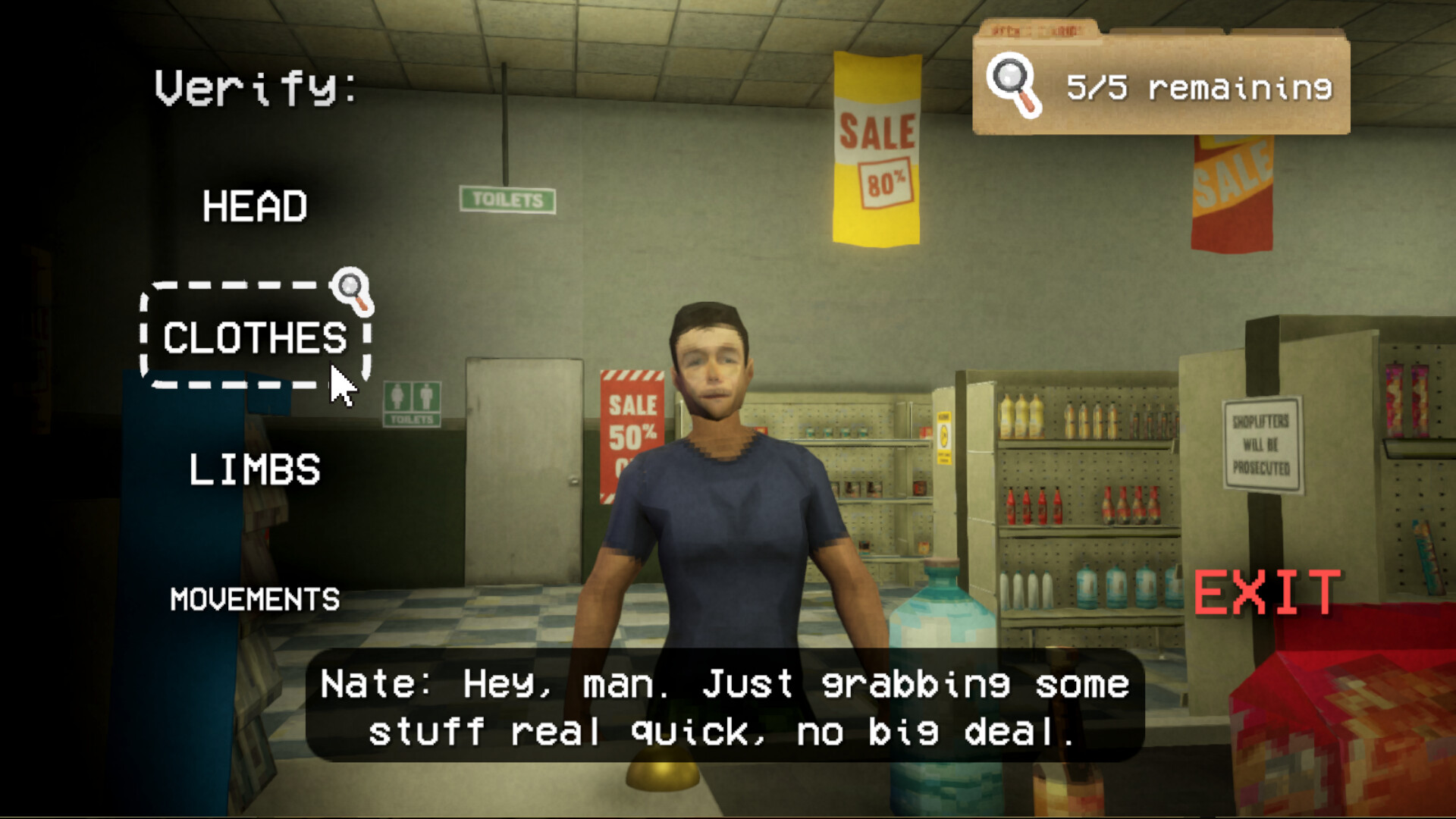
While you work through the menu, watch how the customer behaves. Players keep reporting the same behavioral tells:
- Emotions that do not match the words: a cheerful voice describing a bad day, or flat delivery on a friendly greeting.
- Hesitation and refusals: stalling on simple questions, or refusing an ID check outright.
- Contradictions on re-asks: ask the same question twice and compare answers. Humans stay consistent.
- Odd body language: strange posture, unnatural eye movement, awkward pauses, looking around the store for no reason.
- Confidence that feels wrong: either rehearsed-smooth answers or nerves with no explanation.
Two environmental tricks extend your toolkit. Reflective surfaces give you viewing angles you cannot get from the counter, and details sometimes look wrong in a reflection before they look wrong head-on. The store newspaper is also worth a skim at the start of each shift: in one run, a customer claimed he had just finished a shift at a diner the paper said burned down.
The Emotoscope: Useful but Not Foolproof
Partway through the story, the game hands you the Emotoscope, a tablet that reads a customer’s emotional state. The readings themselves are described as fully accurate. The catch is the target: some doppelgangers can replicate human emotional responses, while others cannot.
In practice that means a monstrous reading on the scanner is close to a confirmation, but a clean reading clears nobody. Use it the same way you use every other tool here, as one clue that needs a partner before you reach for the gun. A suspicious scan plus an inconsistent job title is a story. A clean scan plus a wrong birthdate is still a story. The scanner alone is neither.
Every Shift At Midnight Doppelganger Tell in One Checklist
Here is the full set of Shift At Midnight doppelganger tells in one place, grouped by where they show up. Two or more from any combination of groups is your threshold to act.
- Paperwork tells: wrong or missing occupation, appearance that contradicts the description, mismatched date of birth, expired ID, an ID that will not scan at all.
- Story tells: answers that contradict the database, answers that change on a re-ask, claims the newspaper disproves, hesitation on questions a human would not need to think about.
- Behavior tells: mismatched emotion and speech, strange posture and eye movement, awkward pauses, unexplained nerves or rehearsed confidence.
- Tool tells: a suspicious Emotoscope reading, or something that only looks wrong through a reflection or the Verify menu’s Head, Clothes, Limbs, and Movements views.
- Vehicle tells: a license plate that does not check out at the pumps, suspicious items your flashlight finds in the car, a bus driver sitting behind the wheel when the seat should be empty.
Shifts are randomly generated, so the specific customers, names, and stories change between runs and between lobbies. The tell categories do not. That is why a repeatable routine beats memorizing any specific night layout you find online.
Pump Duty and the Bus Driver Check
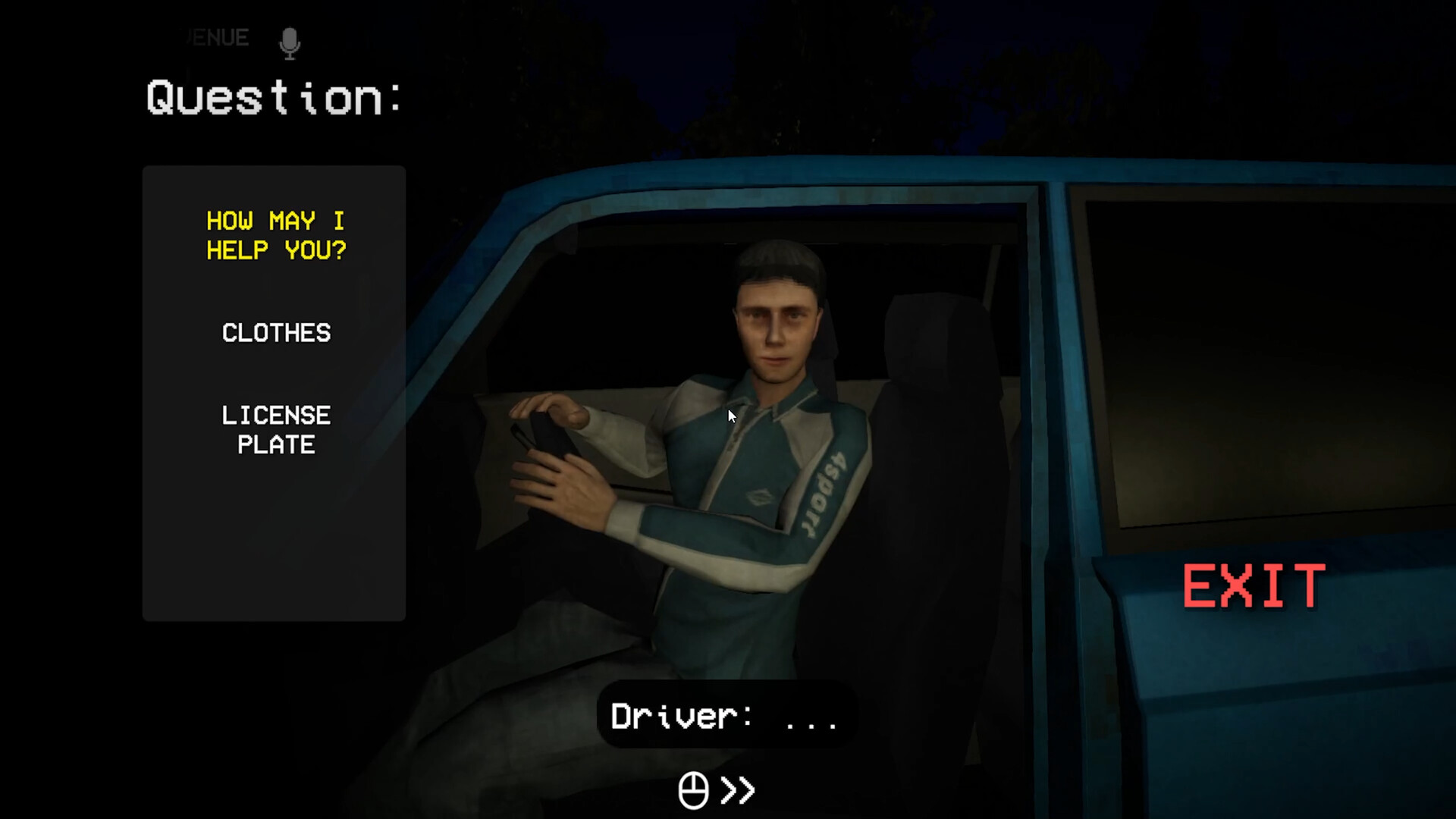
Later shifts add the gas pumps, and cars get their own inspection routine. The interaction menu at a vehicle gives you three moves, and you should use all of them before serving anyone:
- Open with the service question and listen to the driver’s answer for the same story tells you use at the counter.
- Question their clothes and compare against what you can see through the window.
- Run the license plate through the lookup, and sweep the car with your flashlight for suspicious items.
One more check happens at the end of the night. Before you clock out, look at the bus. An empty driver’s seat means it is safe to leave. If someone is sitting behind the wheel, that is a doppelganger, and boarding anyway introduces you to one of the fastest monsters in the game.
When You Confirm a Doppelganger
Once you have two or more tells, the order of operations matters. Early Steam forum testing found that completing the sale and then shooting still registers as a miss, and the end-of-shift attack triggers anyway. Kill it before the transaction closes.
- Stop the transaction. Do not ring them up while you deliberate.
- Confirm with a second clue if you only have one. Re-ask a question or spend a Verify check.
- Use the gun under the counter. The game tells you to execute on sight once you are sure.
- Clean up. Trash bags for the remains, mop for the blood. The store still has a rating.
- Get back to the line. The quota does not pause while you compose yourself.
If the clues stack against a real human and you pull the trigger anyway, the game does not end. You lose the sale and you get a body to clean before the next customer reaches the counter. Every streamed disaster so far came from reading the profile too fast, never from asking one question too many.
What Happens if You Miss One
A doppelganger that walks out clean returns later that same shift, and it does not come back as a customer. Every additional miss makes the end-of-shift phase harder, and on a blood moon night an entity attack is guaranteed by design, with store memos warning that serving doppelgangers makes it worse.
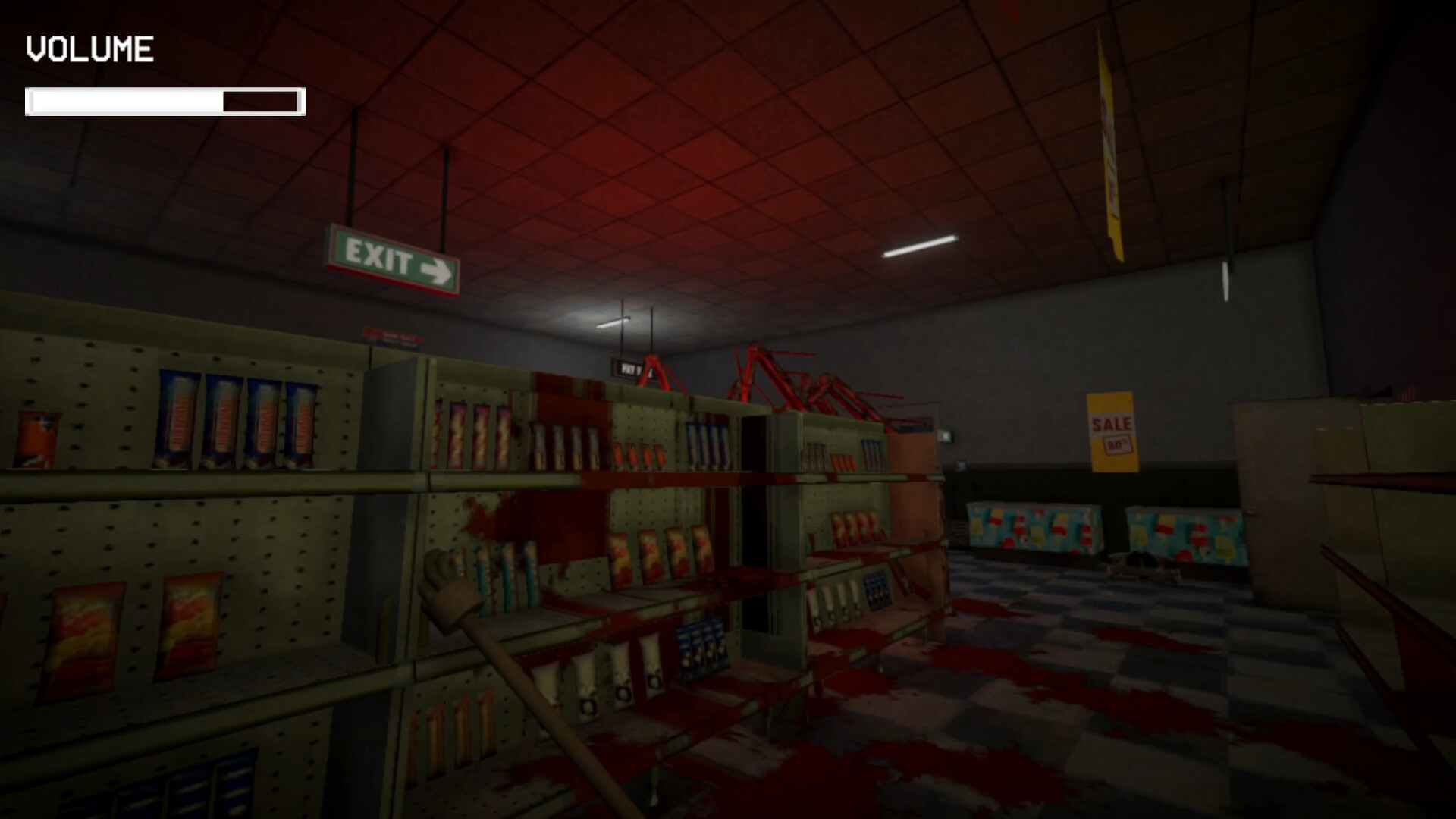
When the attack comes, you board up doors, place traps, and hide. Bear traps and barricades hold chokepoints, stock boxes create artificial ones, and proximity bombs punish aggressive pushes. As of July 2026, the monster roster players have documented includes:
| Monster | Behavior | Counter |
|---|---|---|
| Shrieking Dolls | Small crawlers that slow you, then lunge | Shoot them before they close the distance |
| The Phantom | Cannot advance while you look at it; players also call it the Demented | Back away slowly while watching it, lure it into a bear trap |
| Marionette | Emerges from a jack-in-the-box that appears on later shifts | Track the box by its sound; the Marionette that emerges can be put down, and doing so earns an achievement |
| Red Creature | Spawns if you board a bus with a fake driver; fast, ignores barricades | Lure it back toward the station and stay inside the building |
| The Gnome | A recurring pest with a fake ID; sells lemonade that poisons you | Refuse the ID that will not scan, skip the drink |
Two survival notes for the defense phase. Ventilation shafts are temporary hides at best, because staying inside too long gets you dragged out by whatever lives in there. And turning your flashlight off to listen for footsteps is still the most reliable way to track a monster you cannot see.
Gear for Co-op Horror Nights
Shift At Midnight runs on proximity voice chat, and most wipes start with a callout somebody did not hear. If your crew is settling in for the full 13 shifts, this kit covers the three things that matter: hearing footsteps, being heard clearly, and seeing tells in a dark store. Deal prices below are current as of July 2026.

Sony INZONE H9
Wireless with noise canceling, so footsteps and whispered callouts cut through. 31% off list.

Samsung 27″ Odyssey G5
QHD at 180Hz makes small tells readable, like a description detail that does not match. 39% off.

HyperX QuadCast 2 S
A USB mic with tap-to-mute for the moments when something is standing behind you. 42% off.
Frequently Asked Questions
How many shifts are in Shift At Midnight?
Story Mode has 13 randomly generated shifts, so customers and events change between runs. An Endless Mode is playable in beta, with a free major update planned for Q4 2026 that adds exclusive customers, weapons, traps, and monsters.
Does Shift At Midnight have crossplay between Steam and Game Pass?
No. As of July 2026, players report crossplay works within the Xbox ecosystem, meaning Xbox consoles and the Microsoft PC version through Play Anywhere, but Steam players cannot join Game Pass lobbies. Buy on the same storefront as your friends. Every platform and both crossplay pools are covered in our Shift At Midnight platforms guide.
How many players does Shift At Midnight support?
The game is designed for 1 to 3 players in online co-op. A day-one patch added optional lobbies of up to 6 players, with a developer warning that larger groups play outside the intended balance.
Is the store computer ever wrong about a customer?
No. The NET Database is presented as verified and accurate, which makes it the anchor for every identification. When players shoot innocent customers, the cause is almost always misreading the profile rather than bad data.
What happens if you shoot a real human customer?
The run continues. You lose the sale, you have a cleanup on your hands, and the game logs the mistake, but shooting an innocent does not trigger the monster attack that a missed doppelganger does. The bigger cost is the time you spend cleaning instead of serving the quota.
Summary
Trust the database, spend your five checks deliberately, and never act on a single clue. Kill confirmed doppelgangers before the sale closes, check the bus before you leave, and treat the Emotoscope as a witness rather than a judge. Do that consistently and the 13 shifts turn into a routine your crew can survive. If your group wants more nights like this, our picks for the best prop hunt and hide-and-seek games and our Resident Evil Requiem beginner guide are good next stops, and the INZONE H9 will carry you through all of them.