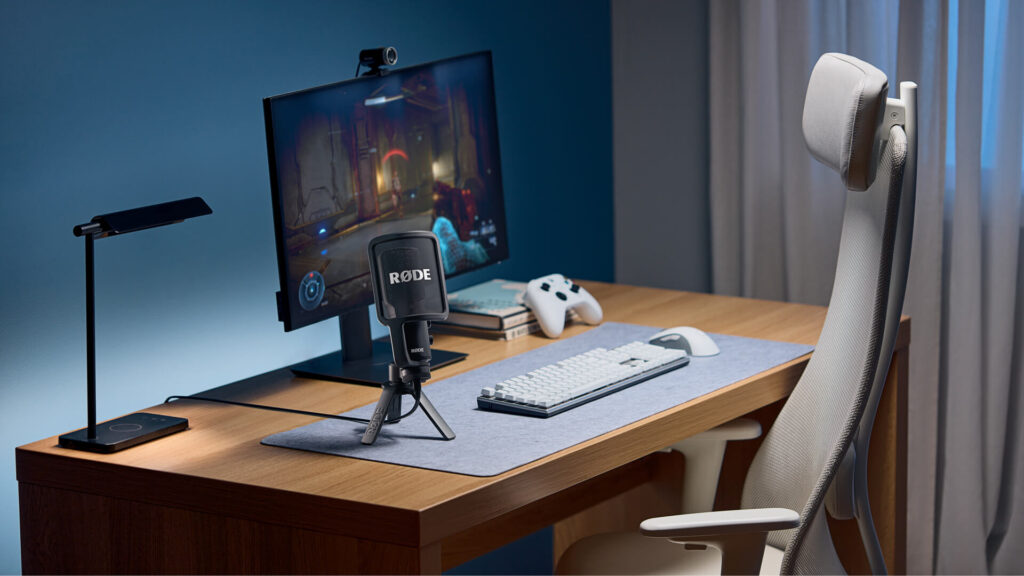
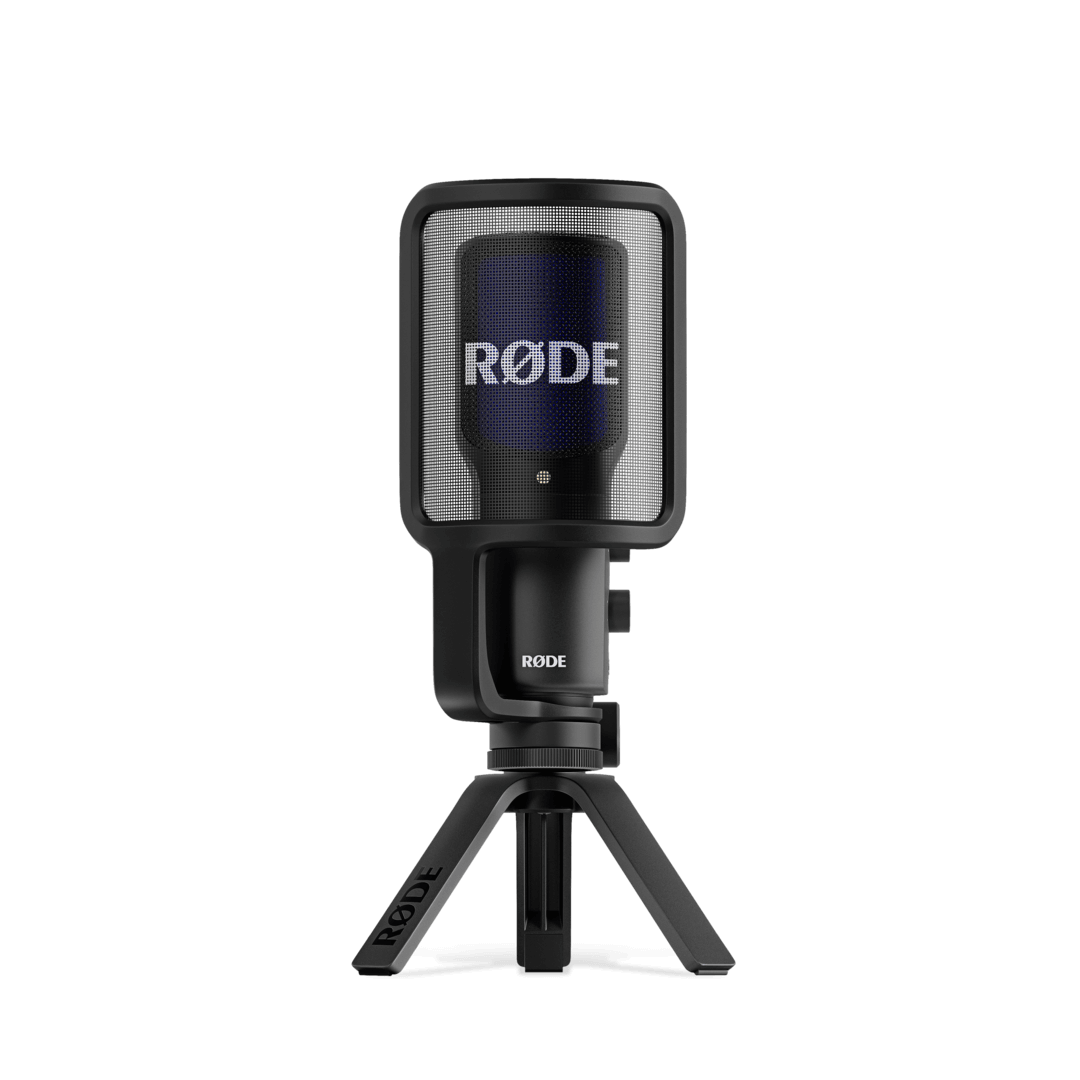
RØDE NT-USB+
Studio condenser clarity over USB with built-in APHEX processing that makes a noticeable difference. Excellent for voiceovers and podcasting in quiet rooms, but the condenser pickup means it’s not ideal for noisy setups.
TL;DR
- The RØDE NT-USB+ is a studio condenser that connects over USB-C — no audio interface needed. Built-in APHEX processing adds warmth, presence, and compression before the signal hits your computer.
- Zero-latency headphone monitoring with a mix knob for blending mic and computer audio. Podcasters and voice actors get real-time feedback without dealing with software latency.
- Best in quiet, treated spaces. The condenser capsule captures every detail in your voice, but it also captures every detail in your room. Mechanical keyboards, fans, and street noise will show up in your recordings.
- At ~$170, it sits between budget USB mics and pro XLR setups. The included pop filter and desk stand save you $30-50 in accessories you’d buy separately.
What Is the RØDE NT-USB+?
The RØDE NT-USB+ is RØDE’s flagship USB microphone, a condenser with built-in APHEX processing that connects directly to your computer over USB-C. It’s aimed at podcasters, voiceover artists, and musicians who want professional sound without buying a separate audio interface.
RØDE has been making condenser microphones for studios since the early ’90s. The NT-USB+ takes that same capsule expertise and packages it with a 24-bit digital converter and onboard DSP so you get studio-quality recording from a single USB cable. It runs around $170, about $75 more than the Blue Yeti and $230 less than the Shure SM7B with an interface.
A USB-C condenser microphone with a studio-grade capsule, built-in APHEX processing (Aural Exciter, Big Bottom, compressor, noise gate), zero-latency headphone monitoring, and a 48kHz/24-bit converter. Includes pop filter, desk stand, and USB-C cable.
Specifications
| Type | Condenser (Cardioid) |
| Capsule | Studio-grade condenser (RØDE proprietary) |
| Sample Rate | 48kHz / 24-bit |
| Frequency Response | 20Hz – 20kHz |
| Polar Pattern | Cardioid |
| Built-in DSP | APHEX Aural Exciter, Big Bottom, Compressor, Noise Gate, High-Pass Filter (75Hz/150Hz) |
| Headphone Out | 3.5mm (zero-latency, volume + mix control) |
| Connection | USB-C (cable included) |
| Included | Pop filter, desk stand, USB-C cable |
| Weight | 540g (mic only) |
| Price | ~$170 |
Design & Build Quality
The NT-USB+ looks and feels like a studio mic because it is one. The all-metal body with RØDE’s matte black finish has real weight to it. At 540g for the mic alone, it feels more substantial than plastic-bodied USB mics in the same price range.
Two dials on the side handle the headphone output: a volume knob on the bottom and a monitor mix knob on top that blends between your mic signal and computer playback. Both have a satisfying resistance that makes fine adjustments easy. Gain and DSP effects (including the high-pass filter) are controlled through RØDE Central software rather than physical switches, which keeps the mic body clean but means you need the app open for initial setup.
The included pop filter clips directly onto the mic body. It’s metal mesh, not the cheap foam kind, and it does a decent job killing plosives. The desk stand is sturdy but puts the mic low, which is the same problem every desk-stand mic has. Plan on a boom arm if you’re using this daily. If you’re also putting together a full desk setup, our ergonomic desk setup guide covers the rest of the layout.
Sound Quality & Performance
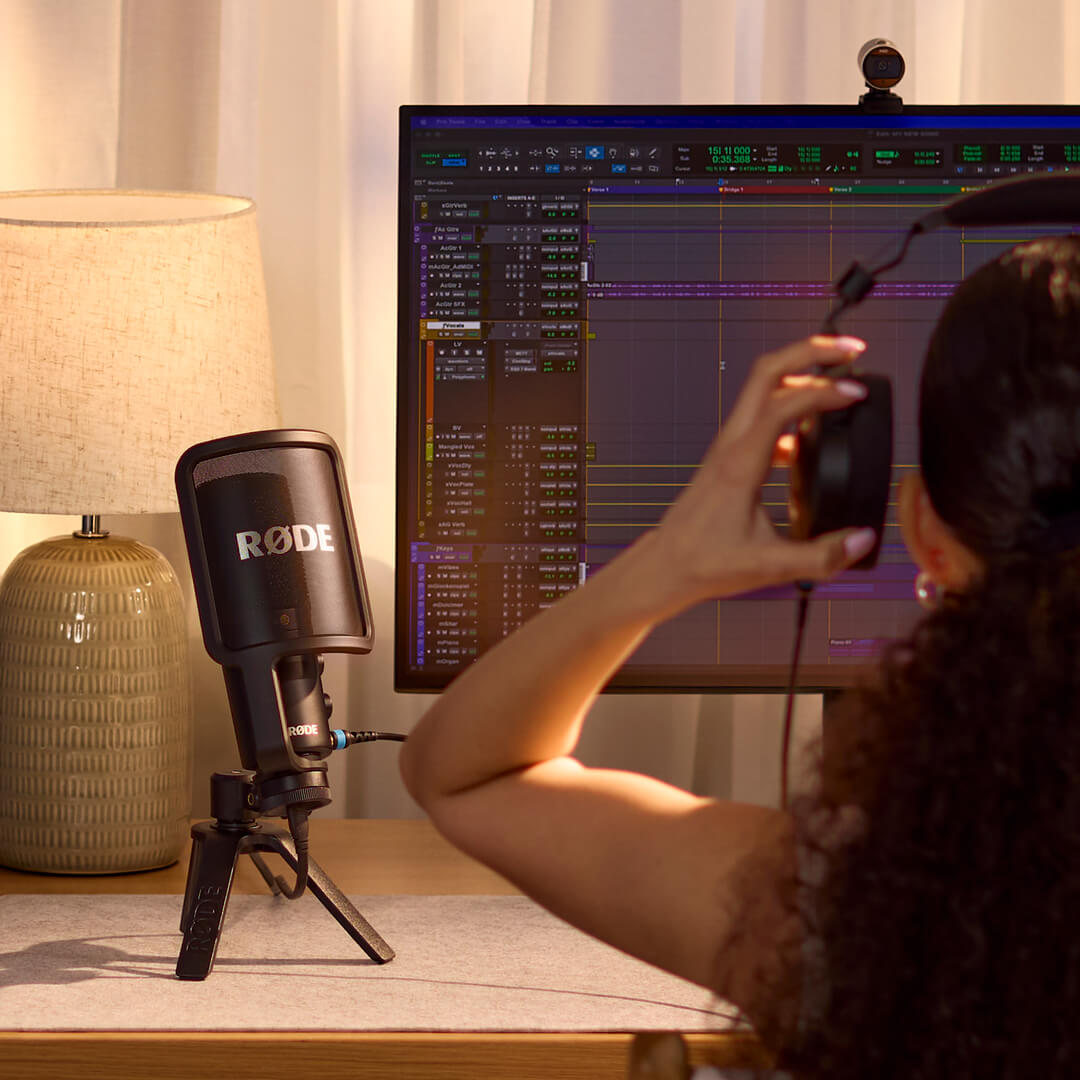
This is where the NT-USB+ earns its price tag. The condenser capsule captures vocals with detail and clarity that budget USB mics can’t match. There’s a natural warmth to the low-mids, crisp presence in the upper range, and a noise floor low enough that you won’t hear hiss in quiet passages. Voiceovers sound full and professional straight out of the mic.
The cardioid polar pattern does a solid job rejecting off-axis sound. Get within 6-8 inches and it focuses tightly on your voice while pushing background noise further down. It’s not as forgiving as a dynamic mic (a condenser will always pick up more room reflections), but in a treated or even reasonably quiet room, the results are impressive for a USB device.
For podcasting, the NT-USB+ gives you that “radio” sound without needing a channel strip or outboard compressor. ASMR creators will love the sensitivity and detail. Singers recording demos get a capsule that handles dynamics well, though if you’re tracking loud vocals you’ll want to watch the gain knob. For gaming and streaming where background noise is a factor, a dynamic mic like the RØDE PodMic USB is still the better tool for the job.
RØDE Central & APHEX DSP
The built-in APHEX processing is what sets the NT-USB+ apart from other USB mics. APHEX effects run on the mic’s internal DSP before the audio reaches your computer, which means they work with any recording software and add zero CPU load. You configure them through RØDE Central (free software for Mac, Windows, iOS, and Android).
Here’s what each effect does:
- Aural Exciter — Adds clarity and presence to the upper harmonics of your voice. Subtle settings sound natural; heavy settings get brittle fast. Start low.
- Big Bottom — Enhances low-end warmth without muddying the signal. Useful for thinner voices that need body.
- Compressor — Levels out volume spikes. Great for podcasters who move around or get animated. Keeps your audio consistent without crushing dynamics.
- Noise Gate — Cuts audio below a set threshold. Helps eliminate room noise between phrases, but set it too aggressively and it chops off the beginnings of sentences.
- High-Pass Filter — Software toggle with two options: 75Hz or 150Hz. Rolls off low-frequency rumble from air conditioning, traffic, and desk vibrations.
RØDE Central itself is straightforward. Drag sliders, hit save, done. It doesn’t try to be a DAW or a streaming tool — it just lets you tweak APHEX levels and install firmware updates. Compared to Logitech G Hub (which the Blue Yeti uses for Blue VO!CE), RØDE Central is lighter and less intrusive.
How It Compares
Here’s how the RØDE NT-USB+ compares to two other USB condensers:
| Feature | RØDE NT-USB+ | Blue Yeti | Audio-Technica AT2020USB+ |
|---|---|---|---|
| Type | Condenser | Condenser | Condenser |
| Polar Patterns | 1 (Cardioid) | 4 (Cardioid, Omni, Bidirectional, Stereo) | 1 (Cardioid) |
| Built-in DSP | APHEX (5 effects) | Blue VO!CE | None |
| Headphone Monitoring | Zero-latency + mix control | Zero-latency | Zero-latency + mix control |
| Connection | USB-C | USB (Micro-B) | USB (Micro-B) |
| Price | ~$170 | ~$95 | ~$149 |
vs Blue Yeti: The Blue Yeti costs nearly half as much and gives you four polar patterns versus one. For the price difference, the Blue Yeti is harder to beat as a general-purpose USB mic. The NT-USB+ wins on raw sound quality and APHEX processing, but the gap isn’t as wide as the price difference suggests. If you’re strictly doing voice work and want the best USB sound, the NT-USB+ justifies the premium. For everything else, the Blue Yeti is the smarter buy.
vs Audio-Technica AT2020USB+: The AT2020USB+ is the closest competitor in terms of sound character — both are cardioid condensers tuned for vocals. The NT-USB+ has the edge with APHEX processing and USB-C, while the AT2020USB+ has a flatter, more “neutral” response that some producers prefer for mixing later. At $20 more, the NT-USB+ is worth it for the onboard processing alone.
Pair It With
The NT-USB+ includes a pop filter and desk stand, but a boom arm makes a big difference. Here are the accessories worth grabbing:
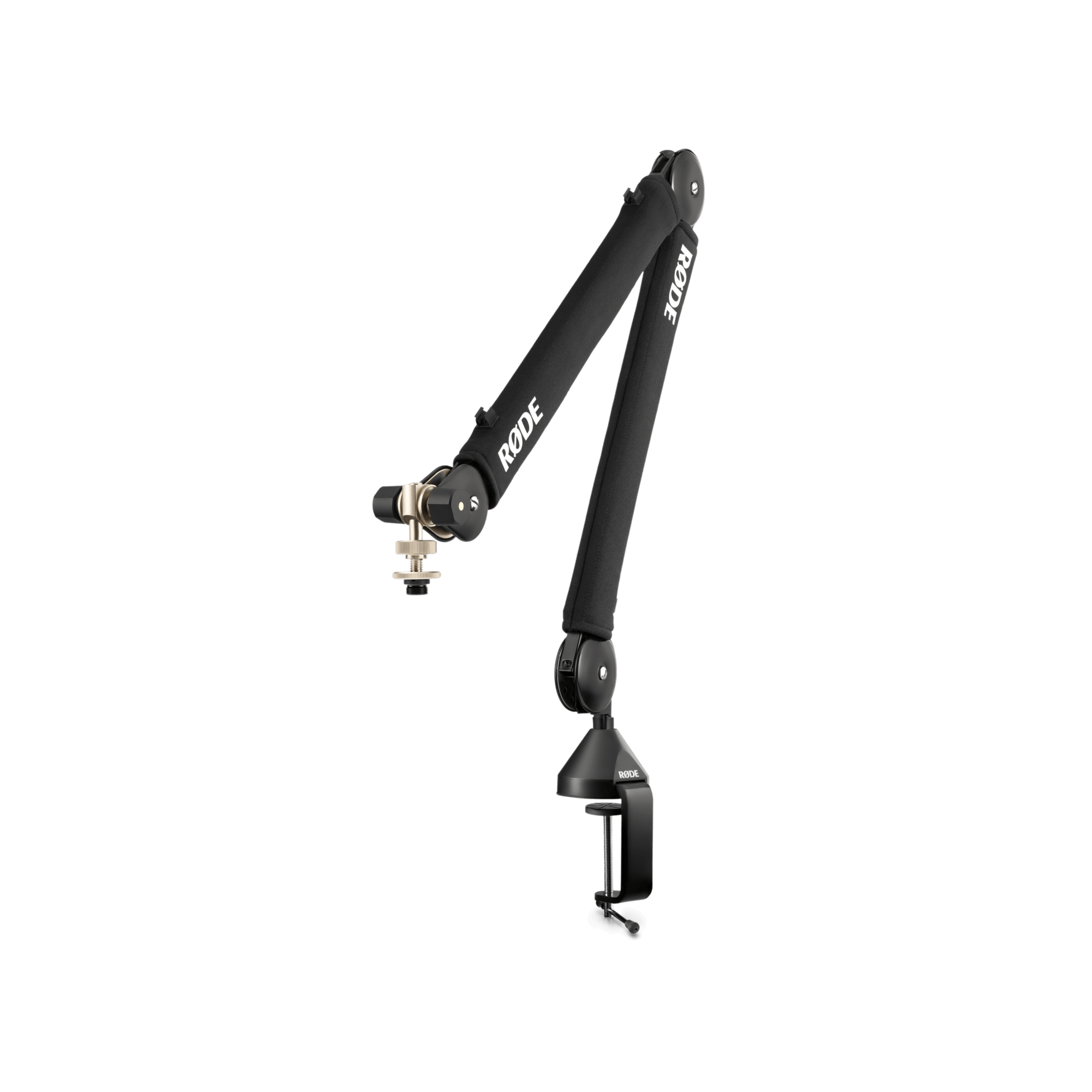
RØDE PSA1+
Industry-standard boom arm, handles the NT-USB+’s weight
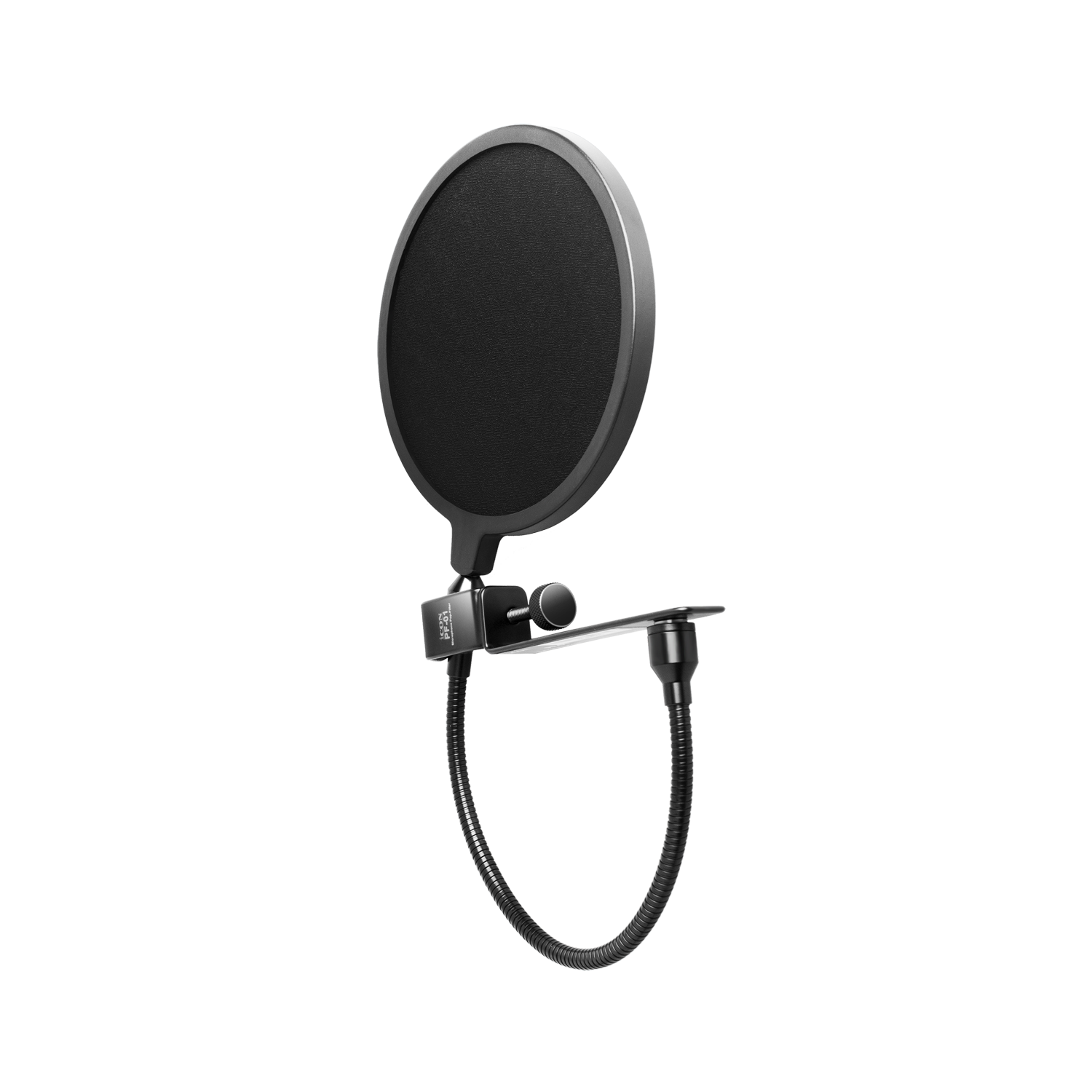
Dual-Layer Pop Filter
Extra plosive protection if you outgrow the included filter
Pros & Cons
Pros
- Condenser sound quality that punches above its price
- APHEX processing handles compression, presence, and noise gating on-device
- Zero-latency headphone monitoring with mic/playback mix control
- USB-C connection (not Micro-B like older mics)
- Pop filter and desk stand included in the box
- RØDE Central is lightweight and non-intrusive
Cons
- Condenser pickup means it captures room noise
- Cardioid only, no multi-pattern option
- USB-only, no XLR option for future interface upgrades
- Desk stand puts the mic too low (boom arm recommended)
- At $170, costs nearly double the Blue Yeti
Who Should Buy This?
Buy the RØDE NT-USB+ if:
- You do voiceovers, podcasting, or vocal recording and want top-tier USB sound
- You have a quiet recording space (home office, treated room, closet booth)
- You want built-in processing without buying a separate channel strip
- You value USB-C connectivity and a clean, simple workflow
Skip this if:
- You’re in a noisy environment with fans, keyboards, or roommates — a dynamic mic like the RØDE PodMic USB handles that better
- You need multiple polar patterns for interviews or room recording — the Blue Yeti offers four patterns at half the price
- You want XLR flexibility for a future interface upgrade — look at the PodMic USB which has both USB and XLR
Final Verdict
The RØDE NT-USB+ does one thing and does it well: it gives you studio condenser sound over USB. The APHEX processing is a genuine advantage over other USB mics — having compression, presence enhancement, and a noise gate baked into the hardware means less time messing with software plugins and more time recording.
The catch is that you’re paying for that quality, and a condenser mic demands a decent recording environment. If your space is noisy, the NT-USB+ will faithfully capture every keyboard click and AC hum alongside your voice. But in a quiet room? This thing sounds like a mic that costs three times more.
At $170, it’s the USB mic for people who are serious about voice quality and don’t want to deal with an XLR interface. If that’s you, this is the one to get.
RØDE NT-USB+
Studio condenser quality with USB simplicity. Worth every dollar if your room is quiet enough to let it shine.
Check Price on Amazon →Frequently Asked Questions
Is the RØDE NT-USB+ good for streaming?
It can work for streaming, but it’s better suited for voiceovers and vocal recording. The condenser capsule picks up background noise like keyboard clicks and room reflections. If you stream in a quiet, treated room it sounds fantastic, but most streamers are better off with a dynamic mic like the RØDE PodMic USB.
Do I need an audio interface for the RØDE NT-USB+?
No. The NT-USB+ connects directly via USB-C and includes its own analog-to-digital converter and built-in APHEX DSP processing. It works as a plug-and-play device on Windows, macOS, iOS, and Android without any additional hardware.
What is APHEX processing on the RØDE NT-USB+?
APHEX is a suite of built-in digital signal processing effects including an Aural Exciter (adds clarity and presence), Big Bottom (enhances low-end warmth), a compressor, noise gate, and high-pass filter. These are configured through the free RØDE Central software and process audio on the mic’s hardware before it reaches your computer.
How does the RØDE NT-USB+ compare to the Blue Yeti?
The NT-USB+ outperforms the Blue Yeti in raw sound quality, noise floor, and built-in processing. The Yeti offers multiple polar patterns (cardioid, stereo, omnidirectional, bidirectional) while the NT-USB+ is cardioid only. For voice work, the NT-USB+’s single-pattern focus with APHEX processing delivers cleaner, more professional results. The Yeti wins on versatility and value.
Can I use the RØDE NT-USB+ with a boom arm?
Yes. The NT-USB+ uses a standard 3/8″ thread mount (with a 5/8″ adapter included) that fits most boom arms. The RØDE PSA1+ is a natural pairing and handles the mic’s weight easily. Using a boom arm is recommended over the included desk stand for better mic positioning and reduced desk vibration pickup.