
Dragon Quest VII Reimagined is a massive JRPG with dozens of hours of content, a complex vocation system, and some mechanics that aren’t immediately obvious. Whether you’re new to the series or returning after playing the 3DS version, this guide covers everything you need to know to start your adventure strong.
Good news: this is a standalone game. You don’t need to play any previous Dragon Quest titles to understand the story or enjoy Reimagined.
Quick Tips Before You Start
Before diving into the details, here are the most important things to know:
- Turn on “Restore HP after Battle” in settings. This quality-of-life feature heals your party after every fight, letting you survive long dungeons without constant backtracking.
- Prioritize defensive gear over weapons. Survivability matters more than raw damage, especially on higher difficulties.
- Break everything. Smash every jar, barrel, and wardrobe you find. Check bookshelves and drawers. This is how you fund your adventure.
- Zoom is free and works anywhere. Unlike previous games, Zoom costs 0 MP and can be used inside dungeons. Use it liberally.
- Save your stat seeds. Don’t use stat-boosting items until late game when your character builds are optimized.
- Some dialogue choices matter. Don’t mash through conversations. Certain responses grant bonuses.
Understanding the Vocation System
The vocation (job/class) system is the heart of Dragon Quest VII Reimagined. It unlocks when you reach Alltrades Abbey, roughly 11 hours into the game. Here’s how it works:
26 vocations are available, organized into three tiers:
- Basic vocations: Your starting options (Warrior, Mage, Priest, Martial Artist, etc.)
- Intermediate vocations: Unlocked by mastering specific basic vocations
- Advanced vocations: The most powerful classes, unlocked by mastering intermediate ones (Armamentalist, Paladin, Monster Masher, Druid, Hero)
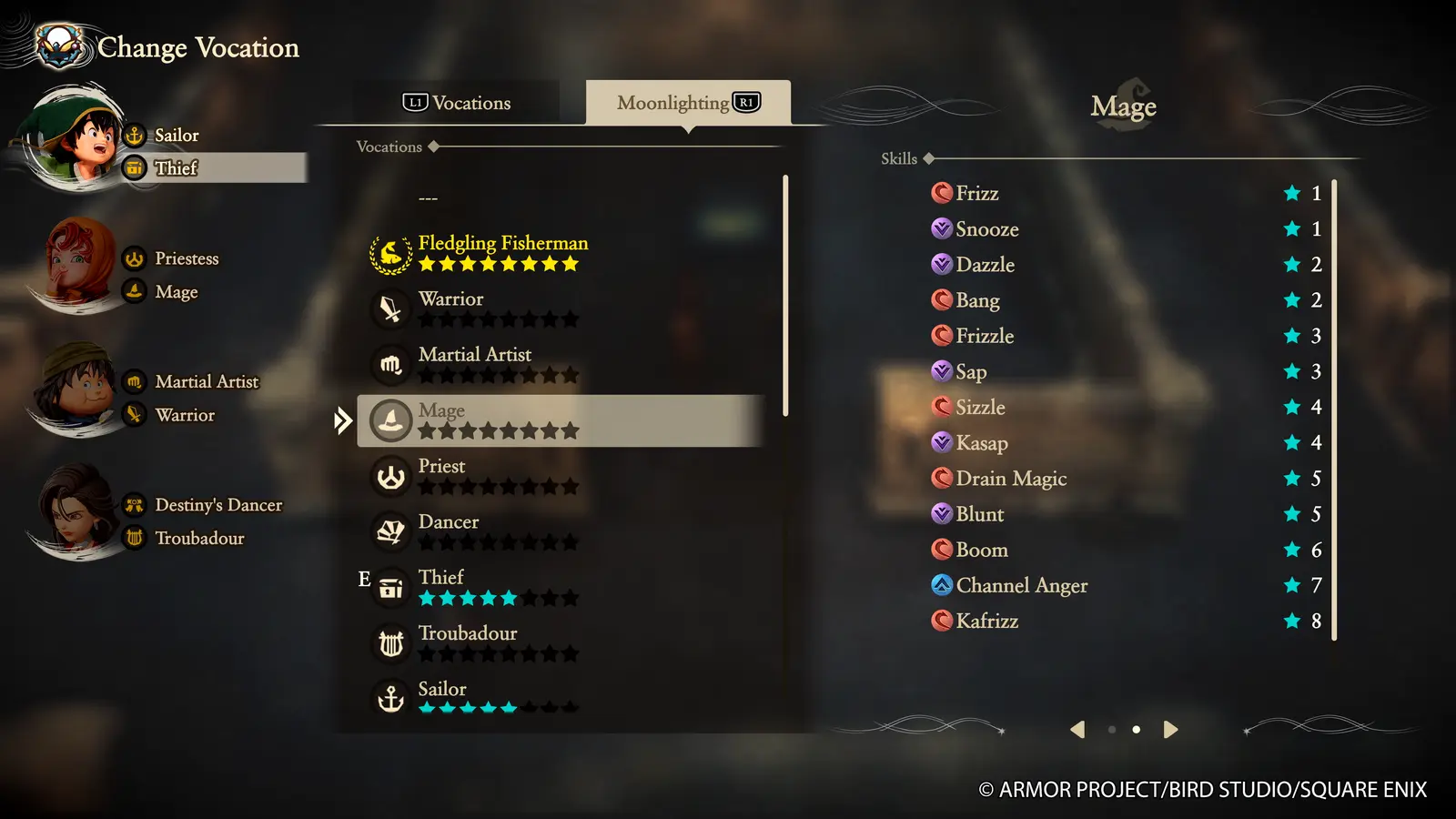
Critical change from the original: In Reimagined, skills and spells are now tied to their vocation. If you learn Flying Knee as a Martial Artist, you can only use it while that vocation is equipped. This is a major departure from the original game where you kept all learned skills permanently.
How Moonlighting Works
Moonlighting is Reimagined’s biggest new feature, and it compensates for skills being tied to vocations. Once you obtain the Job Orb, you can equip two vocations on a single character simultaneously.
Here’s what Moonlighting gives you:
- Both stat bonuses apply. A character with Warrior and Mage vocations gets strength AND magic boosts.
- Access to both skill sets. You can use abilities from either equipped vocation.
- Level both at once. Battles give vocation points to both equipped jobs.
This opens up powerful combinations. Pair a healing vocation with a damage dealer, or combine two complementary magic types. Experiment to find what works for your playstyle.
Fast Vocation Leveling Strategy
Leveling vocations can feel slow if you’re only fighting through normal battles. Here’s the trick: hunt weak enemies on the overworld map.
You can recognize weak enemies because they run away when they see you. When you strike them on the map (before combat starts), you instantly defeat them. Each instant kill grants 1 vocation point.
Compare this to full turn-based battles, which give 7 vocation points but take much longer due to animations and menus. By farming weak enemies, you can earn 15-20 vocation points per minute in good grinding spots.
This is the fastest way to master vocations and unlock advanced classes.
Essential Settings to Change
Dragon Quest VII Reimagined lets you customize your experience through the System menu. These settings can be changed anytime:
- Restore HP after Battle: Turn this ON. It’s not cheating, it’s quality of life. Modern RPGs do this by default.
- Camera Distance: Set to “near” if the zoomed-out camera makes characters too small to appreciate.
- Difficulty settings: Adjustable at any time. Stuck on a boss? Lower enemy strength temporarily. Feeling overpowered? Increase challenge. No shame in tweaking these.
- Autosave: The game has autosave, but don’t rely on it exclusively. Manual save at churches when you can.
Combat Tips
Combat in Reimagined has some features that aren’t immediately obvious:
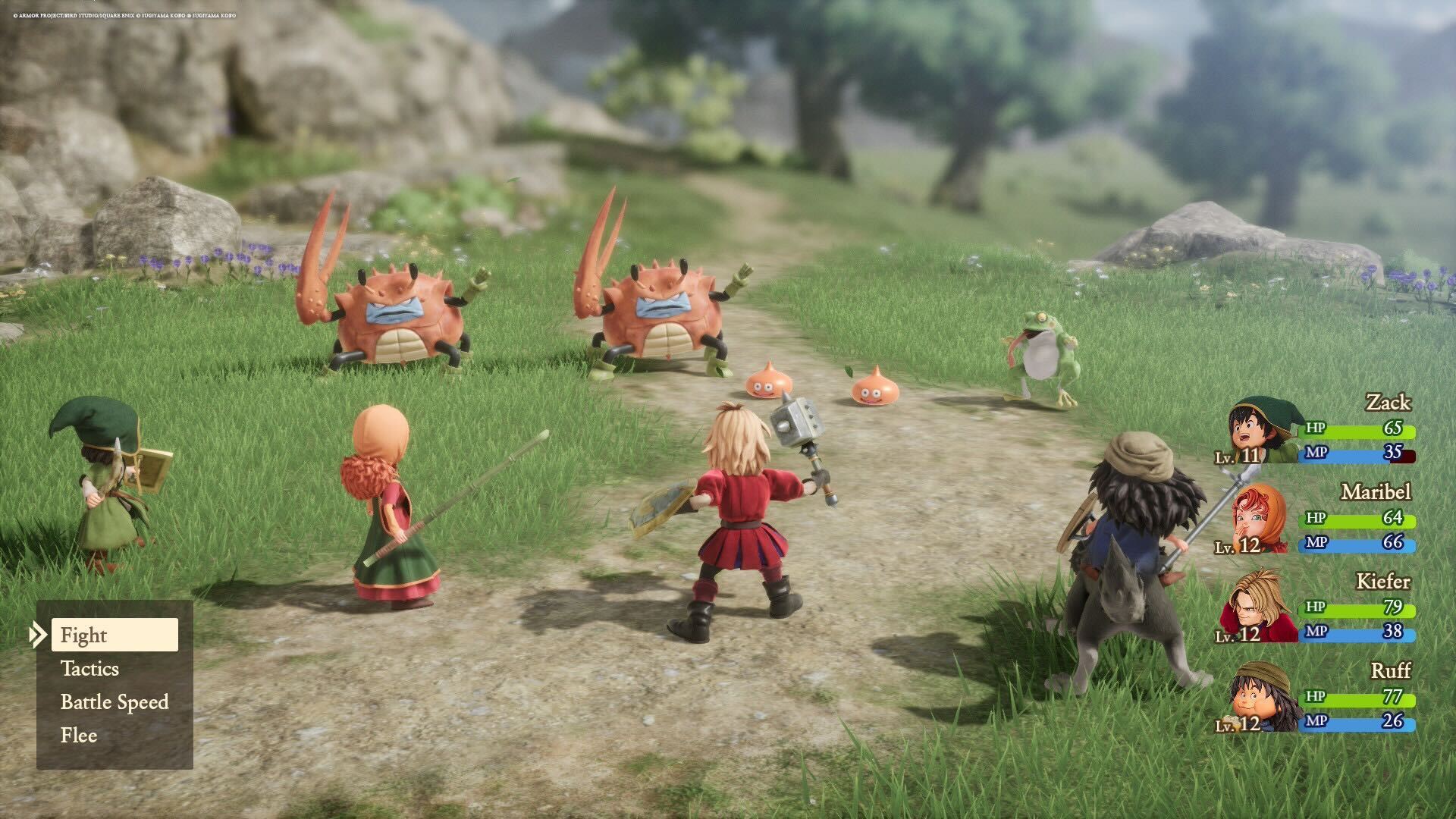
Let Loose and Worked Up: As characters fight, they build up a “Worked Up” state. When fully charged, they can “Let Loose” for powerful special abilities unique to their vocation. Watch for this meter and use it strategically.
Kazing over Zing: Zing is an early resurrection spell that sometimes fails. Kazing always works. Prioritize getting a character who can cast Kazing, it will save runs.
Mid-battle flexibility: You can change equipment during battle if you realize you need different resistances. You can also swap party members in and out during fights.
Chimaera Wings: These now guarantee escape from battle (they lost their teleport function). Keep some handy for emergencies.
Common Beginner Mistakes
Avoid these pitfalls that trip up new players:
- Ignoring defensive gear. That shiny new sword is tempting, but armor and shields keep you alive. Prioritize defense, especially early.
- Forgetting Zoom exists. It’s free! Use it to escape dungeons, return to towns, and save walking time. There’s no reason not to.
- Skipping past/present comparisons. After completing an island’s quest in the past, revisit it in the present. You’ll find new treasures, characters, and story content.
- Losing track of tablet pieces. Open the Tablet List in the Info menu. It shows locations of pieces you’ve encountered but haven’t collected.
- Expecting skills to transfer between vocations. This isn’t the original or 3DS version. Skills stay with their vocation now. Plan your Moonlighting combinations accordingly.
FAQ
Do I need to play previous Dragon Quest games first?
No. Dragon Quest VII Reimagined is a standalone story with no direct connection to other games in the series. It’s actually a great entry point for newcomers.
When do vocations unlock?
Vocations unlock when you reach Alltrades Abbey, approximately 11 hours into the game. The pacing has been improved from the original, which took much longer.
Can I change the difficulty mid-game?
Yes. Difficulty settings can be adjusted at any time through the System menu. You can tweak experience gain, enemy strength, damage dealt, and more.
What happened to monster vocations?
Monster vocations have been removed in Reimagined. Monster Hearts are no longer used. The Moonlighting system compensates by letting you combine two human vocations instead.
Dragon Quest VII Reimagined is a long journey, but with these tips you’ll be well-prepared for whatever the game throws at you. Focus on understanding the vocation system, use Moonlighting to create powerful combinations, and don’t forget to explore every corner of both past and present.