⚡ Quick Answer
Nioh 3’s biggest early mistakes are ignoring exploration and sticking to one combat style. Unlock Deflect (Samurai) and Evade (Ninja) immediately, explore every region before tackling main missions, and switch between styles mid-fight instead of committing to one. The game rewards players who master both, not those who specialize early.
📋 In This Guide
If you’re coming from Dark Souls, Elden Ring, or even Nioh 2, there’s something you need to know right away: Nioh 3 plays by different rules. The dual-style combat system, Lock-based skill progression, and open-world exploration are all new territory. Every guide out there tells you to “explore more” and “try different weapons.” This one tells you exactly what to prioritize, what to skip, and the specific tools that are secretly overpowered from the very first hour.
Samurai vs Ninja: Understanding the Dual Style System
Nioh 3’s biggest change from previous games is the dual combat style system. You’re not picking a class. You’re playing both, constantly switching between Samurai and Ninja mid-fight with R2/RB. Think of it less like two builds and more like two weapons in a fighting game.
Samurai is your defensive wall. You block, you deflect, you use Ki Pulse to recover stamina between combos. You have three stances (High, Mid, Low) that change your attack speed, damage, and dodge behavior. High Stance hits hard but slow. Low Stance is fast and evasive. Mid Stance is the all-rounder you start with.
Ninja is your aggressive speedster. You don’t block. You dodge, use Mist to reposition after attacks (think of it like a dash cancel), and throw Ninjutsu tools to control the battlefield. There are no stances here. Instead, you chain attacks and dodges into a fluid rhythm that rewards constant aggression.
✅ Use Samurai When:
- Enemies have predictable attack patterns you can parry
- You need to break through a guarding enemy’s Ki
- You’re finishing off a staggered target (High Stance heavy attacks)
- Facing a single dangerous enemy head-on
✅ Use Ninja When:
- You need to chip down Ki safely before committing
- Fighting multiple enemies at once (mobility matters)
- You want to apply status effects from a distance
- The boss has an opening after an attack chain
The real magic is the Burst Break. When an enemy glows red and winds up an unblockable attack, switch styles with the right timing (R2/RB just before the hit) to counter it. This deals massive Ki damage, restores your Ki, and flips you into your other style for a follow-up. It’s high-risk, high-reward, and once it clicks, combat feels incredible.
The optimal combat loop: open with Ninja to chip Ki and apply pressure, switch to Samurai for heavy damage when the enemy staggers, Ki Pulse to recover, and switch back. Rinse and repeat. For a deeper breakdown of this loop, Arts Proficiency combo chains, and boss-specific strategies, check out our Nioh 3 combat guide.
Pick Your Starting Weapons
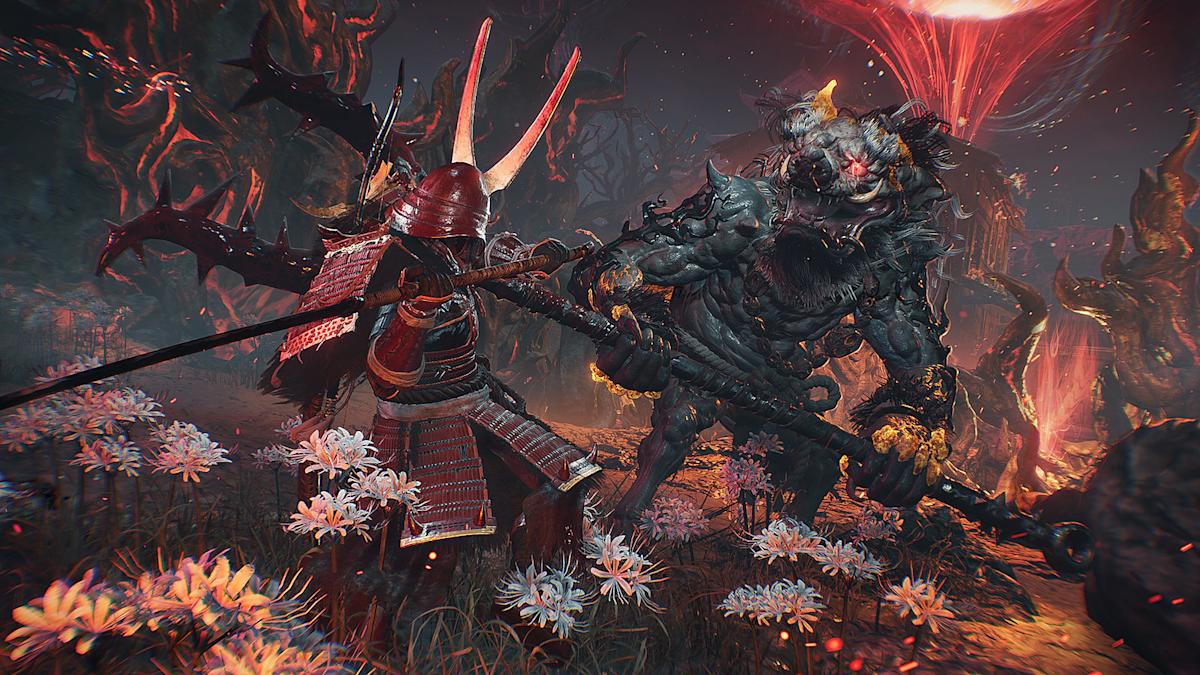
Nioh 3 has 17 weapon types: 7 Samurai, 7 Ninja, and 3 Ranged. The tutorial asks you to pick from 4 Samurai options (Sword, Dual Swords, Spear, Odachi) and then 4 Ninja options (Ninja Sword, Dual Ninja Swords, Kusarigama, Hatchets). The rest unlock as you play.
My recommendation for first-timers: Sword (Samurai) and Ninja Sword (Ninja). Both are straightforward, forgiving, and scale with shared stats (Heart and Strength). That stat overlap matters because every weapon scales off three stats, and pairing weapons that share scaling means your level-up points benefit both styles at once.
Here’s the full weapon roster with primary scaling stats:
Samurai weapons: Sword (Heart/Str/Int), Dual Swords (Heart/Str/Magic), Spear (Cons/Heart/Skill), Odachi (Stamina/Str/Magic), Axe (Cons/Stamina/Str), Switchglaives (Skill/Int/Magic), Cestuses (Heart/Stamina/Str)
Ninja weapons: Ninja Sword (Str/Skill/Int), Dual Ninja Swords (Heart/Int/Magic), Tonfa (Cons/Str/Skill), Kusarigama (Cons/Skill/Magic), Hatchets (Stamina/Skill/Int), Splitstaves (Str/Int/Magic), Talons (Heart/Stamina/Int)
⚡ Pro tip: Look at the three scaling stats on each weapon. The more overlap between your Samurai and Ninja weapon, the more efficient your stat investment. Sword + Ninja Sword share Strength. Switchglaives + Splitstaves share Intellect and Magic. Dual Swords + Dual Ninja Swords share Heart.
Don’t stress over the “perfect” pick. You can respec stats for free at any Shrine. Pick what feels fun, level the stats that boost it, and change later if something clicks better.
The Skills You Need First
Skills in Nioh 3 don’t come from leveling up. They come from Samurai’s Locks and Ninja’s Locks, collectible items you find by exploring the world. Treasure chests, spirit balloons called Chijiko (shoot them down), guarded corpses, Crucible boss rewards, and side quest completions all drop Locks. Each one is a skill point for its respective tree.
This means exploration directly powers your combat abilities. Players who rush through main missions end up undergeared and underskilled. Players who comb every corner walk into bosses with a full toolkit.
Samurai skill priority (unlock in this order):
- Deflect. This is your first purchase, no exceptions. Tap block right before an enemy attack lands (don’t hold it) for a perfect parry. You’ll see a yellow flash and hear a satisfying clang. It negates all damage, restores Ki, fills your Arts Gauge, and even generates Ninjutsu points for Ninja form. The parry window is generous, too.
- High Stance and Low Stance. You start with only Mid Stance. Unlock the other two to access your weapon’s full moveset. Many of the best weapon-specific skills require certain stances to use.
- Flux I and II. When you Ki Pulse (the stamina recovery tap after an attack), switching stances at the same time recovers significantly more Ki. Flux II recovers even more. Combined with stance swapping, you can keep your Ki topped off indefinitely.
Ninja skill priority (unlock in this order):
- Evade. The Ninja equivalent of Deflect. Dodge at the exact moment an attack would hit for a perfect dodge that restores Ki and generates Ninjutsu points. It also works with Midair Dodge once you unlock it.
- Gunpowder Bomb. Your first ranged Ninjutsu tool. Does fire damage and splash damage (rare in this game). Combine with Uncanny Flame (you start with this) to inflict burn status from safety.
- Caltrops. Scatter spikes on the ground that slow enemies and deal chip damage as they approach. Great for controlling spacing against aggressive enemies.
- Footstool Jump → Midair Dodge. Unlock Footstool Jump first, then Midair Dodge on the same branch. Evade works in the air too, so you can restore Ki while dodging projectiles mid-flight.
Ki Management Will Make or Break You
If there’s one thing that separates Nioh from every other action RPG, it’s Ki. Running out of Ki in Dark Souls means you can’t dodge for a second. Running out of Ki in Nioh means you’re staggered and completely vulnerable. Enemies will punish this immediately.
Samurai Ki management: Ki Pulse is mandatory, not optional. After every attack combo, hit the Ki recovery button at the right timing (when the blue glow appears on your character) to recover a chunk of Ki. With Flux I and II, switch stances during the Ki Pulse for even more recovery. Master this rhythm: attack → Ki Pulse + stance swap → attack. Once you internalize it, you’ll never run dry.
Ninja Ki management: Ninja doesn’t use Ki Pulse. Instead, it has Mist, a technique where you dodge immediately after attacking to reposition. This doesn’t recover Ki on its own. That’s why Evade is so critical for Ninja. Perfect dodges are how you get Ki back. Without Evade unlocked, Ninja runs out of gas fast.
Encumbrance matters. Your equipped armor’s total weight determines your agility grade: A (very light), B (optimal), C (heavy). Heavier encumbrance means slower Ki regeneration and sluggish movement. Use the auto-equip feature (R3 in the Equipment menu) and tell the game your preferred encumbrance level. B is the sweet spot for most builds. If you’re going full Ninja, aim for A with the Heir Shinobi armor set, which also reduces dodge Ki cost.
Explore Before You Fight
Nioh 3 has an open world, and unlike most open worlds, exploration here is genuinely rewarding. Every region has an Exploration Level that tracks how much you’ve uncovered. Open the map and press R2/RT to cycle through regions, see your current Exploration Level, and view the list of Valuables (collectibles that include Locks, Secret Skills, and other upgrades).
What to look for in every area:
- Kodama. Small green spirits scattered throughout the map. Guide them to the nearest Shrine to increase your Elixir (healing item) capacity and earn Kodama Merit. Spend Merit on Kodama Blessings at Shrines. Get Elixir Drop Rate first. More healing drops from enemies means more attempts against tough bosses.
- Six Jizo Statues. Found across regions, these provide additional blessings similar to Kodama.
- Chijiko (Spirit Balloons). Floating spirits you shoot down with ranged weapons for Locks and sometimes Transformed Arts (unique weapon skills).
- Large Treasure Chests. Appear on your map once you’re close enough or reach Region Level 4. Often contain Locks and Secret Skill texts.
- Guarded Corpses. Metallic bodies near strong enemies that frequently hold Locks.
⚡ First-hour plan: Spend your first 30 minutes exploring the opening area for 3-4 Locks. Return to a Shrine, spend them on Deflect and Evade. In the next 30 minutes, find your first Kodama, activate Elixir Drop Rate blessing, and check what Secret Skills you’ve picked up. This foundation makes everything after it significantly easier.
Secret Skills are passive perks found as texts in the world or purchased from Sudama merchants (tiny purple creatures). Equip them at any Shrine under Skill Management. You have limited capacity, but it can be expanded by finding special texts during exploration. Look for Long Stride (longer dodge distance) early.
Guardian Spirits and Soul Cores
Guardian Spirits are equipped companions that provide passive stat bonuses and a Spirit Attack (L1 + Square/LB + X). You charge Spirit Force by landing hits, and once full, you can unleash the attack. Spirit Attacks are especially effective at depleting yokai Ki, which stuns them for a massive damage window.
Each style has different Guardian Spirit options. Here are the two that matter most early:
Nekomata (Ninja) is the best early Ninja spirit, and it’s not close. Ki Recovery Speed +8%, Melee Attack Ki Consumption -6% (after unlocking via Crucible Spikes), and Ninjutsu Ki Damage +9%. That’s better Ki regen, cheaper attacks, and stronger tools. The lightning-based Spirit Attack pairs with Lightning Shot (an Onmyo spell) for a quick Lightning debuff that slows enemies down. Slowed enemy + your full Ki = you dictate the entire fight.
Guhin (Samurai) is your defensive anchor. Martial Arts Ki Consumption -8%, Damage Taken -6%, and one of the highest-damage Spirit Attack nukes in the game. The wind element debuff increases the enemy’s Ki costs, draining them faster. The standout perk is Faster Winded Recovery. If you do run out of Ki from blocking, you recover so fast that most enemies can’t punish you before you’re back in action.
Soul Cores are equipped alongside Guardian Spirits. The one to look for early is Yamainu (Yang Position), which grants Faster Movement Speed on Amrita Absorption. Every enemy drops Amrita when they die, so you’re constantly moving faster. It sounds minor, but the speed boost for traversal and combat repositioning is noticeable.
Gear and Loot: What Actually Matters
Loot is overwhelming in Nioh 3. Every enemy drops something. You’ll have hundreds of items in your inventory within a few hours. Here’s the simple approach that works through your entire first playthrough:
Use auto-equip. In the Equipment menu, hit R3 and let the game put on the highest gear score items for your preferred encumbrance level. Do this every 30 minutes or after any major fight. Ignore the small stat differences between pieces.
Lock anything with a star. Gear with special abilities or star-marked stats is worth keeping. Press the lock button on these items so you don’t accidentally scrap them. Same goes for set pieces. Set bonuses get powerful later, but don’t chase full sets during your first playthrough.
Don’t soul match until NG+. The blacksmith’s soul matching feature lets you bring lower-level gear up to your current level, but it costs resources you’ll want later. Everything gets replaced every few hours in the first playthrough. Save your resources.
Break Spirit Stones. Check your Usable Items tab regularly. Spirit Stones and Lumicite Fragments are crystallized Amrita waiting to be broken. If you’re close to a level-up but short on Amrita, these get you there. You can also extract Amrita from unwanted gear at any Shrine under Preparation → Make Offering.
Combat Tips
Most guides give you “practice more” or “learn enemy patterns.” Here are specific techniques that experienced players swear by:
Shurikens are secretly one of the best tools in the game. You get them for free at the start, and most players just throw them randomly. That’s wrong. Shurikens have an extremely short activation and recovery time. Use them to interrupt enemy attacks mid-swing before they connect. Chain them between melee combos: quick attack x4 → shuriken → quick attack x4. You can keep attacking while your Ki recovers because the shuriken keeps the enemy busy. This single technique transforms early game combat.
The Wisteria Longbow is a boss-killing machine. It has a 50% chance to apply a “Decrease Damage Dealt” debuff on every hit. That means half the time you shoot a boss, their attacks get weaker. Arrows are cheap and replenish at every Shrine. Open every boss fight by pelting them with Wisteria Longbow shots. Even if the debuff doesn’t proc, you’re chipping HP and Ki for free.
Pair elemental Ninjutsu with matching elemental weapons. The Uncanny (Element) tools seem weak individually, but they’re designed to prep elemental debuffs. Fire two Uncanny Bubbles (water) at an enemy, then hit them with Water Tonfas. The Water debuff activates instantly and amplifies your melee damage significantly. This works with every element.
Use the training arena. Once you unlock the Eternal Rift (a story hub area through a special mirror), talk to the three NPCs there. Then go to any Shrine, open Battle Scrolls, select the Edo period, and choose “Expanded Control.” You’ll load into a training arena where you can practice any combo against a spawning enemy. You can’t die here. Use this to test new weapons and learn Deflect/Evade timing without risking progress.
Also in Battle Scrolls: Look for missions named “The Way of the…” and complete them. These unlock important weapon-specific skills in your skill trees.
Common Beginner Mistakes
Rushing main missions. This is the number one mistake. Exploration is how you get Locks (skill points), Kodama (healing capacity), Secret Skills (passive perks), and Amrita (levels). Players who skip side content hit a wall around the third region because they’re underpowered across the board. Clear each area’s exploration content before moving on.
Sticking to one style. It’s tempting to just play Samurai and ignore Ninja (or vice versa). Nioh 3 is explicitly designed around switching. You’re leaving half your toolkit on the table. At minimum, unlock Deflect and Evade in both trees and practice switching. Our combat guide breaks down exactly how to chain styles for maximum damage.
Hoarding Amrita. If you’re carrying a pile of Amrita and you’re near a Shrine, level up. Dying twice without recovering your grave loses all that Amrita permanently. There’s no downside to spending it immediately. You can respec for free anyway.
Ignoring ranged weapons. The bow and rifle aren’t just for pulling enemies. The Wisteria Longbow debuffs bosses. Shurikens interrupt attacks. Arrows and ammunition replenish at Shrines for almost nothing. There’s no reason not to use them.
Min-maxing gear in the first playthrough. Every piece of gear gets outleveled within a few hours. Use auto-equip, lock anything with a star, and save your crafting resources for NG+ where gear optimization actually matters. When you’re ready to start planning a real loadout, our Nioh 3 builds guide covers the best options for every playstyle.
Wrong encumbrance. Wearing heavy armor without enough Stamina to stay at B agility means your Ki regenerates at C rate, which is painful. Check your equipment weight after every gear change. If you’re running Samurai and want some block power, the combination of 3-piece Crimson General armor (head, hands, feet) with 2-piece Heir armor (body, legs) gives the best Block Cost Reduction while requiring the least Stamina for B agility.
Frequently Asked Questions
What’s the best starting weapon in Nioh 3?
The Sword (Samurai) paired with Ninja Sword (Ninja) is the most beginner-friendly combination. Both are straightforward, scale well, and share Strength as a common stat. If you want more flash, try Switchglaives (Samurai) paired with Splitstaves (Ninja), which share Intellect and Magic.
Can you respec stats and skills in Nioh 3?
Yes, and it’s completely free. Respec your stats at any Shrine from the Level Up menu (press R3 on controller, R on keyboard). Skill trees can be respecced from the Acquire Martial Arts/Ninjutsu menu. Experiment with everything.
Should I play Samurai or Ninja first?
Both. Nioh 3 is built around style-switching. The strongest approach early is starting fights with Ninja’s fast attacks to drain enemy Ki, then switching to Samurai for high-damage finishers when they stagger. Unlock Deflect and Evade in both trees immediately.
How do I access the training arena?
First, progress the story until you unlock the Eternal Rift (a hub area accessed through a special mirror). Speak to the three NPCs there. Then visit any Shrine, open Battle Scrolls, select the Edo period, and choose “Expanded Control” to enter the training arena. You cannot die inside it.
What are Samurai’s Locks and Ninja’s Locks?
They’re skill point items found by exploring the open world. Treasure chests, Chijiko spirit balloons (shoot them down), guarded corpses, Crucible bosses, and side quests all drop them. Each Lock is one skill point for its respective tree (Samurai or Ninja). Exploration is how you get stronger, not just leveling up.
How many weapons are in Nioh 3?
There are 17 weapon types total: 7 Samurai weapons (Sword, Dual Swords, Spear, Odachi, Axe, Switchglaives, Cestuses), 7 Ninja weapons (Ninja Sword, Dual Ninja Swords, Tonfa, Kusarigama, Hatchets, Splitstaves, Talons), and 3 Ranged weapons (Bow, Rifle, and possibly Hand Cannon).
Last updated: February 2026