Quick Answer
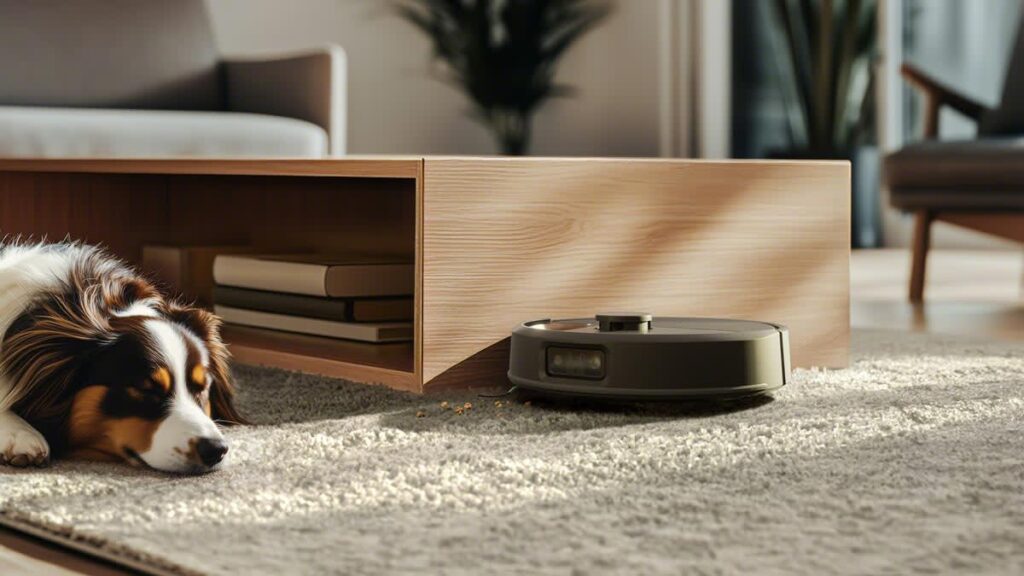
The MOVA S10 is the best robot vacuum under $200 right now. LiDAR navigation, 7,000Pa suction, a 260-minute battery, and automatic mop lifting for $149. Nothing else at this price comes close.
Disclosure: /SKILL is reader-supported. When you buy through links on our site, we may earn an affiliate commission at no extra cost to you. Learn more
In This Guide
Two years ago, a robot vacuum with LiDAR navigation cost at least $250. A self-emptying dock pushed you past $400. In 2026, you can get LiDAR for $149 and a self-emptying base for $176. The budget robot vacuum market has shifted dramatically, and the $200 price point now gets you features that used to be reserved for mid-range models.
This guide covers only vacuums that actually cost under $200 at regular price, not “on sale from $500” deals that disappear next week. Every product here was verified on Amazon in February 2026. If you have more room in your budget, check out our guide to the best Roomba alternatives for options in the $200-$450 range.
Quick Comparison
| Model | Price | Suction | Navigation | Mops | Self-Empty | Best For |
|---|---|---|---|---|---|---|
| MOVA S10 | $149 | 7,000 Pa | LiDAR | Yes | No | Best overall |
| iLife A30 Pro | $176 | 5,000 Pa | LiDAR | Yes | Yes (60 days) | Hands-off cleaning |
| Roborock Q7 M5 | $160 | 10,000 Pa | LiDAR | Yes | No | Deep carpet cleaning |
| Tikom G8000 Max | $114 | 5,000 Pa | Bump | Yes | No | Budget vacuum + mop |
| eufy 11S MAX | $140 | BoostIQ | Bounce | No | No | Simple, slim design |
| Lefant M210 | $90 | 2,200 Pa | Bump | No | No | Cheapest option that works |
| Dreame D10 Plus Gen 2 | $200 | 6,000 Pa | LiDAR | Yes | Yes (90 days) | Best at the $200 line |
Best Overall: MOVA S10
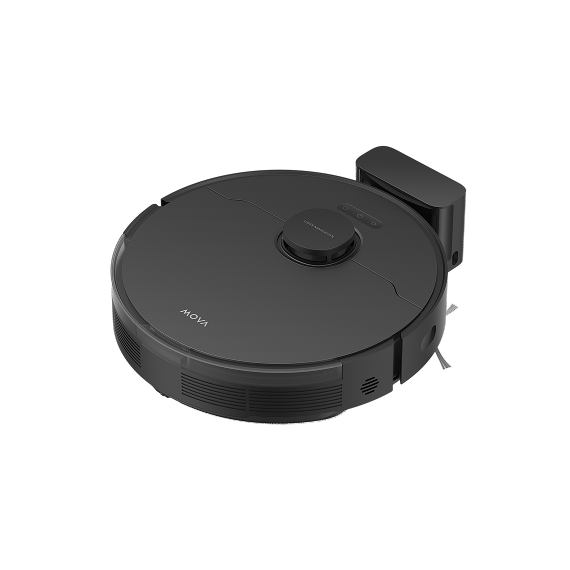
The MOVA S10 scored a 90% carpet deep-clean rate in Vacuum Wars testing, which is remarkable for a vacuum that costs $149. For context, many $300+ models score lower than that. The combination of LiDAR navigation with that kind of cleaning performance makes it an easy first pick.
The 260-minute battery life is the longest on this list by a wide margin. In practice, that means it can clean a 2,000+ square foot home on a single charge. The mop attachment lifts 7mm automatically when the S10 detects carpet, so you can vacuum and mop hardwood without worrying about it dragging a wet pad onto your rugs.
The one real weakness is obstacle avoidance. The S10 relies on its LiDAR and basic sensors rather than a camera-based system, so it will bump into shoes, cables, and pet toys more often than premium models. If your floors stay relatively clear, that won’t matter much. If you have kids or pets leaving things everywhere, expect some bumping.
There is no self-emptying dock. MOVA makes an S10 Plus variant with one, but it pushes the price past $200. At $149 for the base S10, it’s still the best overall value here.
Best Self-Emptying: iLife A30 Pro
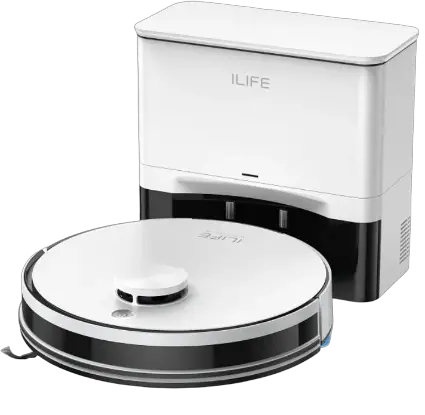
Self-emptying docks used to be a $350+ feature. The iLife A30 Pro includes one for $176, and it actually works well. The base station holds about 60 days of debris, and it ships with five dust bags that stretch the total hands-free period to roughly 280 days. That is almost a year of not thinking about your robot vacuum.
The A30 Pro uses LiDAR navigation with SLAM mapping, so it cleans in efficient rows rather than bouncing randomly. You get app control with no-go zones, virtual walls, room selection, and multi-floor map support. The 5,000Pa suction is solid for hard floors and low-pile carpet, though it won’t match the MOVA S10 or Roborock Q7 M5 on thick carpet.
It also mops, which is a nice bonus at this price. The mopping is basic (no auto-wash or vibrating pad), but it handles light maintenance cleaning on tile and hardwood. With over 23,000 Amazon reviews and a 4.2-star average, it has a track record of reliability that some of the newer brands on this list don’t.
If emptying the dustbin every few days is the thing you hate most about robot vacuums, the A30 Pro solves that problem for less than $180.
Best Suction: Roborock Q7 M5
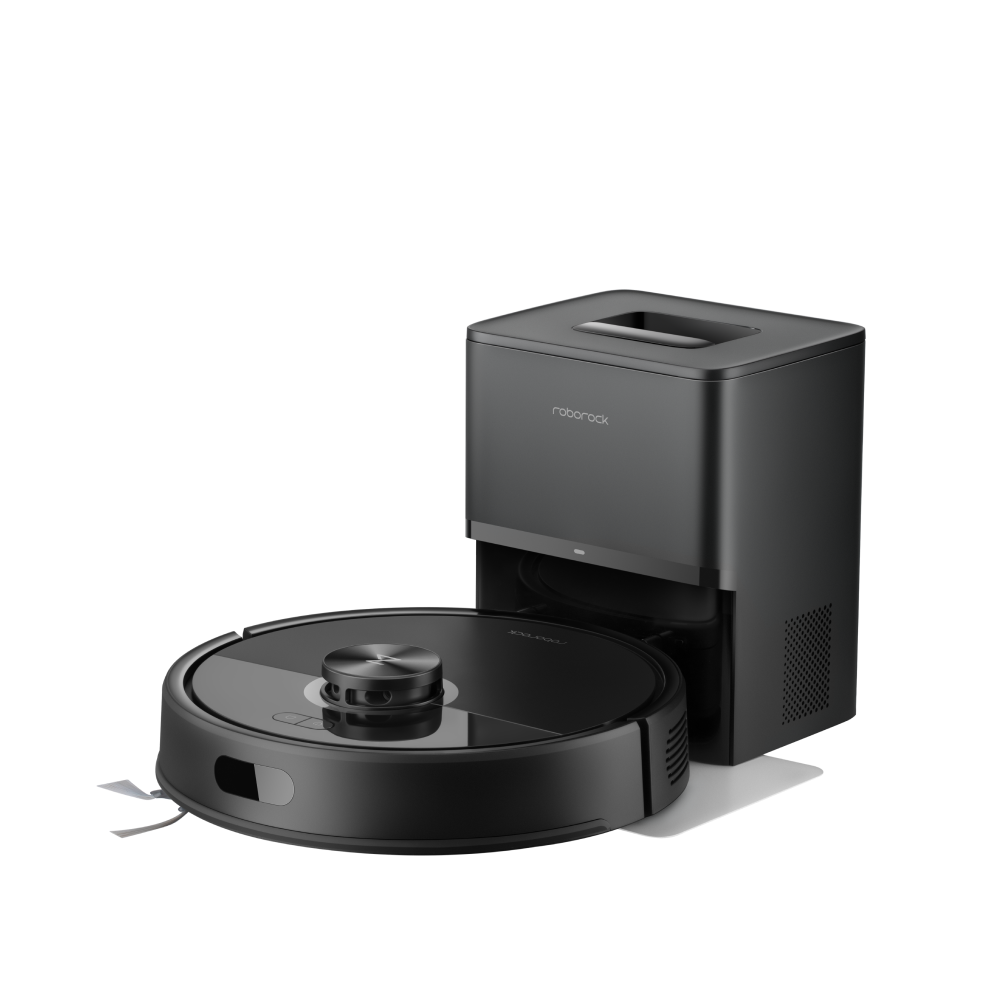
The Roborock Q7 M5 has 10,000Pa of suction, nearly double what most budget models offer. If you have medium or high-pile carpet, or if pet hair is your main concern, that extra pulling power makes a measurable difference. Roborock’s dual anti-tangle system also means long hair and pet fur won’t wrap around the brush roll the way it does on cheaper models.
Roborock is one of the most trusted names in the robot vacuum space, and the Q7 M5 carries that build quality into the budget tier. LiDAR navigation is fast and accurate, and the app gives you precise mapping with pin-and-go spot cleaning. You can set no-go zones, schedule by room, and save maps for multiple floors.
It also vacuums and mops simultaneously with a 270ml water tank. The mopping is basic, like every other budget model, but it handles daily maintenance cleaning without issues. There is no self-emptying dock, but at $160 with this level of suction and navigation, something had to give.
If you care most about raw cleaning performance on carpet, the Q7 M5 is the pick. Roborock has over 80% positive sentiment on Reddit across their product line, which says a lot about long-term reliability.
Best Value Combo: Tikom G8000 Max
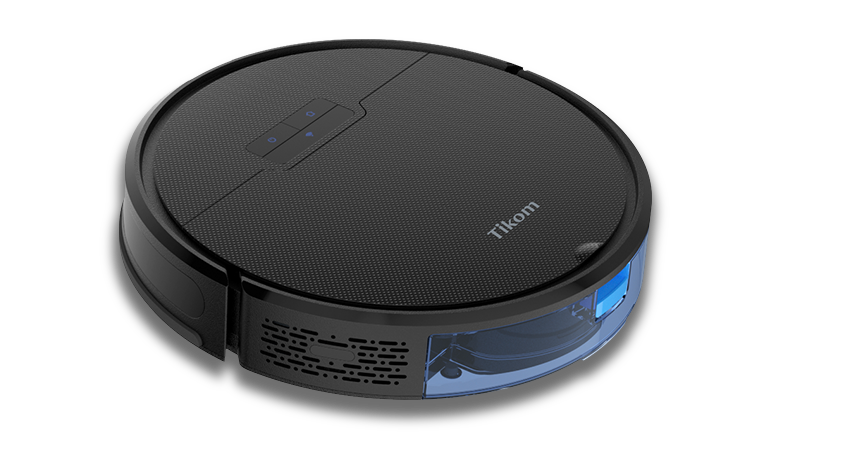
The Tikom G8000 Max gives you vacuum and mop capability for $114. That is the cheapest way to get both functions in a single robot. It has 5,000Pa suction, a 450ml dustbin, and a 300ml water tank, with a 150-minute runtime that handles most apartments and smaller homes in a single charge.
At 2.99 inches tall, the G8000 Max is one of the slimmest robots on this list. It fits under most couches, bed frames, and low-clearance furniture that thicker models can’t reach. That matters more than you’d think, since under-furniture areas collect dust fast.
The trade-off is navigation. The G8000 Max uses bump-and-go sensors, not LiDAR. It will clean your floors, but it won’t map your home or clean in efficient rows. Expect some overlap and missed spots in larger spaces. For studio apartments and smaller homes, that’s a reasonable compromise at this price. For anything over 1,500 square feet, step up to something with LiDAR.
App and remote control are both included, and it works with Alexa and Google Assistant. At $114, it is hard to argue with the feature set.
Best for Simplicity: eufy 11S MAX
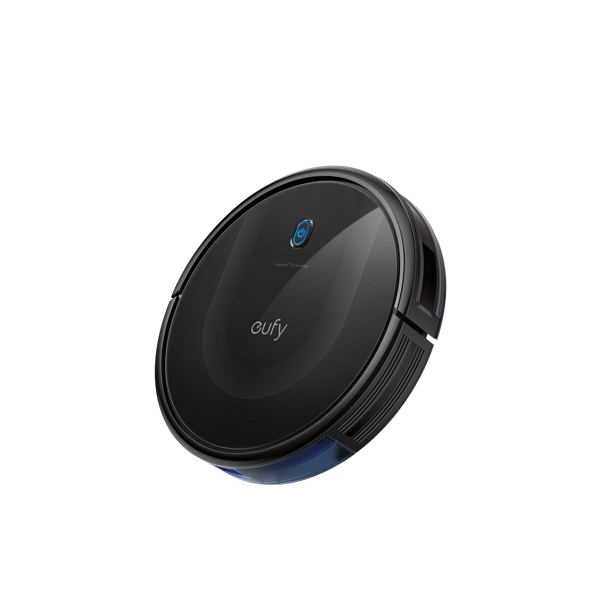
Not everyone wants an app. The eufy 11S MAX is for the person who just wants to press a button (or use the included remote) and have their floors cleaned. There is no Wi-Fi, no account creation, no firmware updates. It charges itself, it cleans, and it goes back to the dock.
The BoostIQ feature automatically increases suction when the 11S detects carpet, then drops back to quiet mode on hard floors. It is one of the slimmest robot vacuums available, making it excellent for getting under low furniture. The noise level is noticeably quieter than most competitors.
The runtime tops out around 75 minutes, which is the shortest on this list. That limits it to smaller spaces, roughly 1,000 square feet per charge. It also uses bounce navigation, so cleaning patterns are random rather than methodical. For a small apartment or a single floor of a home, that works fine. For larger spaces, you will want LiDAR.
The eufy 11S MAX has been a budget favorite for years. It doesn’t have the latest features, but it does the basics well and will keep doing them without asking you to connect anything to your Wi-Fi.
Best Under $100: Lefant M210
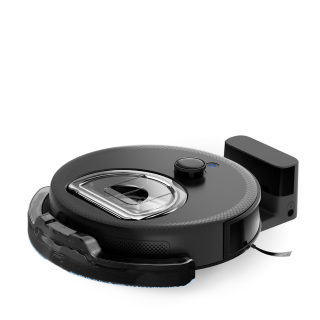
The Lefant M210 costs $90 and it works. That is the core pitch. It connects to Wi-Fi, works with Alexa and Google Assistant, and has app control with scheduling. At $90, that feature set is genuinely impressive.
The standout feature is the tangle-free suction design. Instead of a traditional brush roll that wraps hair around it, the M210 uses direct suction. If you have long hair or pets that shed, you won’t spend time cutting tangled hair off the roller. The 500ml dustbin is also larger than most budget models.
At 11 inches in diameter and 2.99 inches tall, the M210 is compact enough to reach tight spaces. The 120-minute runtime handles most apartments. With 2,200Pa suction, it picks up surface debris on hard floors and manages low-pile carpet. It won’t deep-clean thick carpet, but that’s not what a $90 vacuum is for.
The M210 uses bump navigation, so it won’t map your home. It can get disoriented in large, multi-room layouts. For a bedroom, studio, or small apartment, it is a genuine bargain. For anything larger, spend the extra $59 on the MOVA S10.
Honorable Mention: Dreame D10 Plus Gen 2
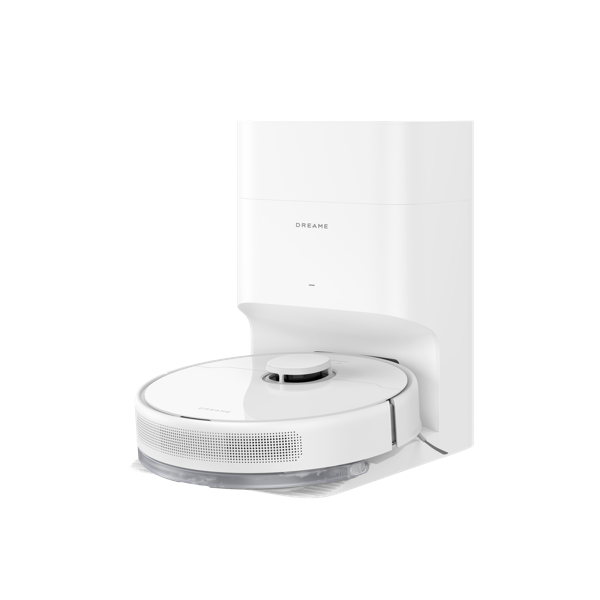
The Dreame D10 Plus Gen 2 sits right at $200, which is technically the ceiling of this guide. It earns an honorable mention because the feature set is hard to ignore: a self-emptying dock that holds 90 days of debris, LiDAR navigation, 6,000Pa suction, a 285-minute battery, and mopping capability.
Compared to the iLife A30 Pro ($176), the Dreame offers stronger suction (6,000 vs 5,000Pa), a much larger battery (285 vs ~180 minutes), and a bigger self-emptying capacity (90 vs 60 days). The $24 difference buys meaningful upgrades across the board. If you can stretch to exactly $200, it is the most complete package in this guide.
Dreame is a well-established brand with strong community sentiment and reliable long-term support. If your budget has any flexibility at all, the D10 Plus Gen 2 is worth the stretch.
What to Look For in a Robot Vacuum Under $200
Navigation type matters most. LiDAR-equipped robots clean in efficient rows and finish faster. Bump-and-go robots bounce randomly and miss spots. In 2026, you can get LiDAR for as low as $149 (MOVA S10), so there is no reason to settle for random navigation unless you are buying under $100.
Suction numbers need context. A 2,200Pa vacuum handles hard floors and light carpet. A 5,000Pa vacuum handles most carpet types. Anything above 7,000Pa handles deep carpet and heavy pet hair. The Pa rating is not the only factor (brush design, airflow path, and dustbin capacity all matter), but it is a useful baseline for comparing models in the same price range.
Mopping is a bonus, not a replacement. Every budget robot mop is a basic water-drip system with a microfiber pad. It handles light maintenance (dust, footprints, minor spills) but won’t replace actual mopping for stuck-on messes. Treat it as a convenience feature rather than a primary mopping solution.
Self-emptying changes the experience. Without it, you empty the dustbin every 1-3 cleanings. With it, you forget the vacuum exists for weeks. The iLife A30 Pro at $176 is the cheapest way to get this feature, and it is worth the premium if low maintenance is your priority.
Frequently Asked Questions
Is LiDAR navigation worth paying extra for in a budget robot vacuum?
Yes. LiDAR-equipped robots clean faster, miss fewer spots, and support features like no-go zones and room-specific scheduling. The price gap has shrunk significantly. The MOVA S10 offers LiDAR for $149, which is only $35-60 more than most random-navigation models. For anything larger than a studio apartment, LiDAR pays for itself in cleaning efficiency.
Which budget robot vacuum is best for pet hair?
The Roborock Q7 M5 ($160) is the best choice for pet hair under $200. It has the highest suction at 10,000Pa and a dual anti-tangle brush system designed to prevent hair wrapping. The Lefant M210 ($90) is a good budget alternative since its tangle-free suction port avoids the hair-wrapping problem entirely, though it has much less suction power.
Can cheap robot vacuums damage furniture or walls?
Budget robots with bump navigation will make contact with furniture and baseboards, but they use rubber bumpers designed to absorb impact without causing damage. LiDAR-equipped models reduce wall contact significantly since they map the room before cleaning. If you have delicate furniture legs or wall finishes, a LiDAR model is the safer choice.
Can you get a self-emptying robot vacuum under $200?
Yes. The iLife A30 Pro ($176) and Dreame D10 Plus Gen 2 ($200) both include self-emptying docks. The iLife holds 60 days of debris, while the Dreame holds 90 days. Both also include LiDAR navigation, making them strong overall packages at their respective prices.
How long do budget robot vacuums last?
Most budget robot vacuums last 2-4 years with regular maintenance (cleaning brushes, replacing filters, and emptying the dustbin). Battery degradation is the most common issue, and replacement batteries are available for most models. Brands like Roborock, eufy, and Dreame tend to have better long-term reliability based on community feedback.
The Bottom Line
The MOVA S10 at $149 is the best robot vacuum under $200 for most people. LiDAR navigation, strong suction, the longest battery life on the list, and automatic mop lifting make it a standout. If you want self-emptying, the iLife A30 Pro at $176 is the cheapest way to get that feature. If raw cleaning power is the priority, the Roborock Q7 M5 at $160 has the most suction in this price range.
If your budget goes higher, our best Roomba alternatives guide covers the $200-$450 range with features like hot water mop washing, advanced obstacle avoidance, and larger self-emptying stations.